
Tenome: The Figure With Eyes in Its Palms
手の目(てのめ) Tenome ASCII: Tenome
Pronunciation: TEH-noh-meh
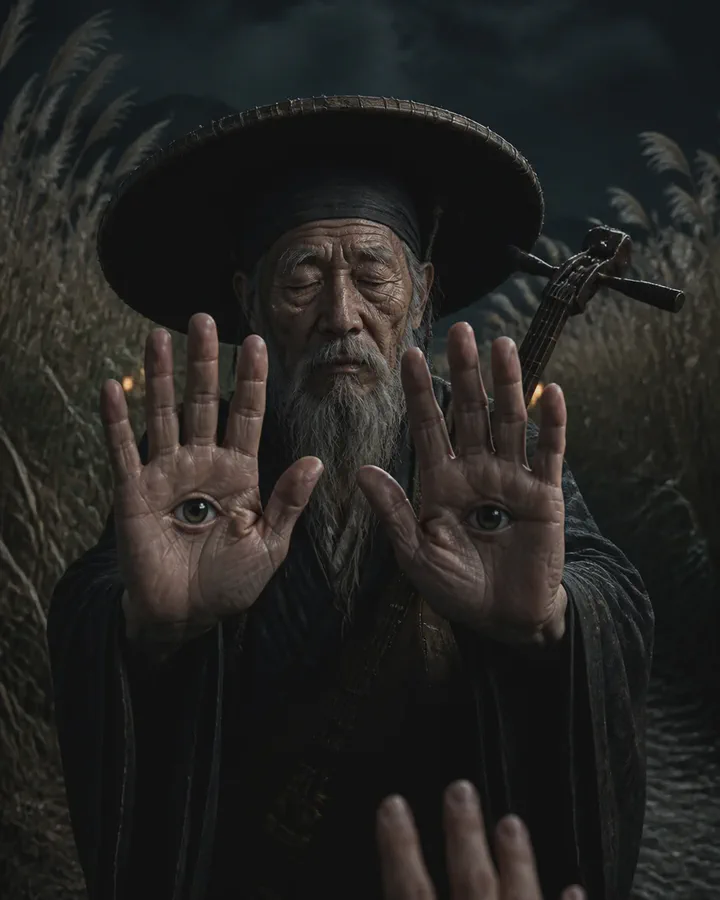
Sekien's 1776 plate shows an elderly blind figure with a biwa on his back, holding out two palms, each with an open eye. He gave it a name and nothing more; the story of a murdered man hunting his killer came later.
Quick Facts
- Habitat
- Field, Road
- Region
- unspecified
- Recorded period
- Toriyama Sekien's Gazu Hyakki Yagyō (1776)
- Nature
- Unknown
- Danger rating
The danger rating is an editorial summary made for readability. It is not an objective measure found in folklore sources.
Watch the Short
What is Tenome?
Te is hand. Me is eye. Tenome is “hand-eyes,” and the name is exact.
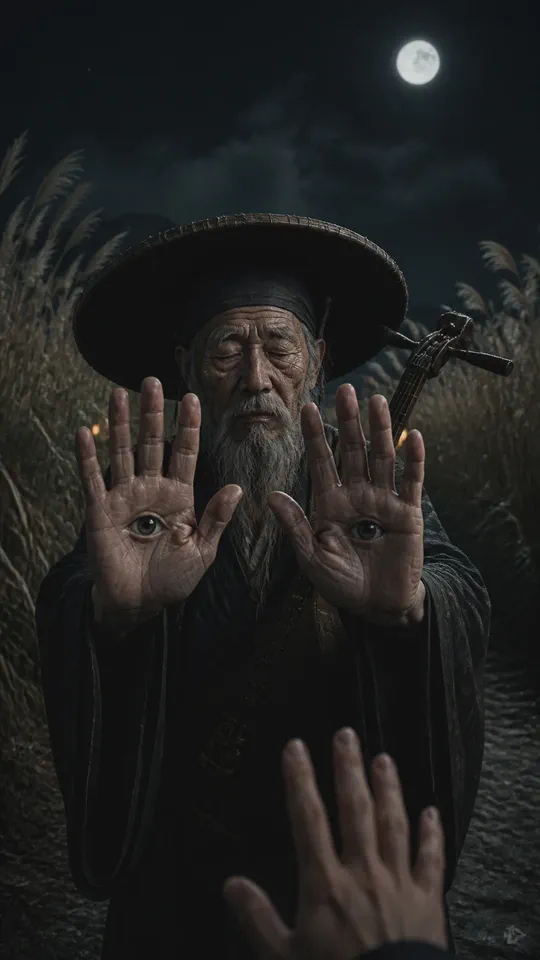
In 1776 Toriyama Sekien included it in Gazu Hyakki Yagyō, his first illustrated collection of yokai. The plate shows an old man out in the open. His eyes are closed. A biwa, the Japanese lute, hangs on his back. He holds both hands out in front of him, palms forward, and in the middle of each palm is an eye.
And there the source ends.
What Sekien did not write
Like most entries in that first book, Tenome carries a name and a picture and no explanation. There is no account of where he was seen, what he wants, how the eyes came to be in his hands, or what happens to someone he finds.
The details that are there are careful ones. The biwa on his back and his closed eyes mark him as a zatō or biwa priest — a blind man who made a living as a travelling musician and storyteller, a familiar figure on the roads of Edo-period Japan. Sekien is not inventing a stranger; he is drawing someone his readers would have recognised, and then changing one thing about him.
Appearance
An old blind traveller, a biwa slung across his back, alone under the moon. The face is shut. The hands are open, and each hand is looking.
Our illustration follows the plate: the straw hat, the robe, the instrument, and the palms held out toward the viewer, as though he has only just noticed you and is checking.
Behavior and abilities
- He sees through his hands. This is the image, and it is all the image asserts.
- He is feeling his way. The outstretched palms are the gesture of someone who cannot see, made unsettling by the fact that now he can.
That list is short because the source is short.
Weaknesses and countermeasures
None are recorded. There is no encounter in the source to defend against — only a man standing in the dark with his hands out.
Why the gap got filled
A figure with eyes in his hands asks a question: why there? Later writers answered it. The best-known answer, now repeated in most yokai books, is a revenge tale. A blind man is robbed and killed on the road; his ghost rises with eyes in his palms, and he wanders searching for the man who murdered him, feeling each face he meets.
It is a good story and it fits the picture. It is also not in the picture. Sekien’s plate gives no robbery, no death, and no search.
Other readings are possible and none is confirmed. The image may be a visual pun on the way a blind person “sees” with their hands. It may be a comment on touch noticing what faces miss. Sekien does not say, and the silence is the only thing about Tenome that is certain.
Documented plate and later imagery
Documented plate. Toriyama Sekien, Gazu Hyakki Yagyō, 1776: an elderly blind figure with a biwa on his back, holding out both hands, an eye open in each palm, under the name 手の目. No explanatory text accompanies it, in common with much of that first collection.
Later imagery. Tenome is now usually a vengeful ghost, a murdered blind man searching for his killer with his hands.
The plate is simpler and odder. A traveller everyone would have known, doing what such travellers did — reaching out into the dark to find the way — except that the dark is looking back out of his hands.
Sources and further reading
- Library Gazu Hyakki Yagyō bibliographic record (画図百鬼夜行) (external link) National Diet Library Search Bibliographic record for Sekien's 1776 picture book.
- Library Toriyama Sekien's Illustrated Night Parade of the Demon Horde (external link) National Diet Library Image Bank Overview of Sekien's four illustrated collections, including the 1781 Konjaku Hyakki Shūi that carries the Shinkirō plate.
- Academic paper Toriyama Sekien's Gazu Hyakki Yagyō: background and contents (external link) Jörg Ebenschwanger; Bunka/Hihyō 1 (Osaka University), 2009 Notes that most of the fifty-one entries in the first collection carry a name and little or no explanatory text. Also reads the Biwa-bokuboku plate as a blind biwa priest feeling his way, with a proposed link to the Tsurezuregusa episode of the lost Genjō.
Related yokai
Biwa-bokuboku
琵琶牧々(びわぼくぼく)
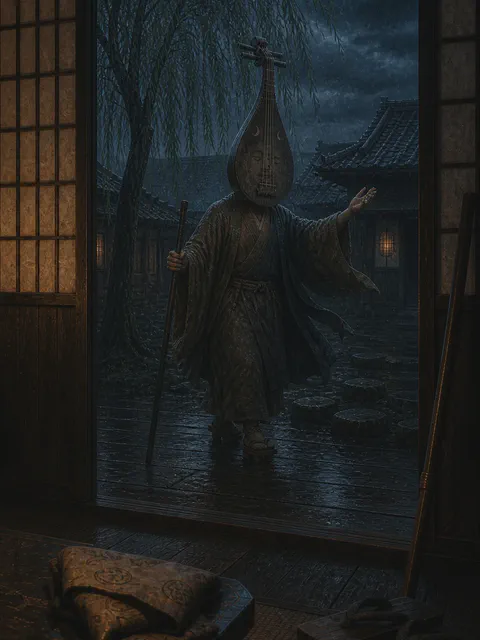
In 1784 Sekien drew a blind biwa priest with a biwa for a head, feeling his way under a willow. His caption names two legendary court lutes, Genjō and Bokuba, and builds the creature's name out of one of them.
Akaname
垢嘗(あかなめ)
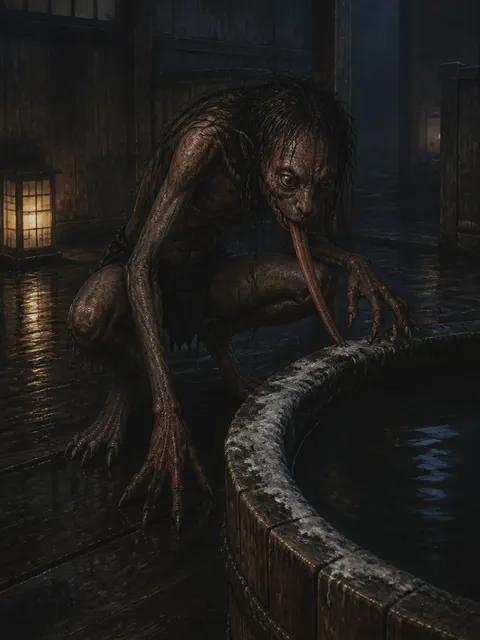
Sekien drew a crouching figure with a long tongue in a bathhouse in 1776 and called it the grime-licker. He wrote nothing else about it — and everything you have been told about dirty bathrooms was added afterwards.
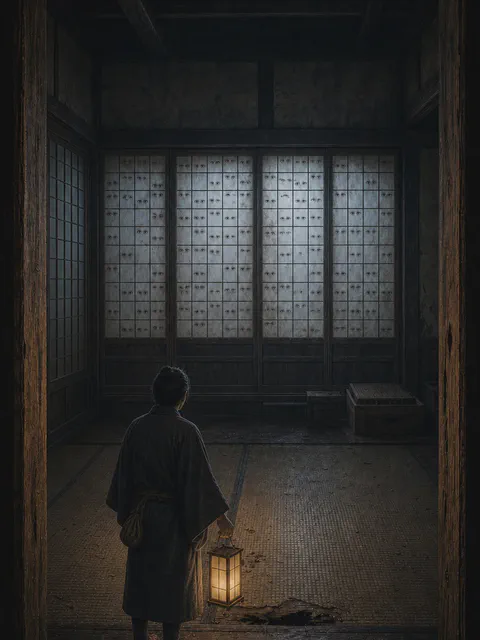
Mokumokuren
目目連(もくもくれん)
Rows of human eyes appear across old shoji in Toriyama Sekien's 1781 picture-book image.