
Shōkera (しょうけら): The Thing Looking In Through the Skylight
Sekien's clawed watcher on the roof, and the Kōshin-night reading added later
しょうけら Shōkera ASCII: Shokera
Also known as: せうけら, Shokera
Pronunciation: SHOH-keh-rah
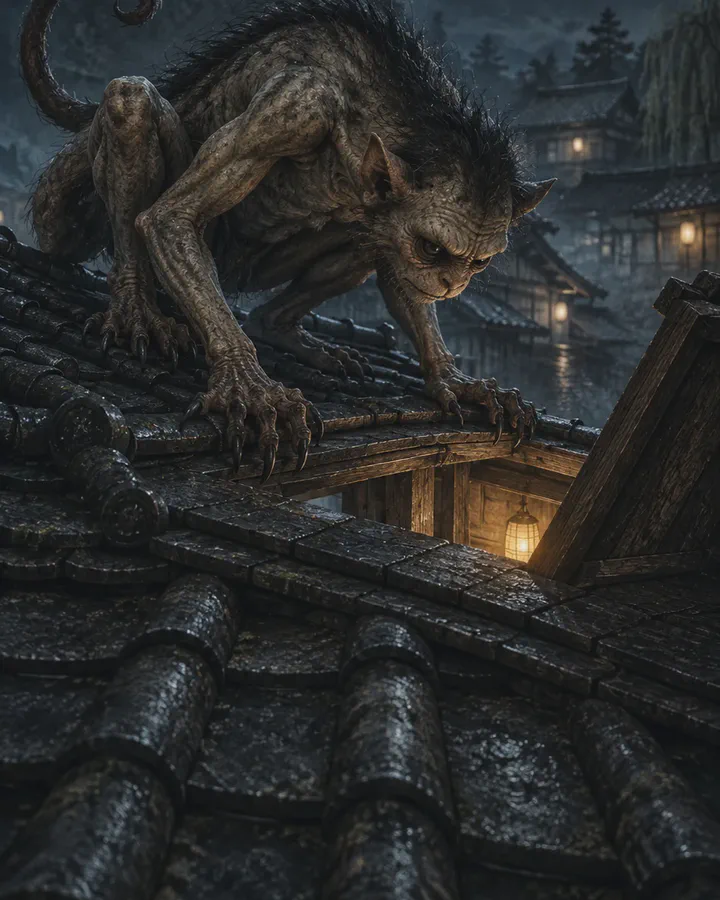
Shōkera (しょうけら) is a long-limbed, clawed figure that clings to the roof of a house and peers in through the skylight. Toriyama Sekien drew it in 1776 and gave it a name and nothing else — no caption, no purpose, no victim. Later writers tied it to the Kōshin night, when three worms inside the body climb out to report a person’s sins to heaven and people sat up all night to stop them; on that reading the shōkera is the watcher on the roof. Sekien’s plate says only that something is looking in.
Quick Facts
- Habitat
- House
- Region
- unspecified
- Recorded period
- Toriyama Sekien's Gazu Hyakki Yagyō (1776)
- Nature
- Unknown
- Danger rating
The danger rating is an editorial summary made for readability. It is not an objective measure found in folklore sources.
Watch the Short
What is Shōkera?
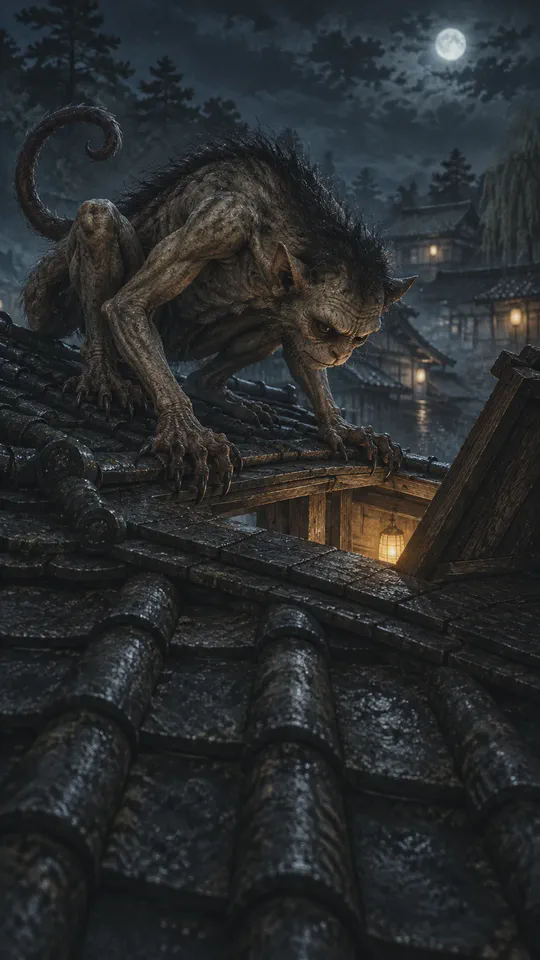
Something is on the roof. It is holding on to the tiles with long clawed hands and feet, hunched, its head bent down toward the skylight — the small opening in an Edo roof that let smoke out and light in — and it is looking into the room below. Whoever is in the room has not looked up.
That is the plate titled shōkera in Gazu Hyakki Yagyō, Toriyama Sekien’s first picture book of 1776. It is precise about position and silent about everything else. There is no caption. Who lives below, what the thing wants, whether it has ever come in, and what happens to the person who looks up and meets its eyes — the plate says nothing about any of it.
What does shōkera mean?
The name is written only in kana, しょうけら, or in Sekien’s spelling せうけら, and its meaning is uncertain. The likeliest reading connects it to the shōkera or shōkei of Chinese-derived Kōshin belief — spirits or worms associated with the night of the Monkey in the sixty-day cycle. In Japanese the word also names the mole cricket, the burrowing insect, and the two may be related or may simply sound alike. It is pronounced SHOH-keh-rah.
The Kōshin reading
Later writers connected the shōkera with Kōshin-machi, the Kōshin vigil. In that belief, three worms — the sanshi — live inside every person and, on the Kōshin night that comes round every sixty days, leave the sleeping body to climb to heaven and report its sins, shortening its life. People stayed awake together all night so that the worms could not get out. On that reading the shōkera is the thing that watches from the roof on Kōshin night for anyone who has fallen asleep.
It is a good fit for a creature looking in through a skylight, and it is not written on Sekien’s plate.
Appearance
Long-limbed, clawed, hunched on the roof tiles, head bent toward the skylight. Our illustration keeps that pose and adds a moon; the lit room below and the shape of the opening are our own.
Behavior and abilities
- It watches. The plate shows nothing else.
- It climbs. It is on the roof and holding fast.
Weaknesses and countermeasures
None are recorded, because the plate records nothing but a name and a picture. In the Kōshin reading, the defence is the vigil itself: stay awake, and there is nothing for it to see.
Documented plate and later imagery
Documented plate. Toriyama Sekien, Gazu Hyakki Yagyō (1776): a clawed, long-limbed figure clinging to a roof and peering in through the skylight, under the name shōkera, with no explanatory text.
Later imagery. Modern books link the shōkera to Kōshin-night beliefs, and some give it the power to cause illness or shorten lives, or to punish those who break the vigil. Those details are added; the plate names no harm. What Sekien left is a single unexplained moment. Something is on the roof. You can hear its claws on the tiles. It has not told you why it is looking in.
Sources and further reading
- Museum Shōkera by Toriyama Sekien (external link) Wikimedia Commons Scan of the plate: a long-limbed clawed figure on a roof, face to a skylight, with only a name.
- Museum "Chase Japan's yokai!" exhibition list (2013) (external link) Yokosuka Museum of Art Lists Sekien's Gazu Hyakki Yagyō as An'ei 5 (1776).
- Library Gazu Hyakki Yagyō (画図百鬼夜行) (external link) National Diet Library Search Bibliographic record for the historical picture book associated with Sekien's kodama image.
On the timeline
In the glossary
In manga
- Nura: Rise of the Yokai Clan ぬらりひょんの孫 Uses the names, reinvents the rest
Related yokai
Tenjō-sagari
天井下り(てんじょうさがり)
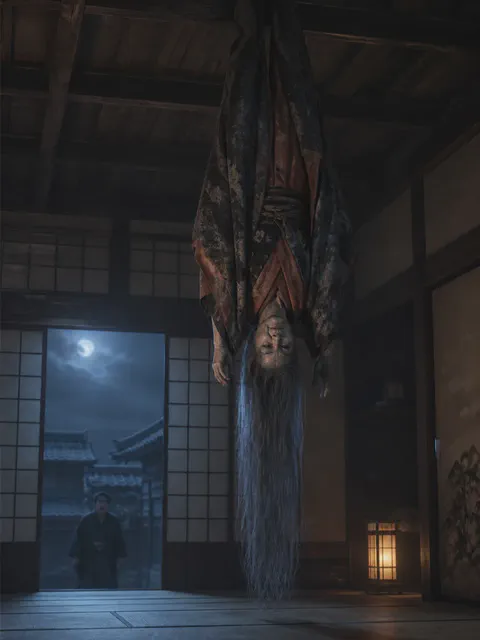
In 1779 Sekien drew an old woman hanging upside down from the ceiling, and wrote a caption that is mostly a joke — about a demon who once escaped through a roof, and a phrase for knocking someone flat.
Yanari
鳴屋(やなり)
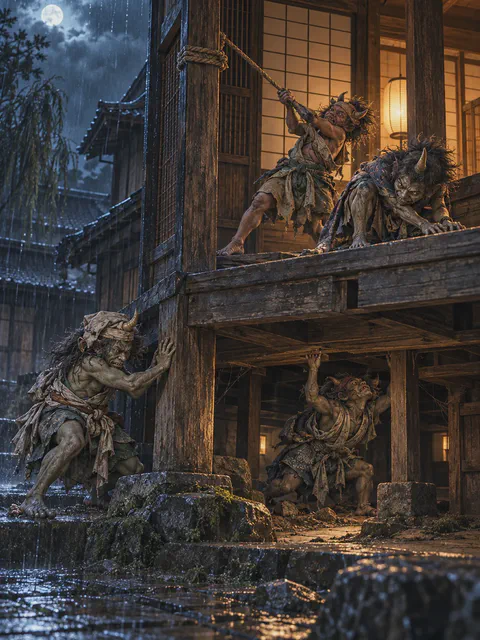
Sekien's 1776 plate shows a crew of small oni at the posts and under the veranda of a wooden house, pushing at the timbers. He named them for the sound a house makes at night and wrote nothing else.

Akaname
垢嘗(あかなめ)
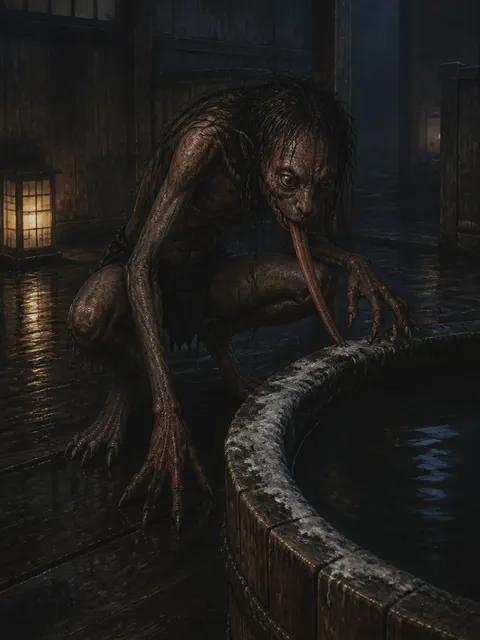
Sekien drew a crouching figure with a long tongue in a bathhouse in 1776 and called it the grime-licker. He wrote nothing else about it — and everything you have been told about dirty bathrooms was added afterwards.