
Otoroshi: The Picture That Came Before the Legend
おとろし Otoroshi ASCII: Otoroshi
Also known as: Odoroshi
Pronunciation: oh-TOH-roh-shee
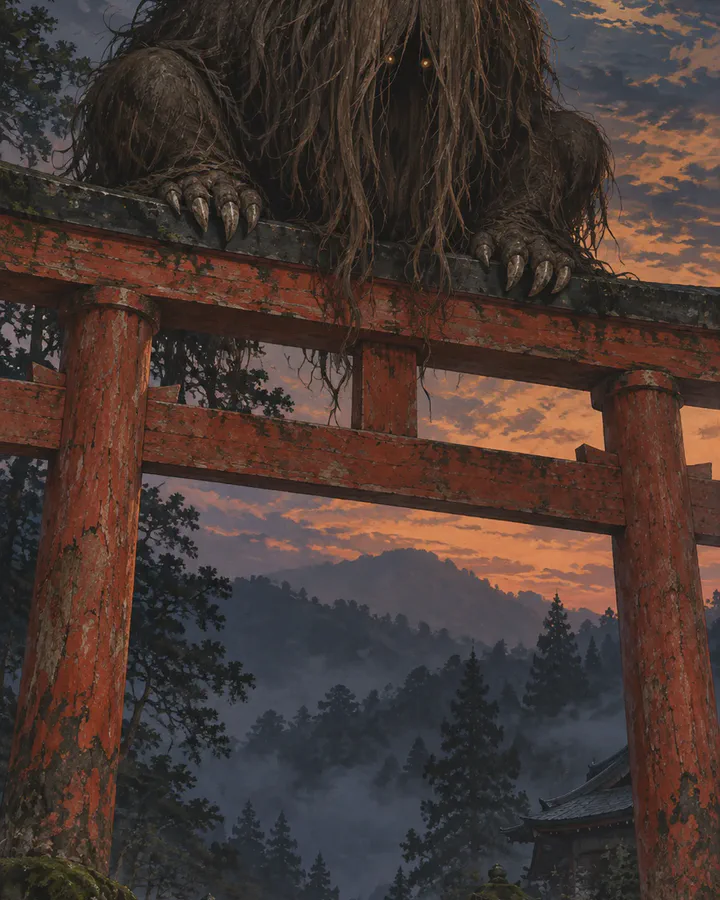
Otoroshi appears in a 1737 scroll and in Sekien's 1776 book as a hunched, hairy creature — on top of a torii in Sekien's version. Neither says what it does. The story about it dropping on the impious was read out of the picture later.
Quick Facts
- Habitat
- Temple shrine
- Region
- unspecified
- Recorded period
- Sawaki Sūshi's Hyakkai Zukan (1737), Toriyama Sekien's Gazu Hyakki Yagyō (1776)
- Nature
- Unknown
- Danger rating
The danger rating is an editorial summary made for readability. It is not an objective measure found in folklore sources.
Watch the Short
What is Otoroshi?
The name is usually connected with osoroshii, “frightening,” or odoroodoro, the tangled, overgrown look of wild hair. One scroll spells it odoroshi. Either way, the word describes an impression rather than an act.
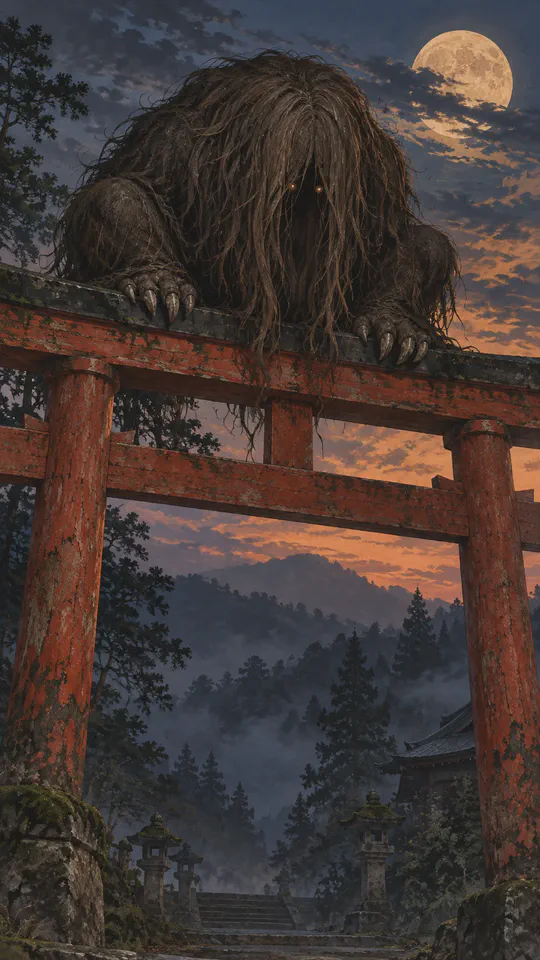
Otoroshi is a hunched creature buried under a mass of long, unkempt hair, with claws and a face peering out from the fringe. It is one of the oldest named yokai in the picture-scroll tradition — and one of the most thoroughly silent.
The scrolls
In 1737 the painter Sawaki Sūshi made the Hyakkai Zukan, “Illustrated Scroll of a Hundred Monsters,” now in the Fukuoka City Museum. Its colophon says it copies an original by the sixteenth-century master Kano Motonobu. It shows thirty yokai, each with its name written beside it, and nothing else. Otoroshi is one of them: a shaggy creature crouched on the ground.
Other scrolls of the same family repeat the figure. A twenty-three-figure Bakemono-zukushi Emaki in the International Research Center for Japanese Studies labels it odoroshi. None of them explains it.
Sekien’s torii
In 1776 Toriyama Sekien included Otoroshi in his first book, Gazu Hyakki Yagyō, and made one change that shaped everything afterwards. He put it on top of a torii, the gateway of a Shinto shrine.
He still wrote no explanation. The book, like most of its entries, gives a name and a picture. Why the creature is on a torii, what it is waiting for, and what happens to anyone passing underneath are all left to the viewer.
Appearance
A heavy, hunched body under long hair; claws; a face half hidden. In the scrolls it sits on the ground. In Sekien it sits on the crossbeam of a shrine gate.
Our illustration follows Sekien: the creature crouched on a red torii at dusk, looking down the path.
Behavior and abilities
The Edo-period sources record none. The scroll gives a name and a figure; Sekien adds a location. That is the full record.
Weaknesses and countermeasures
None are recorded, because no encounter is.
Pictures and later legend
Documented pictures. Sawaki Sūshi, Hyakkai Zukan, 1737: a named hairy creature among thirty, with no text. Related scrolls, including one at Nichibun spelling it odoroshi. Toriyama Sekien, Gazu Hyakki Yagyō, 1776: the same kind of creature placed on top of a torii, again without explanation.
Later legend. Modern books say that Otoroshi guards shrines, sitting on the torii and dropping onto people who pass through with disrespect or without faith, crushing or devouring them. That account is generally understood as having been worked out backwards from Sekien’s picture: a creature on a shrine gate must be guarding it, and a guardian must punish someone.
It is a reasonable story, and it explains why the creature is up there. But the old pictures came first, and for well over two centuries they said nothing. The legend is what people made of a picture that refused to explain itself.
Sources and further reading
- Museum Sawaki Sūshi, Hyakkai Zukan (百怪図巻), 1737 (external link) Fukuoka City Museum A 1737 scroll of thirty named yokai, each with only its name written in; the colophon says it copies an original by Kano Motonobu. Includes Otoroshi.
- Library Gazu Hyakki Yagyō (画図百鬼夜行) (external link) National Diet Library Search Bibliographic record for the historical picture book associated with Sekien's kodama image.
- Database Bakemono-zukushi Emaki (化物尽絵巻) (external link) International Research Center for Japanese Studies A twenty-three-figure scroll of monsters including "odoroshi."
- Library Toriyama Sekien's Illustrated Night Parade of the Demon Horde (external link) National Diet Library Image Bank Overview of Sekien's four illustrated collections, including the 1781 Konjaku Hyakki Shūi that carries the Shinkirō plate.
Related yokai
Keukegen
毛羽毛現(けうけげん)
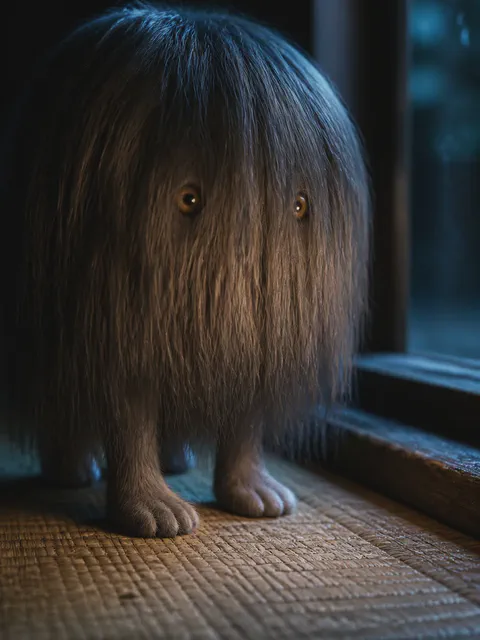
Sekien drew Keukegen in 1781 as a small creature covered in long hair, and spent his caption on its name — which, written another way, means rarely there and rarely seen. The damp houses and disease came later.
Akaname
垢嘗(あかなめ)
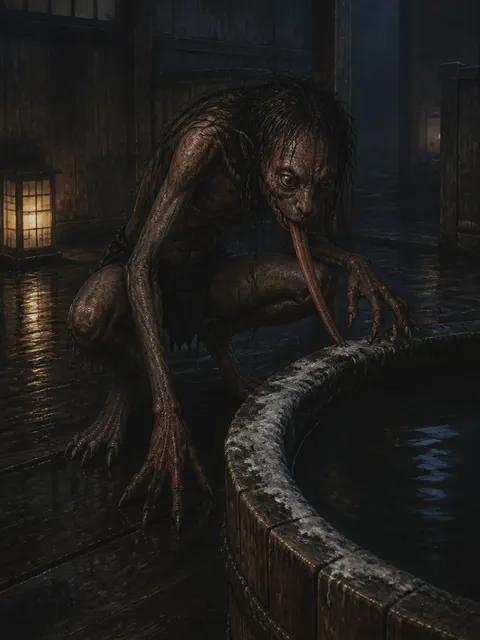
Sekien drew a crouching figure with a long tongue in a bathhouse in 1776 and called it the grime-licker. He wrote nothing else about it — and everything you have been told about dirty bathrooms was added afterwards.
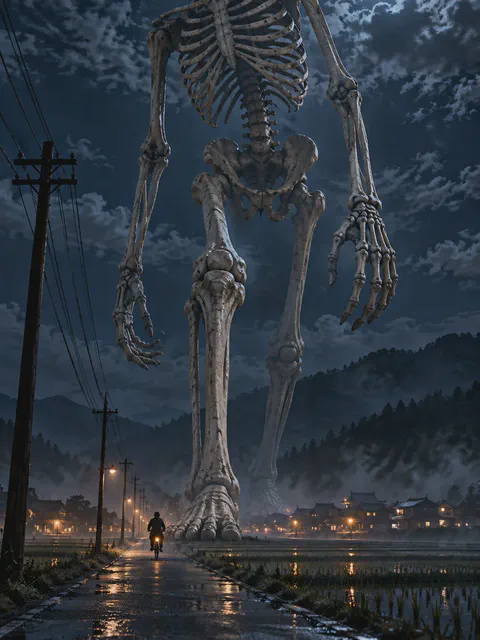
Gashadokuro
がしゃどくろ
Gashadokuro, the giant skeleton, looks ancient. It was created by the writer Saitō Morihiro in 1966, taken into Mizuki Shigeru's yokai collection in 1968, and later matched to a Kuniyoshi print from the 1840s that never used the name.