Oiwa (お岩): The Ghost Inside the Lantern
The wronged wife of Yotsuya Kaidan, Japan's most famous ghost story
お岩(おいわ) Oiwa ASCII: Oiwa
Also known as: Oiwa-san, Yotsuya Kaidan
Pronunciation: OH-ee-wah
Oiwa (お岩) is the ghost of Tōkaidō Yotsuya Kaidan, the kabuki play Tsuruya Nanboku IV first staged in Edo in 1825 — a wife sent poison under the name of medicine by the family that wanted her husband, disfigured by it, betrayed, and dead, who returns to pursue her husband Iemon through scene after scene until his crimes catch up with him. On stage she bursts out of a burning paper lantern. There was a real Oiwa of the Tamiya family in Yotsuya, and her shrine still stands; the play borrowed her name, not her life.
Quick Facts
- Habitat
- House
- Region
- Edo (Yotsuya)
- Recorded period
- Tōkaidō Yotsuya Kaidan (1825), Edo kabuki
- Nature
- Harmful
- Danger rating
The danger rating is an editorial summary made for readability. It is not an objective measure found in folklore sources.
Watch the Short
Who is Oiwa?
Oiwa is married to the masterless samurai Tamiya Iemon, and she does not know that he killed her father. She has just given birth and is weak, and Iemon has begun to see her as an obstacle: the wealthy Itō family next door wants him for their granddaughter. The Itō household sends Oiwa a medicine to help her recover. She takes it gratefully. It is poison, and it ruins her face. When she learns what has been done to her she sits down before the mirror to make herself ready to confront them, and combs her hair, and the hair comes away in her hand. She dies. And then she comes back.
That is the first half of Tōkaidō Yotsuya Kaidan, “The Ghost Story of Yotsuya on the Tōkaidō,” which Tsuruya Nanboku IV wrote for the Nakamura-za in Edo in the seventh month of 1825. It became one of the most performed plays in kabuki and the most famous ghost story in Japan. Oiwa is not a monster. She is a woman who was wronged.
What does Oiwa mean?
The name is written お岩: the honorific o- that was prefixed to women’s names, and iwa, a rock. Iwa was an ordinary name for a girl in Edo, and it is also the name of a real woman: an Oiwa of the Tamiya family, retainers of the shogunate who lived in Yotsuya, remembered locally as a devoted wife who restored her house’s fortunes. Her shrine, Oiwa Inari, still stands in Shinjuku. Nanboku borrowed the name and the neighbourhood for his play, and Shinjuku City is careful to keep the two women apart. It is pronounced OH-ee-wah.
The lantern
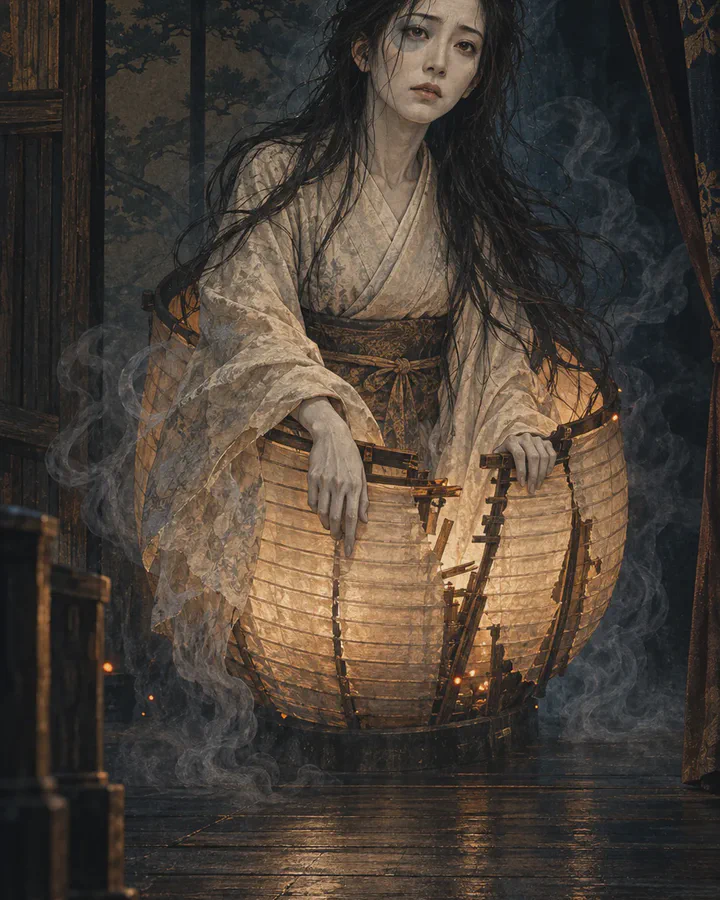
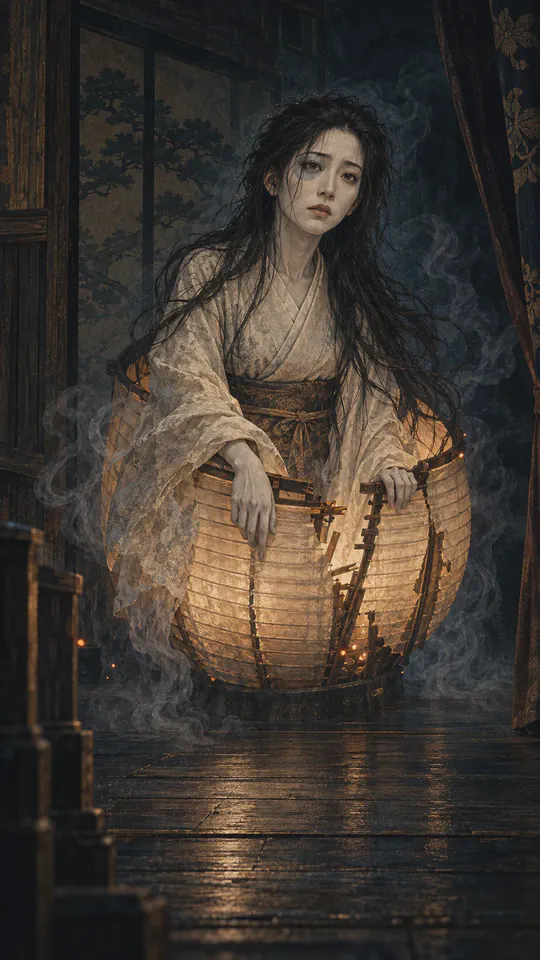
The play’s best-known effect is chōchin-nuke, “passing through the lantern.” A great paper lantern hanging at the back of the stage bursts into flame, and Oiwa’s ghost comes out of it. The Japan Arts Council describes the stage machinery behind the trick, and an 1861 print by Utagawa Yoshitsuya in the National Theatre collection is itself a trick picture of the scene. Exactly how it was done at the 1825 premiere is less certain.
Appearance
On stage, Oiwa after the poison is marked by a swollen, drooping eye and falling hair; as a ghost, by long loose hair and white robes. Our illustration shows the ghost rising from the lantern and does not dwell on the injury. The horror of the play is in what was done to her, not in her face.
Behavior and abilities
- She pursues one man. Her haunting is aimed at Iemon and those who wronged her, and at nobody else.
- She appears from ordinary things. A lantern, a mirror, a comb, a mosquito net.
Weaknesses and countermeasures
None in the play. Her pursuit ends only with Iemon. Later tradition holds that actors and film crews visit the Oiwa shrine before staging the story, and that productions that skipped the visit met with accidents; that is a custom of respect, not a remedy written into the drama.
Documented play and later imagery
Documented play. Tōkaidō Yotsuya Kaidan, Tsuruya Nanboku IV, first staged 1825: Oiwa is poisoned under the name of medicine, betrayed, and dies, and as a ghost pursues her husband Iemon; on stage she emerges from a burning lantern. Separately, the historical Oiwa of the Tamiya family and her shrine in Yotsuya.
Later imagery. Oiwa’s ruined face became shorthand for the Japanese female ghost — the long black hair, the white robe, the one drooping eye — and her story has been filmed dozens of times, often with the disfigurement as the point. The play is clearer about where the horror lies. It is not in her face. It is in what was done to her, and in the man who did it.
Sources and further reading
- Reliable secondary Kaidan and kabuki: Tōkaidō Yotsuya Kaidan (external link) Shochiku, Kabuki Bito First staged in the seventh month of 1825; Oiwa is given poison as medicine, learns of the betrayal, dies, and pursues Iemon as a ghost.
- Reliable secondary Tōkaidō Yotsuya Kaidan: points to watch (external link) Japan Arts Council, Cultural Digital Library Stage costume, props, and techniques including chōchin-nuke, the ghost emerging from a lantern.
- Museum Tōkaidō Yotsuya Kaidan nishiki-e, No. 10039 (1861) (external link) Japan Arts Council, National Theatre collection Utagawa Yoshitsuya's 1861 trick print of a burning lantern with the ghost emerging.
- Reliable secondary Legends of Shinjuku (external link) Shinjuku City Separates the local devotion around the Tamiya family's Oiwa from the wife of the play.
- Reliable secondary Kabuki A to Z: Tokaido Yotsuya Kaidan (external link) Japan Arts Council Author and 1825 Nakamura-za premiere.
Where it was recorded
- 1825
Yotsuya (Oiwa Inari), Tokyo
Legend or tale
Tōkaidō Yotsuya Kaidan; the Tamiya family's shrine
Places named in the records behind this article. Coordinates are approximate. View on the map
On the timeline
In the glossary
In manga
- Hozuki's Coolheadedness 鬼灯の冷徹 Uses the names, reinvents the rest
Where to see it
- Oiwa Inari: Tamiya Shrine and Yōunji 於岩稲荷田宮神社・陽運寺 Shrine or temple
Related yokai
Hone-onna
骨女(ほねおんな)
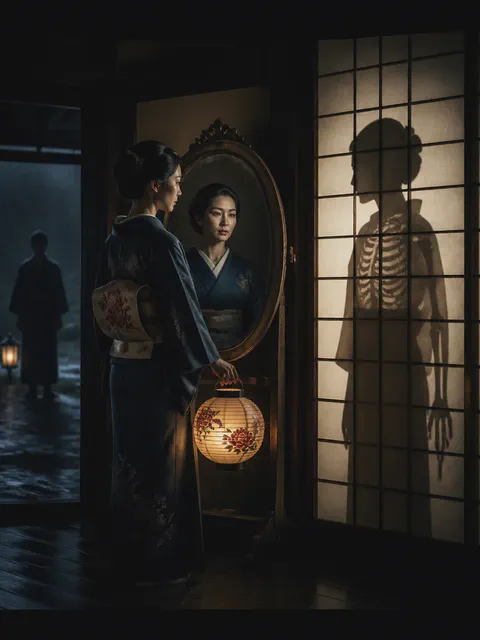
Sekien drew Hone-onna in 1779 as an old skeleton carrying a peony lantern, and his caption names the 1666 tale behind it: a widower's night visitor whom only an outsider saw for what she was.
Chōchin-obake
提灯お化け(ちょうちんおばけ)
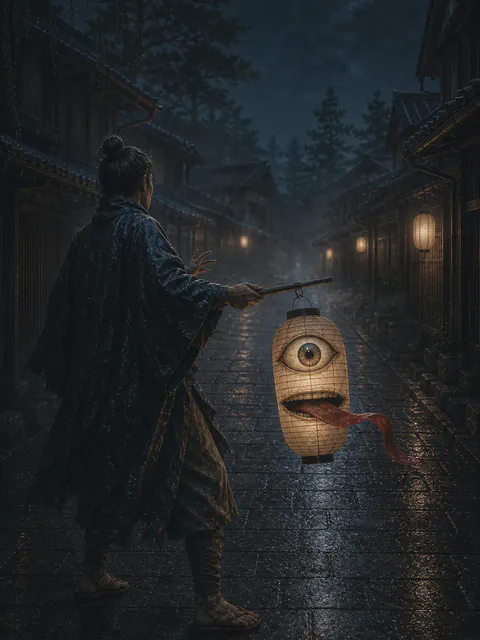
One of forty-eight monsters on Yoshimori's print Shinban Bakemono-zukushi is a paper lantern with an eye, a mouth, and something coming out of the mouth. That picture is the record — there is no story attached to it.
Kuchisake-onna
口裂け女(くちさけおんな)
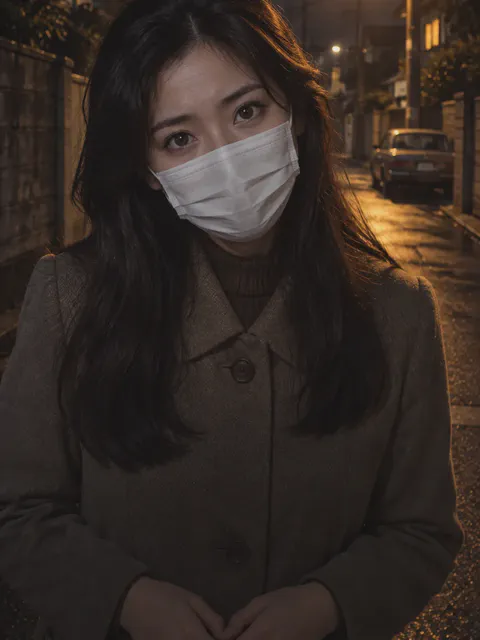
Kuchisake-onna is not an old yokai. She is a rumour that swept through Japanese schoolchildren in 1978–79: a masked woman asking 'Am I pretty?' Almost every other detail changed from school to school.