
The Moving Anatomy Model (動く人体模型): The School Ghost Story
The science-room model that walks at night, from a 1948 memory in Iwate to first-graders in Fukui in 2024
動く人体模型(うごくじんたいもけい) Ugoku Jintai Mokei ASCII: Moving Anatomy Model
Also known as: Jintai mokei, The anatomy model that walks at night
Pronunciation: oo-GOH-koo jin-tye moh-kay
The moving anatomy model (動く人体模型, ugoku jintai mokei) is the plastic torso in the school science room that gets down from its stand after everyone has gone home and walks the corridors, often with the skeleton beside it. It is one of the standard school ghost stories of Japan, collected from pupils since the 1980s and remembered from as early as the 1940s. In 2024 a school report from Fukui described first-graders turning their talk about the science-room skeleton and model into exactly this story, a few days after exploring the school for the first time.
Quick Facts
- Habitat
- Other
- Region
- Japan, Fukui, Tokyo, Kanagawa (Yokohama), Iwate (Kitakami)
- Recorded period
- school ghost stories since the 1980s, a 1948 memory, a 2024 school report
- Nature
- Unknown
- Danger rating
The danger rating is an editorial summary made for readability. It is not an objective measure found in folklore sources.
Watch the Short
What is the moving anatomy model?
In the spring of 2024 the first-graders of a school in Fukui spent their first weeks exploring the building. Back in the classroom they had a “talking time”, and what they talked about was the science room: the skeleton and the anatomy model they had found there. Within a few sentences the talk had become a ghost story. At night, the children said, the models move. Dark empty rooms became haunted houses, and a rule appeared: get through in ten seconds or the ghost comes out.
A teacher wrote this down that August in a report on how children learn, and it is the freshest record of one of the oldest school ghost stories in Japan. The report is about storytelling, not about a model that moved. What it shows is how fast the story is made: a strange object, a dark room, a group of children, and no adult to say otherwise.
What does the name mean?
人体模型, jintai mokei, is a human-body model: the torso on a stand, with removable organs in painted plastic and half the face cut away to show the muscles, that stands in the science room of nearly every Japanese school. Ugoku means “it moves”. Its companion in the stories is the 骨格標本, kokkaku hyōhon, the skeleton specimen. The two are the only human-shaped things in a school building after the people have left, which is the whole of their qualification.
The science room after dark
The science room was already the haunted room of the school when folklorists began collecting from pupils. In 1985 and 1986 a teacher in Tokyo wrote down what his junior-high pupils told him. In one story a girl had thrown herself from the fourth-floor music room of a private school, a quarter of her face had been preserved as a specimen in the science room, and ever since, the room that was locked at dusk was found open in the morning. In another, a skeleton appeared in the dormitory mirror at two in the morning. In Yokohama in 1990 a pupil reported that the painting of a waterfall in the science room flowed at night.
The model and the skeleton belong to the same room and the same hour. The standard form, as the school ghost story collections give it, is that at midnight the skeleton, the anatomy model and the stuffed animals get up and wander the building. A version from Hiroshima has the two of them dance in the science room, and anyone who watches is pulled into the model’s stomach. The oldest memory attached to the story goes back to about 1948, at an elementary school in Kurosawajiri in Iwate: when the piano in the music room played, the skeleton in the science room directly below it danced.
How the story spread
The school ghost story became a genre in 1990, when a folklorist who had taught in junior high published a children’s book of the tales he had collected. It ran to nineteen volumes over the next quarter century, and its stories were set in the rooms every reader knew: the science room, the art room, the gymnasium, the stairs, the toilets. A film followed in 1995. In it the model in the old school building’s science room turns its plastic organs into real ones and walks, and it was popular enough to return in the third film two years later.
The 2024 report from Fukui shows the other way the story travels, which needs no book: six-year-olds who had never read it arrived at it in an afternoon.
Appearance
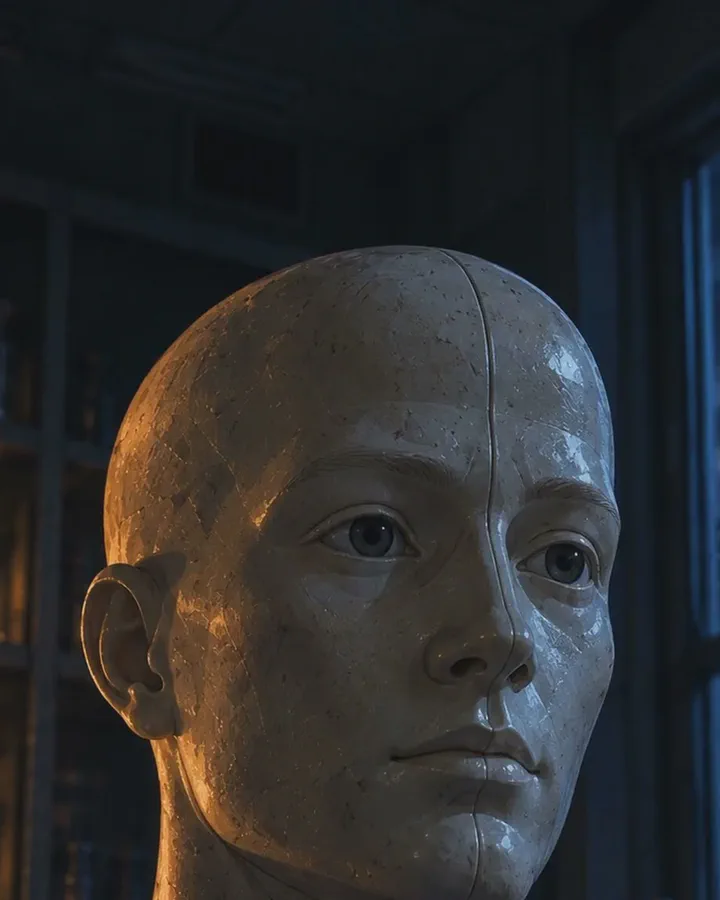
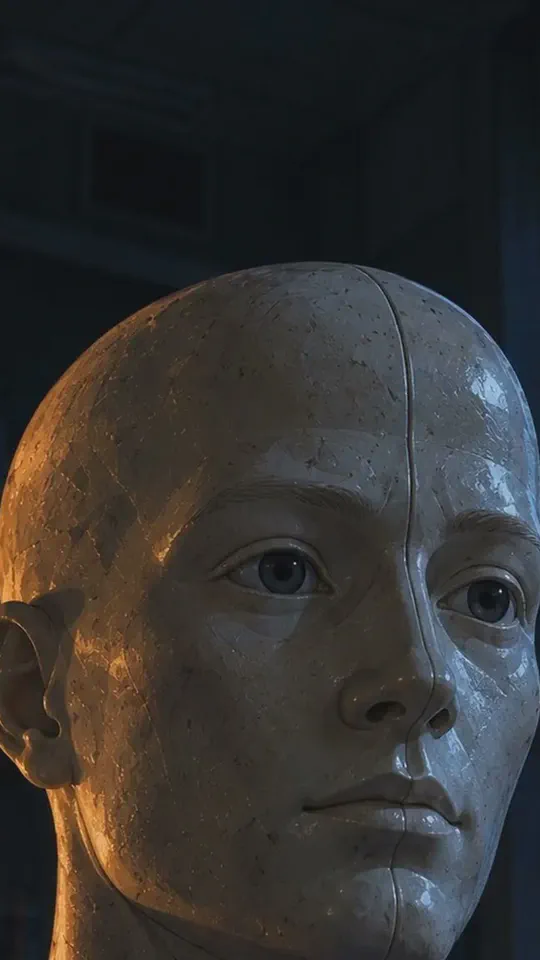
A life-sized torso on a stand, armless and legless, with the chest open and the organs showing in painted colour, and a face that is half skin and half muscle. In the stories it looks exactly as it does by day; the horror is that it is somewhere else. Our illustration keeps the model as a plain teaching object, pale plastic with a seam down the face, in a dark science room with the windows behind it.
Behavior and abilities
- It moves at night. It gets down from its stand once the school is empty.
- It walks the corridors. With the skeleton, and in some versions the stuffed animals too.
- It dances. When the music-room piano plays, in the Iwate memory; at midnight with the skeleton, in the Hiroshima version.
- It leaves traces. A locked science room found open in the morning.
Weaknesses and countermeasures
None are recorded, and the stories need none, because the model is never caught. Every version ends with morning and the torso back on its stand. The only countermeasure the children of Fukui came up with was speed: through the dark room in ten seconds, before the ghost comes out.
Documented rumour and later imagery
Documented rumour. Science-room ghost stories collected from Tokyo junior-high pupils in 1985 and 1986 and from a Yokohama pupil in 1990; the standard form of the skeleton, model and stuffed animals walking at midnight in the school ghost story collections from 1990; a memory from about 1948 in Kurosawajiri, Iwate, of the skeleton dancing under the music room; and a 2024 report from a school in Fukui of first-graders turning the science-room model into the story again.
Later imagery. The 1995 film gave the model real organs and a monster’s role, and the 2025 television series about a ghost-fighting teacher put the school’s midnight visitors into its third episode. On screen the model has to do something. In the stories children tell each other it does almost nothing: it is simply not where it was, and the room is open, and nobody saw.
Sources and further reading
- Reliable secondary Report on the three-school summer meeting on educational practice, 1 August 2024 (external link) Fukui University affiliated kindergarten Page 1 quotes a first-grade practice report: after exploring the school, talk of the science-room skeleton and anatomy model became a story of them moving at night, with dark rooms as haunted houses.
- Fieldwork collection The science-room specimen, record 2470046 (external link) International Research Center for Japanese Studies Mukashibanashi Densetsu Kenkyū 12 (1986), Tokyo junior-high pupils: a quarter of a dead girl's face kept as a specimen, and the locked science room found open every morning.
- Fieldwork collection The moving picture, record 2210094 (external link) International Research Center for Japanese Studies Minzoku 135 (1990), Yokohama: the waterfall painting in the science room flows at night.
- Academic book School ghost stories: the development and aspects of an oral literature (1993; new edition 2013) (external link) National Diet Library Search (Minerva Shobō) The folklorist's monograph on the school ghost story as a genre.
- Database Tsunemitsu Tōru (常光徹) (external link) Wikipedia (Japanese) The former junior-high teacher whose children's series of school ghost stories ran to nineteen volumes from 1990 and was the basis of the 1995 film.
- Database List of school ghost stories (学校の怪談一覧) (external link) Wikipedia (Japanese) The standard form of the science-room story, in which the skeleton, the anatomy model and the stuffed animals move and wander the school at night.
- Database School Ghost Stories (1995 film) (external link) Wikipedia (Japanese) Released 8 July 1995; the anatomy model of the old school building's science room turns its organs real and moves, and returns in the third film.
- Reliable secondary "The dancing skeleton model is a teaching aid of death" (web Mu, 15 August 2024) (external link) Gakken, web Mu Reports a memory from about 1948 at an elementary school in Kurosawajiri, Iwate, of the science-room skeleton dancing when the music-room piano played, and a Hiroshima version in which the skeleton and model dance at midnight.
- Reliable secondary Hell Teacher Nūbē (2025), Jump Festa event report (external link) Official site of the television series Published 26 December 2025; mentions the anatomy model of the third episode. Used for the later image only.
- Reliable secondary Hell Teacher Nūbē (2025), episode 3 (external link) Official site of the television series The night-in-the-school episode; consulted only to keep the series' own plot apart from the school ghost story.
Where it was recorded
- 2024
Fukui (a university-affiliated school), Fukui
Modern rumour
First-graders turned talk of the science-room skeleton and anatomy model into a story of models moving at night
- 1986
Tokyo (a private school), Tokyo
Modern rumour
A science room locked at dusk and found open in the morning, told by junior-high pupils
- 1990
Yokohama, Kanagawa
Modern rumour
The waterfall painting in the science room flows at night
- 1948
Kurosawajiri, Kitakami, Iwate
Modern rumour
When the music-room piano played, the skeleton in the science room below it danced
Places named in the records behind this article. Coordinates are approximate. View on the map
Related yokai
Teke Teke
テケテケ
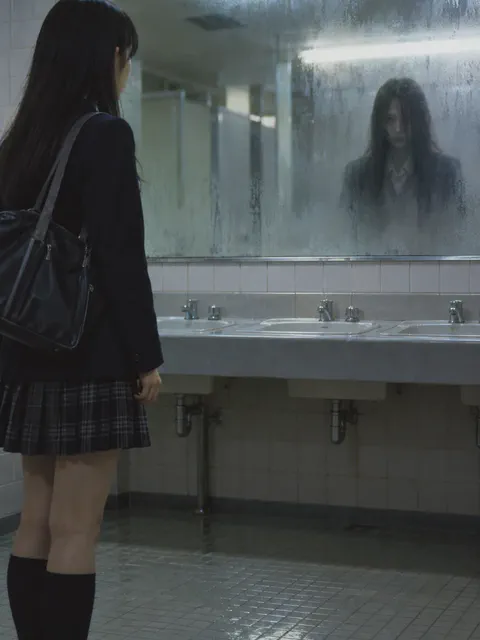
Teke Teke is a modern school ghost story, best known as the upper half of a woman who drags herself along on her elbows. Its origin cannot be traced, and one recorded version from a Kobe high school puts it in a mirror instead.
Kuchisake-onna
口裂け女(くちさけおんな)
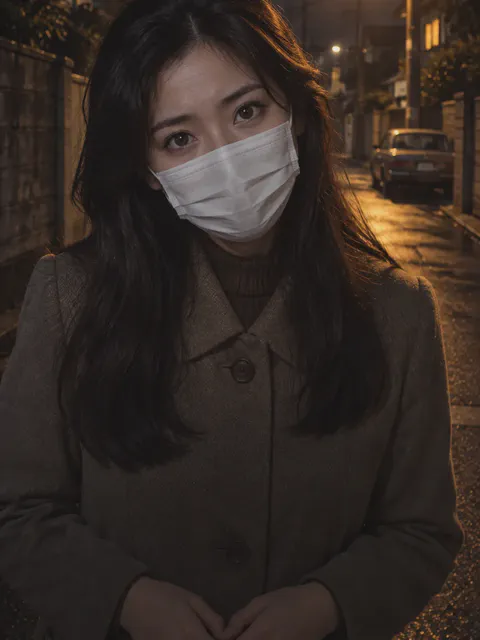
Kuchisake-onna is not an old yokai. She is a rumour that swept through Japanese schoolchildren in 1978–79: a masked woman asking 'Am I pretty?' Almost every other detail changed from school to school.
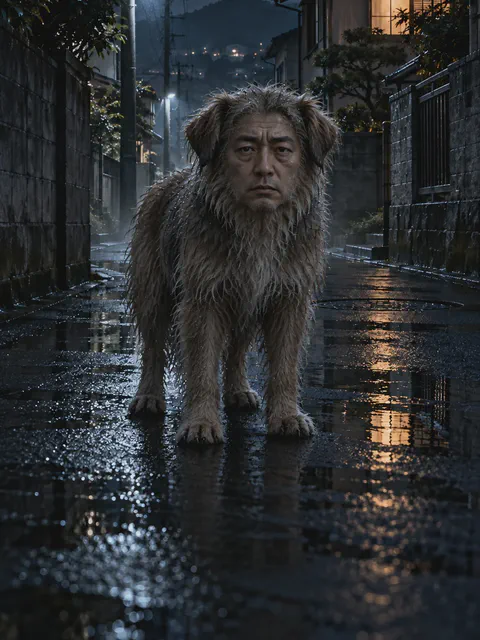
Jinmenken
人面犬(じんめんけん)
Jinmenken, the dog with a human face, swept through Japanese children's rumour around 1989–90. A first-grader in Yamagata had his own version: the dog had left Tokyo because people would not stop talking about it.