
Jinmensō (人面瘡): The Face That Grew on a Farmer's Leg
A sore with eyes and a mouth in a tale of 1666, its Tang-dynasty ancestor, and the one medicine it refused to swallow
人面瘡(じんめんそう) Jinmensō ASCII: Jinmenso
Also known as: Jinmenso, Human-face sore
Pronunciation: jin-men-soh
Jinmensō (人面瘡, “human-face sore”) is a swelling on the body that takes the shape of a face and eats. In a tale published in 1666, a farmer at Ogura in Yamashiro grows one on his left thigh: it has eyes and a mouth but no nose or ears, it swallows rice and rice cakes, and it hurts when it is not fed. The same story had been told in China eight centuries earlier, and in both versions the face is beaten by one medicine, the only thing it will not eat.
Quick Facts
- Habitat
- House, Other
- Region
- Japan, Yamashiro (Kyoto), China (origin)
- Recorded period
- Tang China (c. 860), Otogi Bōko (1666), Edo and Meiji accounts
- Nature
- Harmful
- Danger rating
The danger rating is an editorial summary made for readability. It is not an objective measure found in folklore sources.
Watch the Short
What is Jinmensō?
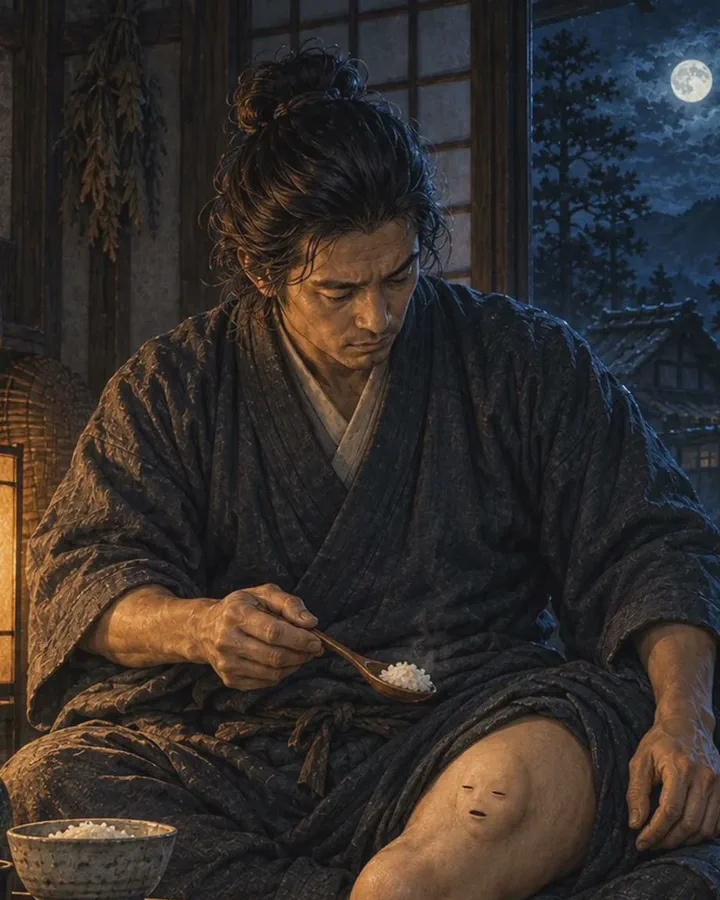
A farmer at Ogura, in the province of Yamashiro south of Kyoto, falls ill, and about half a year later a swelling rises on his left thigh. It takes the shape of a face. It has eyes and a mouth; it has no nose and no ears. It hurts. When the farmer pours sake over it, the face flushes red as if it had drunk. When he puts rice or rice cakes to its mouth, the mouth moves and swallows them, and the pain eases. When he stops feeding it, the pain becomes unbearable. He wastes away to skin and bone, and the physicians can do nothing.
That is the tale of the jinmensō in a collection of ghost stories printed in 1666, one of thirteen volumes that took Chinese tales of the strange and set them down again in Japanese towns and villages. The farmer is not named. The face on his leg is the whole story, and it eats.
What does jinmensō mean?
The name is written 人面瘡: jin, a person; men, a face; sō, a sore or ulcer. The human-face sore. It is pronounced jin-men-soh. The 2025 television series that used the story writes it 人面疽, with a final character meaning an abscess, and reads it the same way. Either spelling names the one thing every version has: not a creature that comes to you, but a face that opens in your own skin.
The cure
The 1666 tale ends with a travelling ascetic who promises a cure. The farmer sells his fields to pay for it. The ascetic buys up every medicine he can find and offers them to the face one after another, and the face swallows them all, until he comes to baimo, the dried bulb of a fritillary, which the face refuses. He grinds it to powder and forces it into the mouth, and in seventeen days the sore is healed.
The story is not a medical record. Its logic is the logic of the tale: a mouth that eats everything can be defeated only by the one thing it will not eat, and the cure costs the farmer all he owns.
Older than Japan
The face-shaped sore came to Japan from China, where it had been written down by around 860. In that version a merchant in the lower Yangzi country has a face on his left arm. It does not hurt. Wine makes it flush; it eats most foods; and when a physician suggests testing it with medicines, the only one that makes it frown and shut its mouth is the same fritillary bulb. The merchant forces the powder in through a reed tube, and in a few days the sore scabs over and heals. The Japanese tale follows it almost step for step, moving the face from arm to thigh and giving the merchant a farmer’s poverty.
A second Chinese story went another way. In it a monk of the ninth century, raised to the rank of national teacher, grows a face on his left knee after pride gets the better of him. Washed with spring water at a mountain temple, the face speaks: it is the ghost of a minister wrongfully executed a thousand years before by the man the monk had been in a former life, and it has waited ten lifetimes for a single lapse in his virtue. This is the origin legend of a Buddhist rite of repentance, and it reached Japan in the morality books that circulated in the Edo period. In this line of the story the face is a grudge wearing a man’s features, and no medicine touches it.
After 1666
The sore kept appearing in Japanese writing. An essayist of the Edo period described a swelling below a man’s knee that became like a face and hurt, and drew it. A diary of 1828 noted a case in Kazusa in which the sore went quiet when fed. A physician of Edo examined a merchant from Sendai who was said to have one and had an illustrated account printed. In 1882 a Kyoto newspaper reported a farmer in southern Mie whose sore, in the groin, had eaten about a shō of rice. A scholar of the same period explained the whole thing as a tumour that happened to look like a face. The explanations do not change the pattern: a face, a mouth, and food going into it.
Appearance
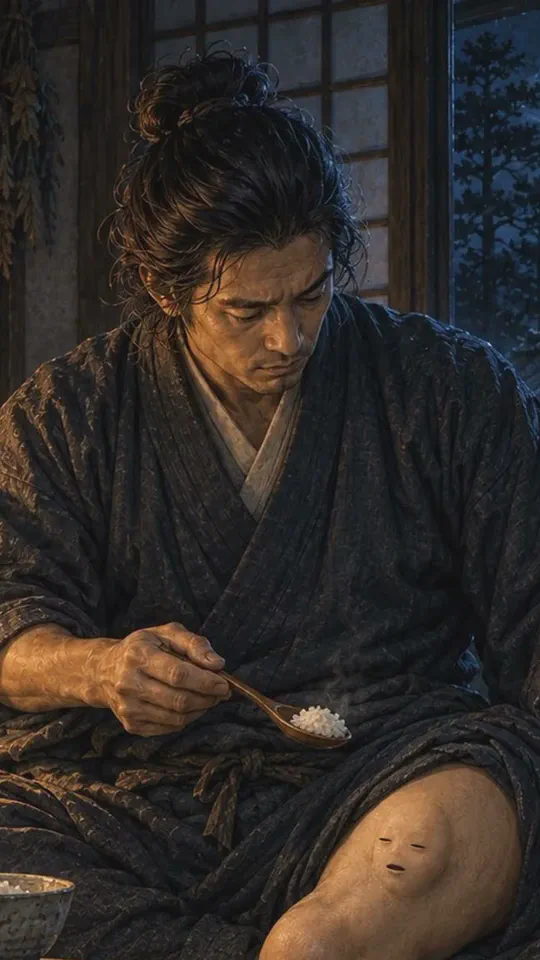
A swelling on the body with the features of a face. In 1666 the face has eyes and a mouth and nothing else; the Chinese merchant’s face on his arm flushes with wine like a drinker’s. Our illustration keeps the 1666 account: a small, smooth face on the outer side of a farmer’s left thigh, the same colour as the skin around it, with a lamp and a bowl of rice beside him.
Behavior and abilities
- It eats. Rice, rice cakes, and in the Chinese version most foods.
- It drinks. Sake or wine makes it flush red.
- It hurts when it is hungry. Feeding it eases the pain; withholding food makes the pain unbearable.
- It wears a man down. The farmer of 1666 is reduced to skin and bone.
- In one lineage, it speaks. The monk’s knee names the man it used to be.
Weaknesses and countermeasures
One, and the tale is built around it. The face will eat anything except the fritillary bulb called baimo; forced to take it, the sore dries and heals. In the Chinese version a reed tube does the forcing, in the Japanese one a travelling ascetic’s hands. The monk’s face has no such cure, since it is not a sore but a debt, and it leaves only when the debt is washed away.
Documented tradition and later imagery
Documented tradition. A Tang collection of around 860, in which a merchant’s left arm grows a face that eats and drinks and is cured with fritillary bulb; the Japanese retelling of 1666 at Ogura in Yamashiro, with the face on a farmer’s left thigh, eyes and mouth and no nose or ears, rice and rice cakes, a travelling ascetic and seventeen days; the Chinese monk’s knee that was a murdered minister’s grudge; and the Edo essays, diaries and Meiji newspapers that kept finding new cases.
Later imagery. In December 1974 a manga about an unlicensed surgeon ran a chapter called “The Face Sore”, and the face on the body has belonged to medical horror ever since: a second personality, a parasite, a thing that talks back. The 2025 television series about a ghost-fighting teacher made it the enemy that eats its way into the hero in its thirteenth episode. Those faces argue and scheme. The face of 1666 does none of that. It is hungry, and the man it grows on has to decide, every day, whether to feed it.
Sources and further reading
- Reliable secondary Japanese Literature Seminar I [11], 2022 syllabus (Ōki Kyōko) (external link) Aoyama Gakuin University Quotes the Otogi Bōko passage on the face-shaped sore: eyes and a mouth, no nose or ears, a mouth that moves and swallows.
- Academic paper "Early modern tales of the human-face sore: morality books and other sources" (2022) (external link) Waseda University, Bulletin of the Graduate School of Letters 67 Dates Otogi Bōko to 1666, names the Tang collection of around 860 as the earliest account, and traces the lineage through the monk's-knee legend and the morality books into Edo Japan.
- Reliable secondary Report on the 22nd Arts and Letters Research Meeting (2024) (external link) East Asian Academy for New Liberal Arts, University of Tokyo Research on the human-face sore at the meeting point of medicine, literature and Buddhism.
- Museum Illustration of the human-face sore from Otogi Bōko (File:Ryoi Jinmenso.jpg) (external link) Wikimedia Commons The woodblock illustration of the 1666 tale, consulted for research only.
- Database Jinmensō (人面瘡) (external link) Wikipedia (Japanese) Summary of the Otogi Bōko tale at Ogura (illness, the face, sake, rice and rice cakes, the travelling ascetic, fritillary bulb, seventeen days), the Tang original, and the Edo and Meiji accounts that followed.
- Library Youyang Zazu (酉陽雑俎), the merchant with a face on his arm (external link) National Diet Library Digital Collections The Tang collection of around 860: a face on a merchant's left arm that flushes with wine, eats, refuses only fritillary bulb, and heals when the powder is forced in through a reed tube.
- Database Zhixuan (知玄) (external link) Wikipedia (Chinese) The ninth-century monk whose knee grew a face that claimed to be a wrongfully executed minister, and the origin legend of the water repentance rite.
- Fieldwork collection Human-face sore, record 5870005 (Tanki Manroku) (external link) International Research Center for Japanese Studies An Edo essay's account of a swelling below the knee that became like a face and hurt, with a drawing.
- Reliable secondary Black Jack volume 3, contents (Tezuka Osamu Bunko Complete Works) (external link) Kodansha The chapter "The Face Sore" first appeared in the 9 December 1974 issue of Weekly Shōnen Champion.
- Reliable secondary Hell Teacher Nūbē (2025), episode 13 (external link) Official site of the television series The episode that uses the human-face sore, written 人面疽; consulted for the spelling and the later image only.
Where it was recorded
- 1666
Ogura, Uji (Yamashiro), Kyoto
Legend or tale
A farmer's left thigh grows a face with eyes and a mouth that eats rice and rice cakes
Places named in the records behind this article. Coordinates are approximate. View on the map
Related yokai
Futakuchi-onna
二口女(ふたくちおんな)
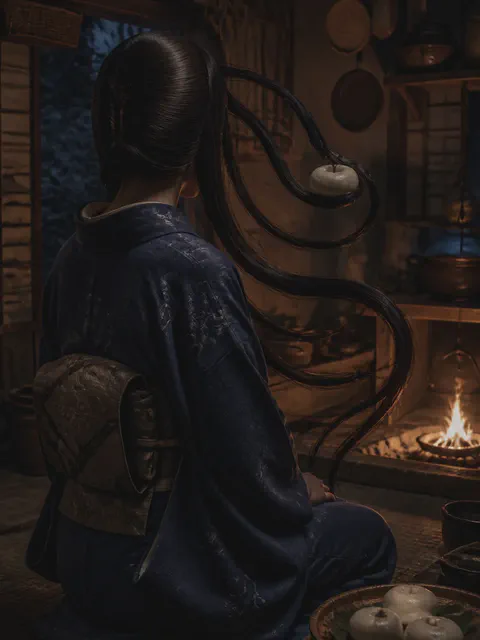
The 1841 Ehon Hyaku Monogatari made Futakuchi-onna a stepmother punished with a mouth at the back of her head. Folktales of the wife who eats nothing, recorded in the twentieth century, give the same hidden mouth to brides who turn out to be snakes, spiders, and oni.
Jinmenken
人面犬(じんめんけん)
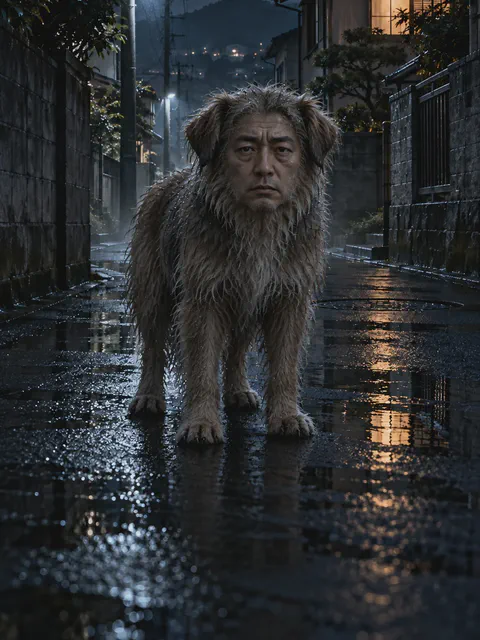
Jinmenken, the dog with a human face, swept through Japanese children's rumour around 1989–90. A first-grader in Yamagata had his own version: the dog had left Tokyo because people would not stop talking about it.

Ōkubi
大首(おおくび)
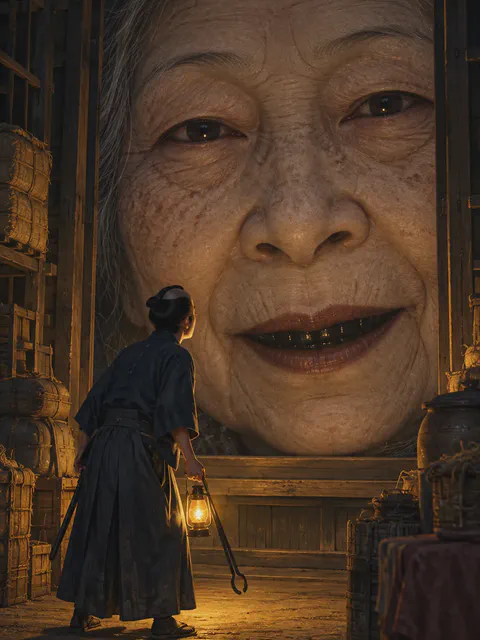
In the Inō Mononoke-roku, set in Miyoshi in 1749, sixteen-year-old Heitarō faces a month of nightly visitations. One night an old woman's face, teeth blackened, fills his doorway. He takes the fire tongs to it.