
Daidarabotchi (だいだらぼっち, Deirabotchi): The Giant Who Left a Pond Behind
Japan's mountain-carrying giant, in the Sagamihara legend
だいだらぼっち Daidarabotchi ASCII: Daidarabotchi
Also known as: Deirabotchi, Daidarabō
Pronunciation: DIE-dah-rah-BOH-chee
Daidarabotchi (だいだらぼっち; Deirabotchi in Sagamihara) is the giant of Japanese landform legends, big enough to carry mountains and to leave lakes where he stepped. In Sagamihara, in Kanagawa, he was carrying Mt. Fuji on his back and sat down to rest; while he rested the mountain put down roots and would not move again. He stamped in frustration, and the hollow his foot left became the pond in Kanuma Park — and the other marshes of the plateau are his footprints too.
Quick Facts
- Habitat
- Field, Mountain
- Region
- Sagamihara (Kanagawa)
- Recorded period
- local landform legend
- Nature
- Neutral
- Danger rating
The danger rating is an editorial summary made for readability. It is not an objective measure found in folklore sources.
Watch the Short
What is Daidarabotchi?
A giant was carrying Mt. Fuji on his back across the Kantō plain. Somewhere on the plateau where Sagamihara now stands he stopped to rest, and set the mountain down. While he sat, it put down roots. When he went to pick it up again it would not move, and never would again. He stamped his foot in frustration — and the hollow it left filled with water and became the pond that is now in Kanuma Park.
That is the Deirabotchi legend as Sagamihara City records it among its registered historic sites, and it is why Fuji is where it is and why the plateau is pocked with marshes. Shōbu-numa in Fuchinobe, Ōnuma and Konuma in Minami ward, and low ground in several other districts are told the same way: footprints.
What does daidarabotchi mean?
The name has dozens of local forms — daidarabotchi, deirabotchi, daidarabō, dairabō — and no settled kanji. Daidara is probably a swelling of dai, great, doubled for size; botchi or bō is the ending for a boy or a monk, as in bōzu. The great big fellow. The folklorist Yanagita Kunio collected the names and the footprint-ponds across Japan as early as 1927 and found them from Kantō to Kyushu. It is pronounced DIE-dah-rah-BOH-chee.
Appearance
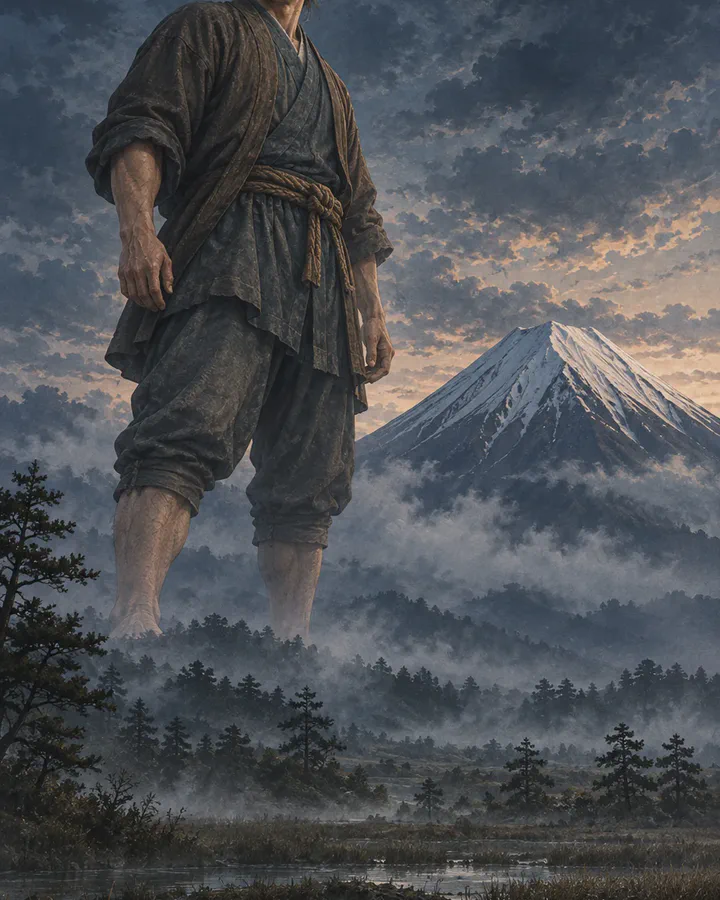
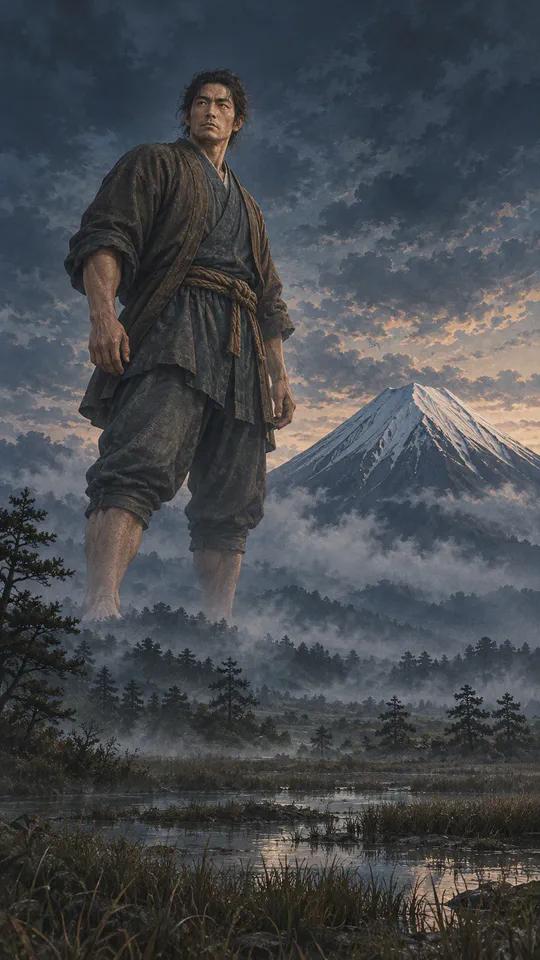
Enormous — big enough to carry Fuji. The legend gives no face, no clothes and no measurements. Our illustration shows him standing over the misty plain with Fuji behind him; the proportions are there to tell the story, not to record a height.
Behavior and abilities
- He carries mountains. The whole legend depends on it.
- He rests. And pays for it.
- He leaves footprints. Hollows and ponds across the plateau.
The pond today
Kanuma Park’s pond is a landscaped feature of a modern park. The marsh was filled and the park laid out, with a pond made at its centre, and the city’s 2025 plan for the area treats it as both a park pond and a legend site. The legend has been kept with the place. The pond is not an untouched footprint.
Weaknesses and countermeasures
None are recorded, and none are needed. Daidarabotchi harms no one in this story. He is defeated by the mountain itself, which simply refuses to be picked up again.
Documented legend and later imagery
Documented legend. Sagamihara’s Deirabotchi carried Mt. Fuji, rested, found it rooted, and stamped in frustration; the footprint became the pond of Kanuma Park, and other hollows in the city are told as his footprints too. Giant legends with different details are found across Japan, collected by Yanagita from 1927.
Later imagery. Modern versions make Daidarabotchi a threatening colossus, or a single giant who dug Lake Biwa and piled the earth up into Fuji in one story. Those belong to other regions and later retellings. The Sagamihara giant is more ordinary than that. He was tired, he sat down, and the mountain would not come with him. The pond is what his frustration looks like.
Sources and further reading
- Reliable secondary Deirabotchi legend site (external link) Sagamihara City The giant carried Mt. Fuji, rested, found it had taken root, and stamped in frustration; Kanuma Park's pond is said to be the footprint.
- Reliable secondary Fuchinobe station south area plan: Kanuma Park (2025) (external link) Sagamihara City Treats the swan pond as a landscaped park feature and a legend site.
- Museum Hyōgo legends: oni living in the mountains (external link) Hyōgo Prefectural Museum of History Comparative giant-footprint and landform legends.
Where it was recorded
- undated
Kanuma Park, Sagamihara, Kanagawa
Legend or tale
Giant who set down Mt. Fuji; his footprint became the pond
Places named in the records behind this article. Coordinates are approximate. View on the map
In manga
- GeGeGe no Kitarō ゲゲゲの鬼太郎 Keeps the traditional forms, invents the stories
Related yokai
Umi-bōzu
海坊主(うみぼうず)
One account describes a vast Buddha-like shape crossing ahead of a boat on a clear, windless day, then slowly thinning until it vanished.
Yamabiko
山彦(やまびこ)
The echo in a Japanese valley was heard as an answer before anyone drew the thing answering — and when painters finally gave it a body, they produced a small animal that is neither quite a dog nor quite a monkey.
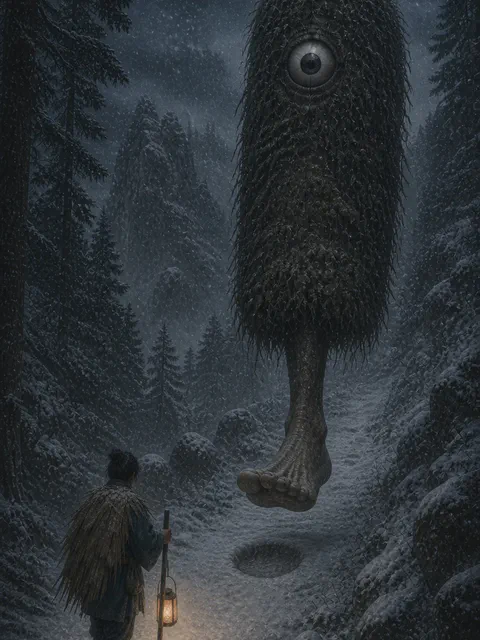
Ippon-datara
一本だたら(いっぽんだたら)
In the Kii mountains a one-legged thing leaves enormous single tracks in the snow — and Yanagita Kunio, reporting them, declined to conclude a one-legged creature from footprints alone.