
Amabie (アマビエ): The Sea Creature That Asked to Be Shared
An 1846 broadsheet from Higo, and the yokai that came back in 2020
アマビエ Amabie ASCII: Amabie
Also known as: Amabiye, Amabiko
Pronunciation: ah-MAH-bee-eh
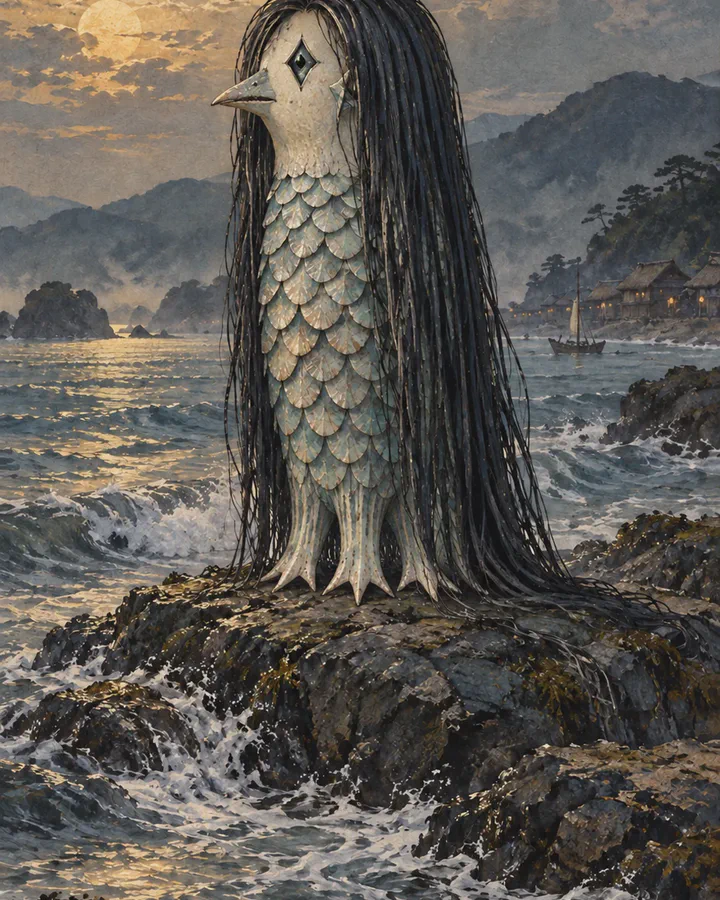
Amabie (アマビエ) is a sea creature known from a single printed sheet dated 1846: long hair, a beak, a scaled body and three leg-like limbs, rising nightly out of the sea off Higo in a glow of light. It told the official sent to investigate that there would be six years of good harvests and also an epidemic, and asked that its picture be copied and shown to people. In the spring of 2020, during the pandemic, Japan did exactly that.
Quick Facts
- Habitat
- Sea, Coast
- Region
- Higo (Kumamoto)
- Recorded period
- 1846 printed sheet, 2020 revival
- Nature
- Helpful
- Danger rating
The danger rating is an editorial summary made for readability. It is not an objective measure found in folklore sources.
Watch the Short
What is Amabie?
Every night, off the coast of Higo — now Kumamoto — something shone in the sea. An official went out to look, and a creature rose from the water. It had long hair falling over its body, a beak, scales, and three leg-like limbs below. It spoke. I live in the sea, and my name is Amabie. For six years from this year there will be good harvests in every province — but disease will spread as well. Copy my likeness quickly and show it to people. Then it went back under.
That is the whole text of a woodblock broadsheet dated the middle of the fourth month of Kōka 3, 1846, now in Kyoto University Library. It closes by saying it is a copy of the report the official sent to Edo. It is the only Edo-period record of the creature.
What does Amabie mean?
Nobody knows. The name is written in kana only, アマビエ, and the sheet offers no characters for it. The likeliest explanation is that it is a mis-copying of Amabiko, a similar prophesying creature of several other nineteenth-century broadsheets — a scribe’s slip that gave the beast a name of its own. That remains a proposal rather than a settled fact. It is pronounced ah-MAH-bee-eh.
What it does and does not promise
Amabie makes a prophecy and a request. The prophecy is mixed — plenty and sickness together. The request is to share its picture. The sheet never says what the picture will do. It does not promise that showing it will ward off the disease or cure anyone. It asks to be copied, and a printed broadsheet was exactly the kind of thing that could be.
Appearance
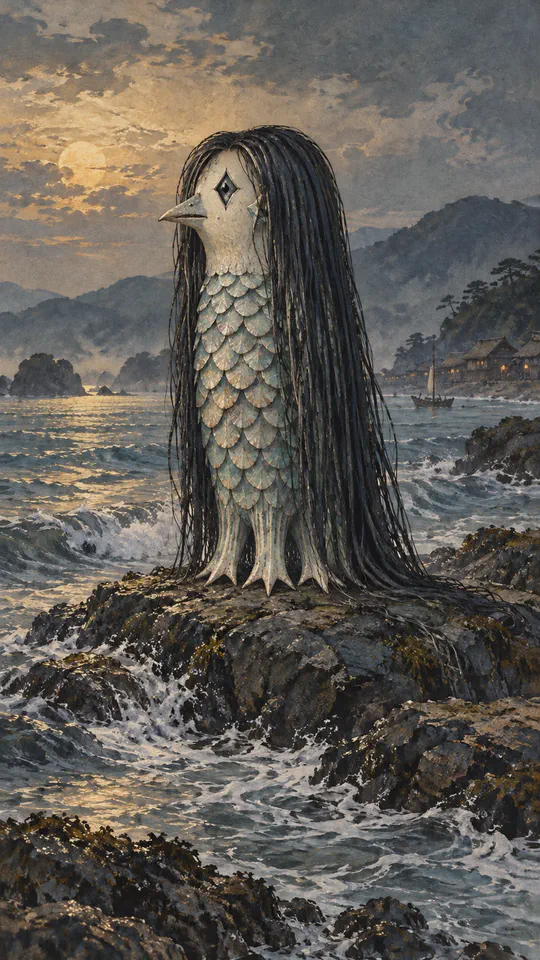
Long hair over the body, a beak-like mouth, a scaled body and three legs. Our illustration follows those features and adds colour and a shoreline; it is our own image, not a copy of the sheet.
Behavior and abilities
- It shines. It is first noticed as a light on the sea at night.
- It foretells. Six good harvests and an epidemic.
- It asks to be shown. That request is the whole of its instruction.
Weaknesses and countermeasures
None are recorded. Amabie is not a danger in the record. It is a messenger, and what it asks for is attention.
Documented sheet and the 2020 revival
Documented sheet. Higo no kuni kaichū no kai, Kyoto University Library, dated 1846: a long-haired, beaked, scaled sea creature appears to an official in Higo, foretells six years of good harvests and an epidemic, and asks that its likeness be copied and shown.
2020 revival. In the spring of 2020, during the COVID-19 pandemic, Amabie spread across Japanese social media as people drew and shared their own versions, and the Ministry of Health put it on its posters; a 2022 study in the Japanese Journal of Psychology examined the role it played. It became a symbol of hope and of staying home — a meaning the 1846 sheet never states, but one that grew directly out of its request. A creature that asked only to have its picture shared got its wish, a hundred and seventy-four years later.
Sources and further reading
- Library Higo-no-kuni kaichū no kai (Amabie) (external link) Kyoto University Rare Materials Digital Archive Printed sheet dated mid-fourth month of Kōka 3 (1846): six years of good harvests, then disease; copy my likeness and show it to people.
- Library What kind of yokai is Amabie? (external link) Osaka Municipal Central Library, Collaborative Reference Database Reference answer confirming the date, place, and appearance.
- Academic paper The social function of yokai seen in Amabie during the COVID-19 pandemic (external link) Takahashi Ayako and Fujii Shūhei; Shinrigaku Kenkyū 93/1 (2022) The 2020 revival of Amabie online and what it was used for.
Where it was recorded
- 1846
Higo coast (Kumamoto), Kumamoto
Print or picture
Broadsheet of a shining sea creature that foretold harvests and disease
Places named in the records behind this article. Coordinates are approximate. View on the map
On the timeline
In the glossary
Related yokai
Kudan
件(くだん)
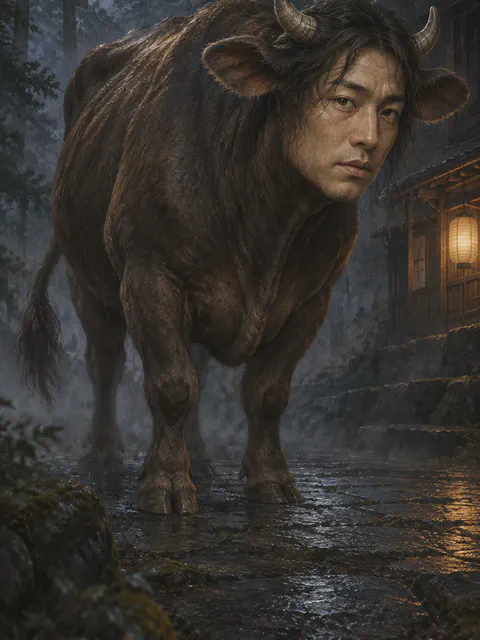
An 1836 broadsheet from Tango described a kudan — a cow's body with a human face — and promised that any house that put up its picture would prosper. Other kudan of the same century foretold disaster instead.
Ningyo
人魚(にんぎょ)
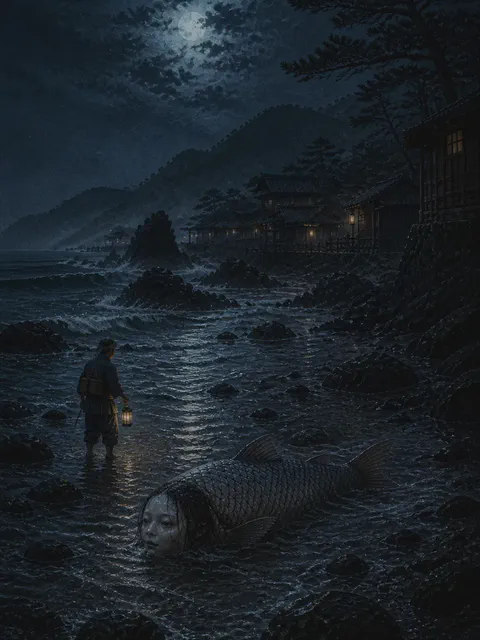
The Japanese ningyo of the old illustrated encyclopedias is not a mermaid — it is a fish body carrying a human face, with no arms and nothing to seduce anyone with. The famous story attached to it is not about romance either.
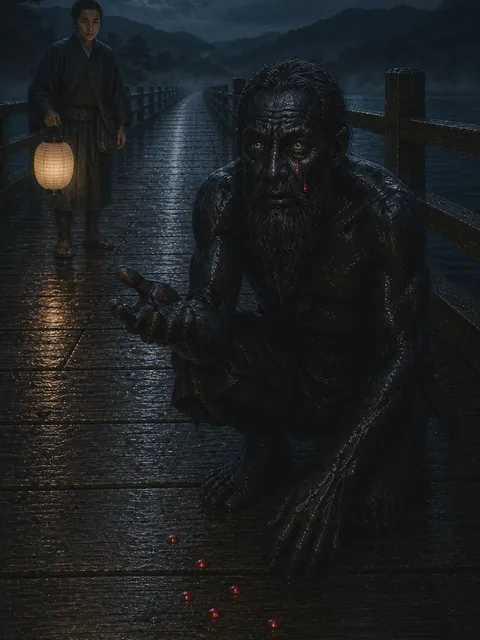
Samebito
鮫人(さめびと)
In a story Lafcadio Hearn published in English in 1900, a man on the Long Bridge of Seta shelters a creature banished from the Dragon Palace — and is repaid in tears that harden into jewels, which only come when the grief behind them is real.