Yokai
Spirits, monsters, and strange encounters from Japanese folklore. Every article lists its sources and separates documented tradition from later popular imagery.
Kappa
河童(かっぱ)
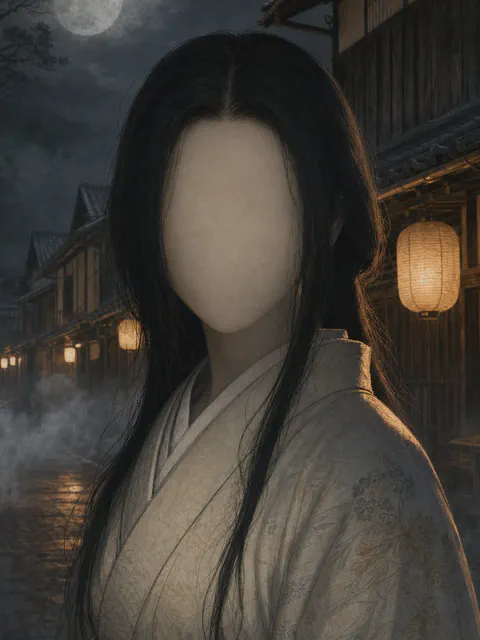
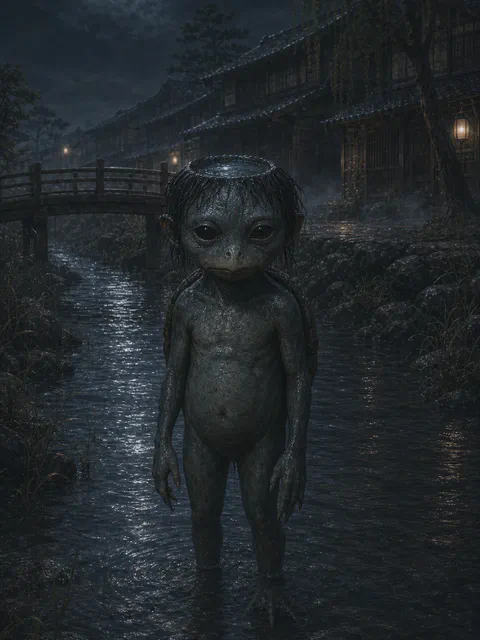
A child-sized water yokai whose strength lives in the water held by the dish on its head.
Tengu
天狗(てんぐ)
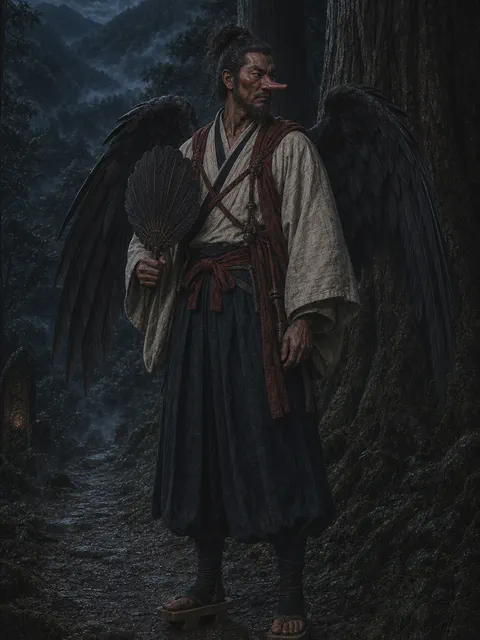
A mountain being associated with flight, impossible voices, disappearances, and more than one familiar face.
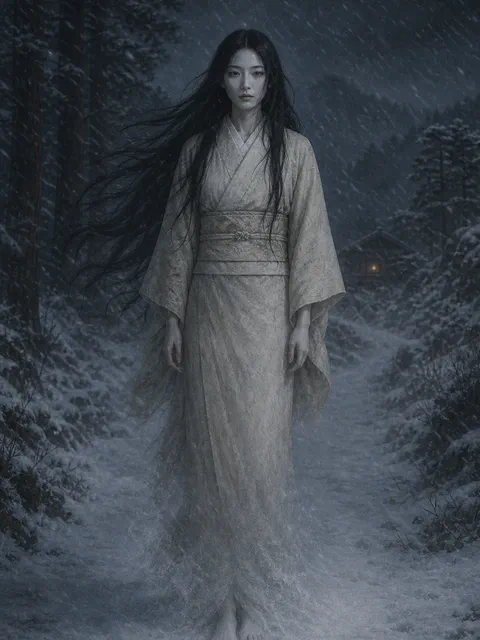
Yuki-onna
雪女(ゆきおんな)
A pale woman seen on winter roads, sometimes deadly, sometimes harmless, and never described the same way everywhere.
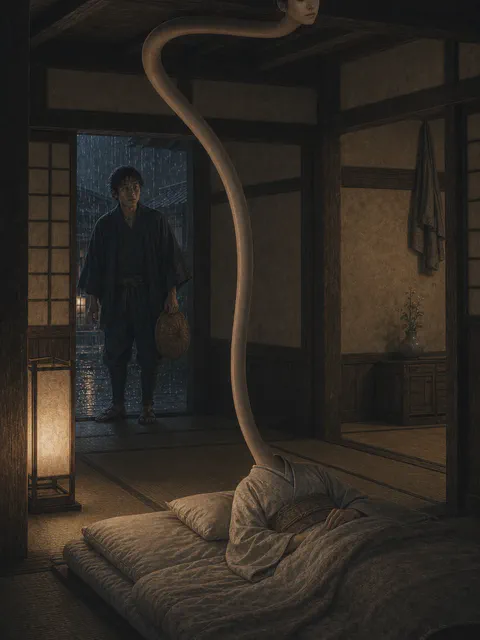
Rokurokubi
轆轤首(ろくろくび)
A seemingly human figure whose neck stretches at night—and one name that once covered more than one uncanny form.
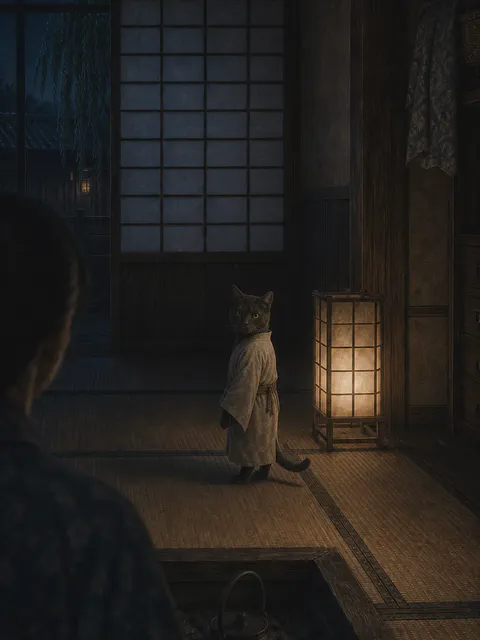
Bakeneko
化け猫(ばけねこ)
Stories of old cats that speak, perform, dress like people or take human form—and the separate cat yokai they keep getting confused with.
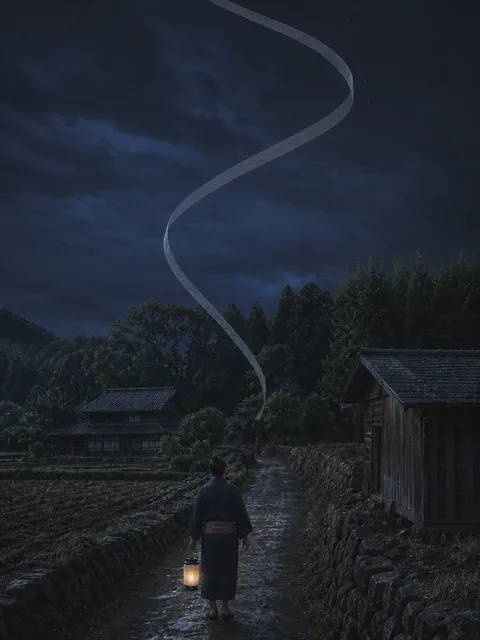
Ittan-momen
一反木綿(いったんもめん)
A white bolt of cloth that flutters across a rural night road, dazzles a traveler and attacks.
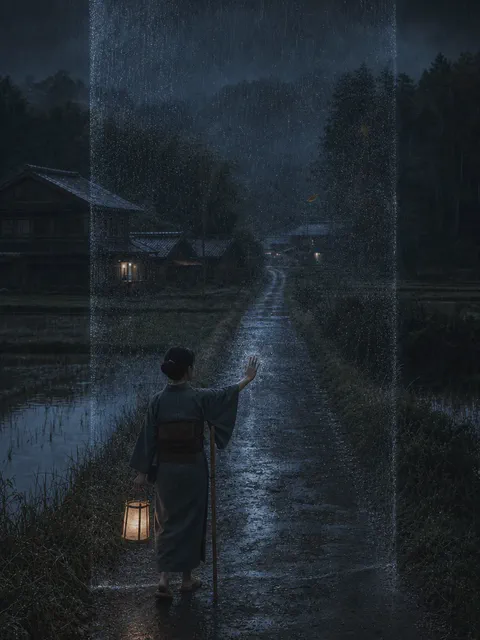
Nurikabe
塗り壁(ぬりかべ)
A night-road obstruction that stops travelers like a wall, though the early record does not describe a visible body.
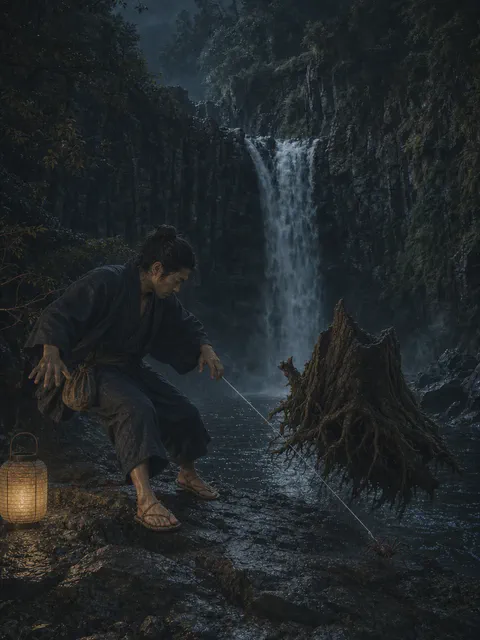
Jorōgumo
絡新婦(じょろうぐも)
At a waterfall in Shizuoka, a spider winds one fine thread around a man's foot—and reveals enough strength to tear a mulberry stump from the earth.
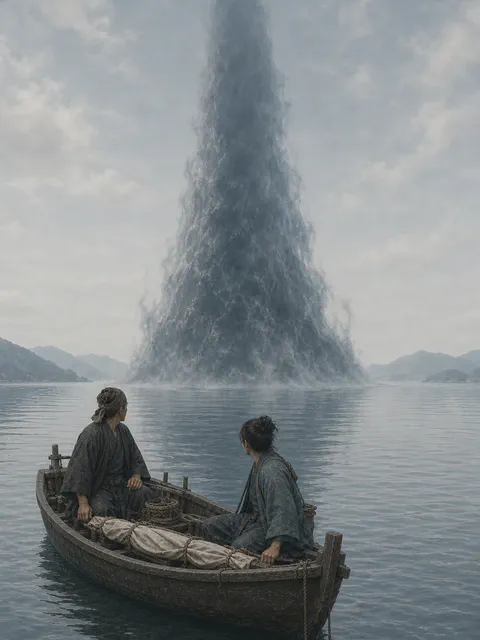
Umi-bōzu
海坊主(うみぼうず)
One account describes a vast Buddha-like shape crossing ahead of a boat on a clear, windless day, then slowly thinning until it vanished.
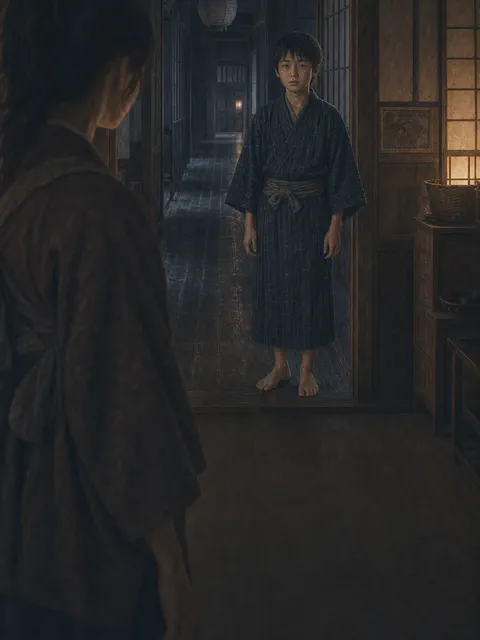
Zashiki-warashi
座敷童子(ざしきわらし)
In Tōno Monogatari, an unfamiliar child crosses the corridor of an old house — and the family that shelters the spirit is said to prosper.
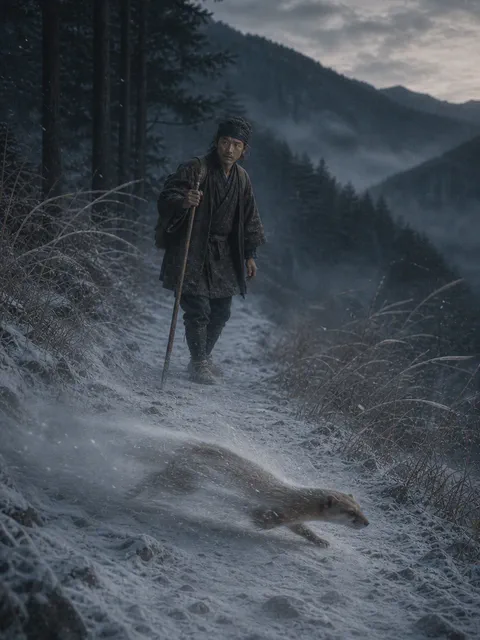
Kamaitachi
鎌鼬(かまいたち)
A 1955 Nagano record describes a weasel-like being so fast no one has seen it — known only by the clean cut it leaves on a stumbling traveler's shin.
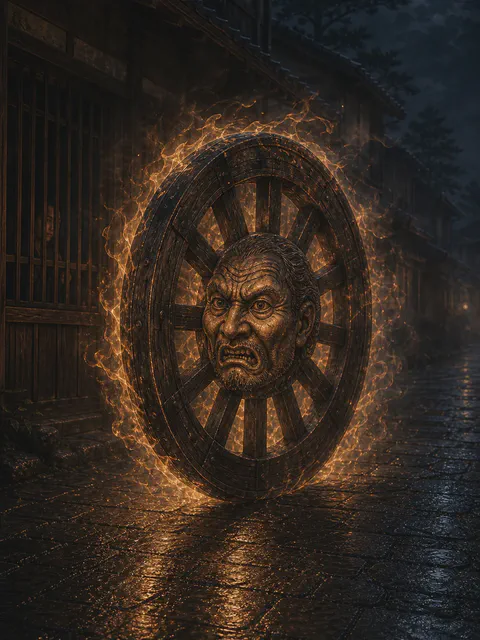
Wanyūdō
輪入道(わにゅうどう)
In Toriyama Sekien's 1779 picture book, a single ox-cart wheel rolls through the night by itself — and anyone who sees it is said to lose their soul.
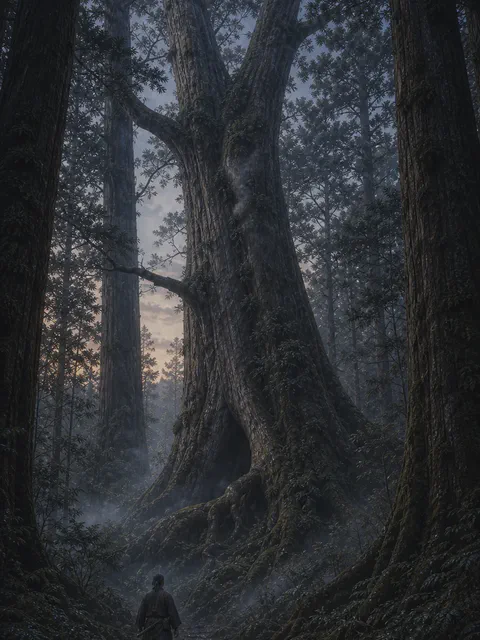
Kodama
木霊(こだま)
Kodama can mean both a presence within an old tree and the echo that returns from a mountain — but Japanese tradition gives it no single fixed body.
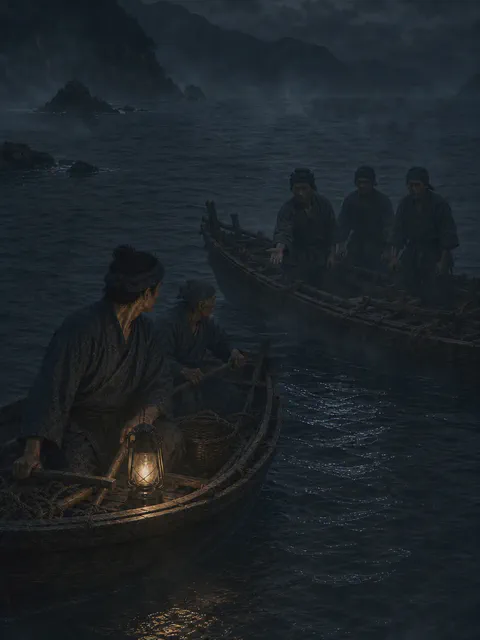
Funayūrei
船幽霊(ふなゆうれい)
A ruined boat draws alongside at night and its crew asks for a scoop. Give them an ordinary one, and they may use it to fill your boat with seawater.
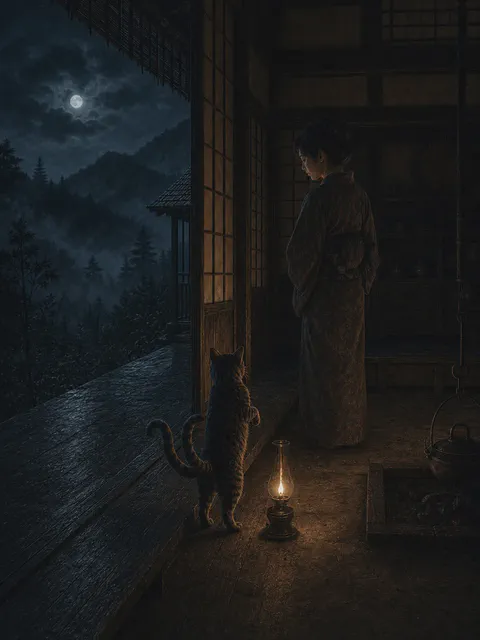
Nekomata
猫又(ねこまた)
A 1931 Kagawa record describes an aging cat whose tail divides in two and that rises to dance on its hind legs.
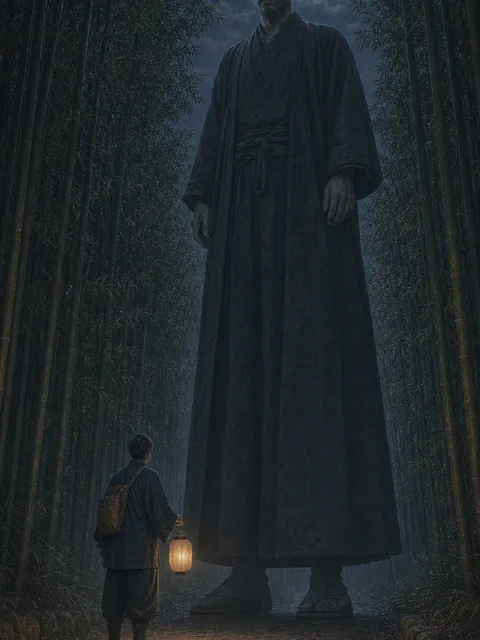
Mikoshi-nyūdō
見越入道(みこしにゅうどう)
A 1938 Nagasaki record warns of bamboo rustling over a night road and a looming figure that must be recognized aloud.
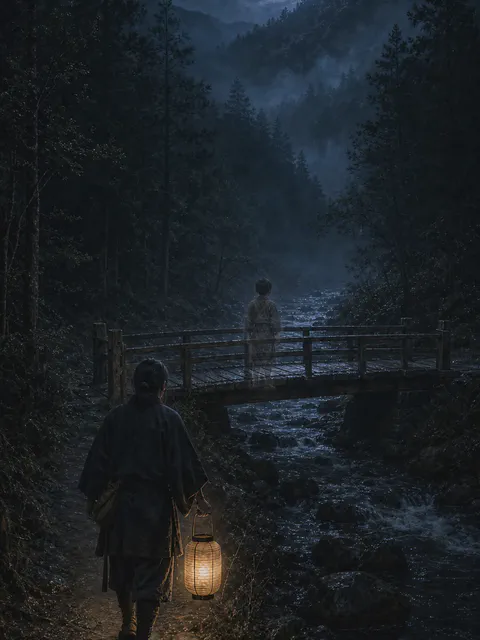
Azuki-arai
小豆洗い(あずきあらい)
A bean-washing sound repeats beside a dark stream, but the person making it cannot be found.
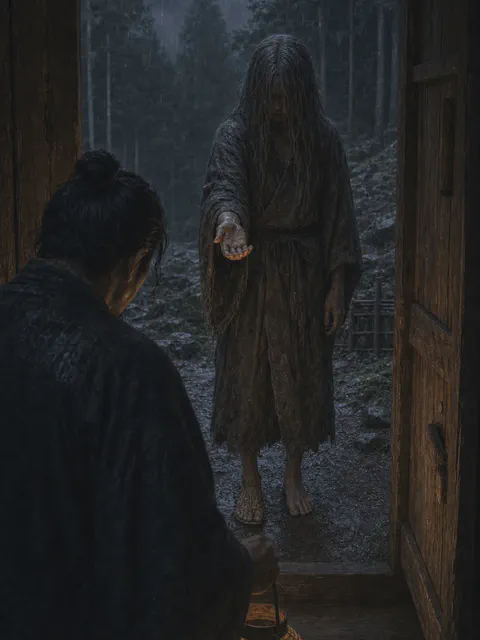
Yamauba
山姥(やまうば)
A man carries a woven object home from the hills, and that night a woman's voice demands the return of her ashinaka.
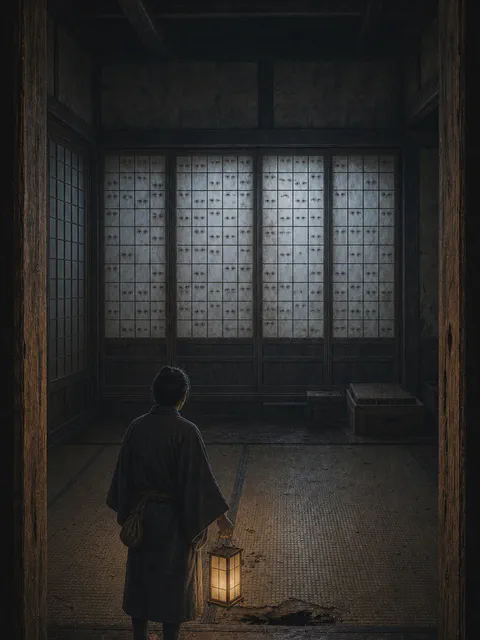
Mokumokuren
目目連(もくもくれん)
Rows of human eyes appear across old shoji in Toriyama Sekien's 1781 picture-book image.
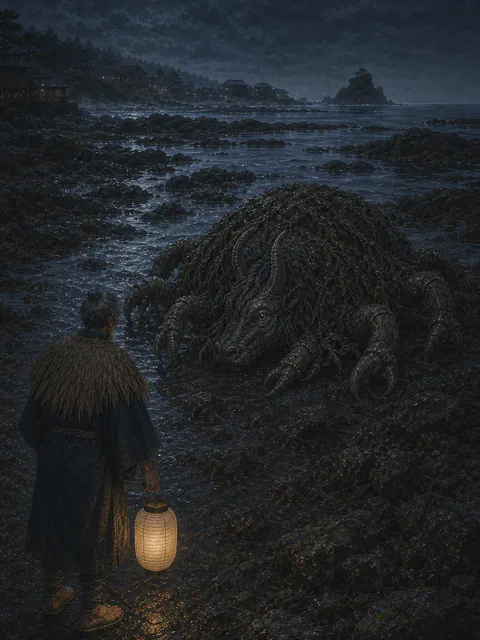
Ushi-oni
牛鬼(うしおに)
Toriyama Sekien's 1776 print shows a bull-like head on a squat clawed body at the water's edge — and tells us nothing else about it.
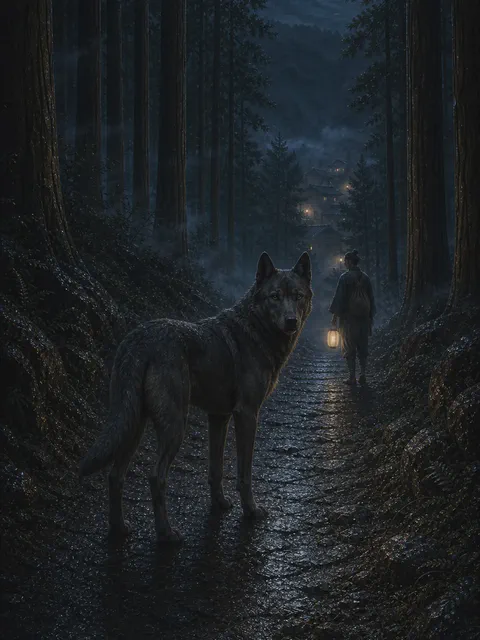
Okuri-inu
送り犬(おくりいぬ)
A 1936 Gifu account describes a mountain dog that follows a traveler all the way to his door — and leaves only after salt and a word of thanks.
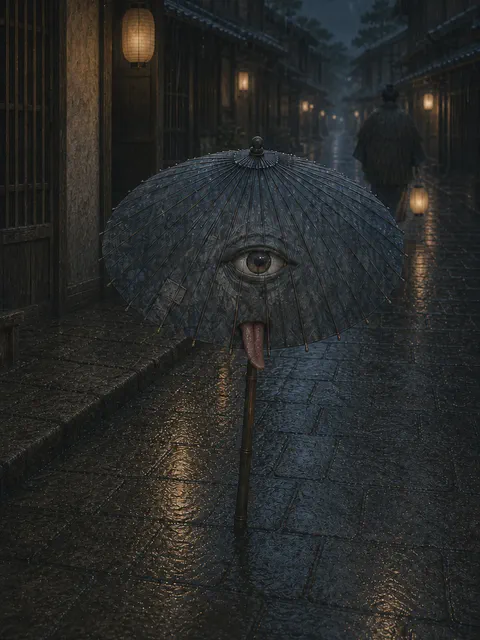
Karakasa-kozō
唐傘小僧(からかさこぞう)
An 1857 Osaka print shows a kabuki actor playing a one-legged umbrella monster — the clearest history of a yokai known through pictures rather than encounters.
Nue
鵺(ぬえ)
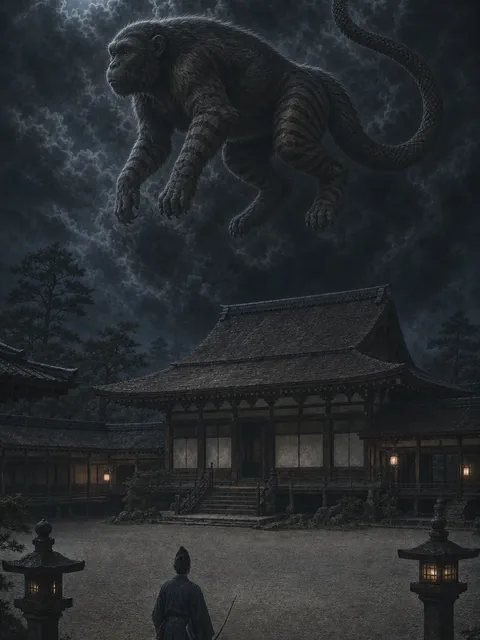
In The Tale of the Heike, a black cloud and a bird's cry sicken the emperor until an archer shoots the creature down — and the versions disagree on what fell.
Kitsune
狐(きつね)
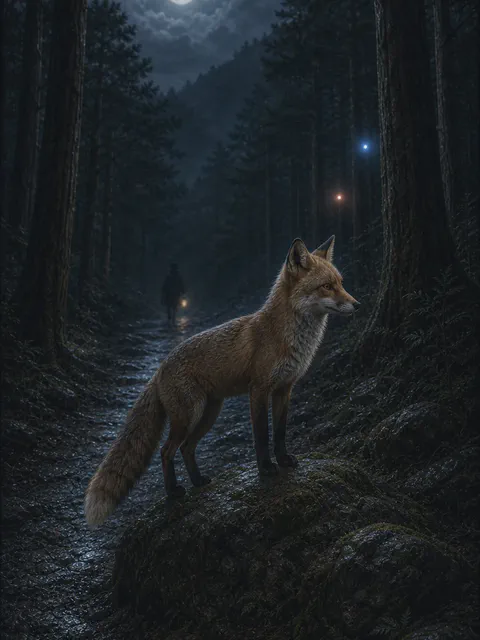
A 1930 account from Toyooka describes blurred blue or red foxfire moving restlessly from beyond the mountain to somewhere close by.
Bake-danuki
化け狸(ばけだぬき)
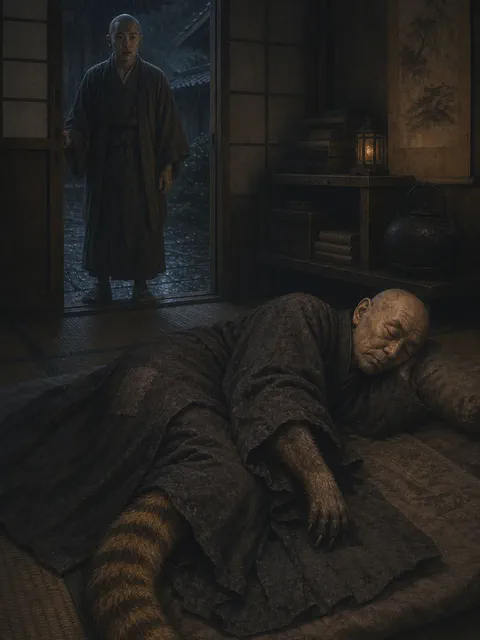
Morinji tradition tells of the monk Shukaku, an inexhaustible iron kettle, and the mujina or tanuki form revealed while he slept.
Inugami
犬神(いぬがみ)
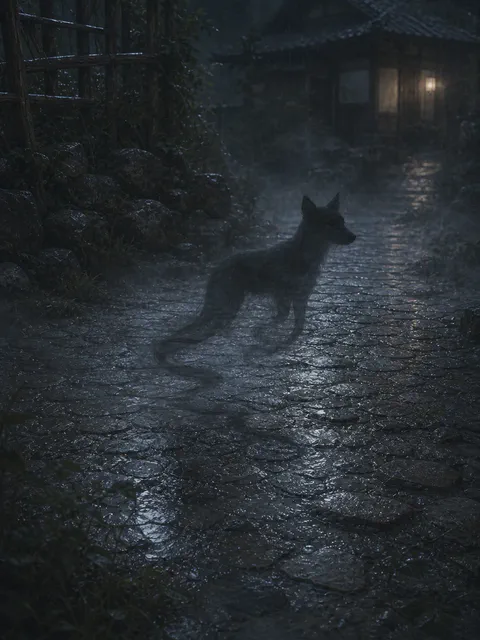
A possessing spirit of western Japan with no agreed-upon body — and a label that excluded entire households from marriage and community life.
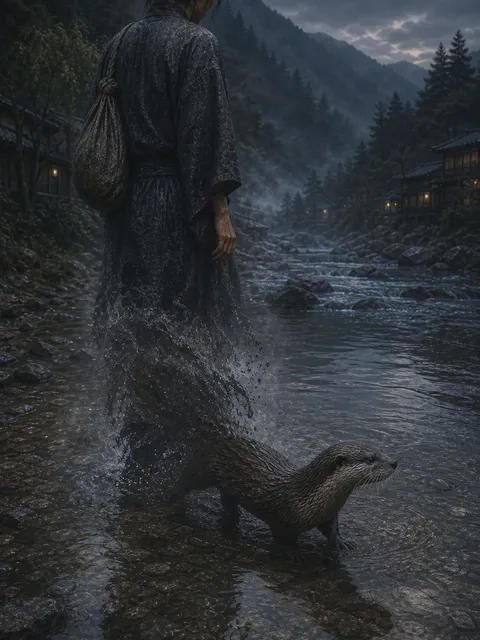
Kawauso
川獺(かわうそ)
A 1956 Gunma record describes a figure on a riverside road at dusk who glances back and beckons — and is not a traveler, but an otter in human form.
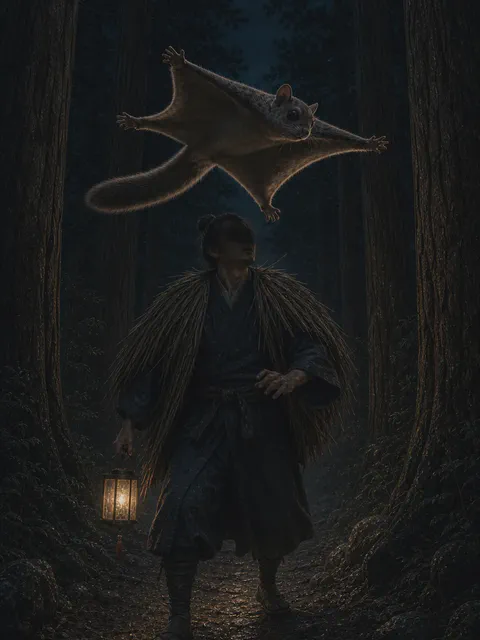
Nobusuma
野衾(のぶすま)
A 1938 Tokyo record describes something like a flying squirrel that drifts down onto a traveler and covers the eyes and mouth — and stops there.
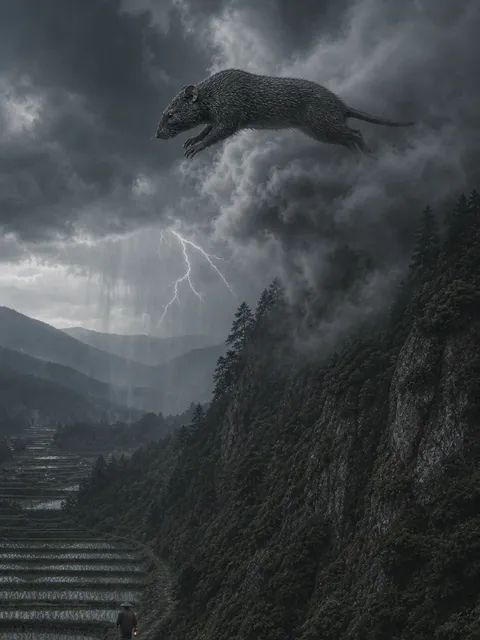
Raijū
雷獣(らいじゅう)
An Edo-period account from Shimotsuke describes a mouse-like animal that waited in a mountain hole each summer until its own thundercloud came to collect it.
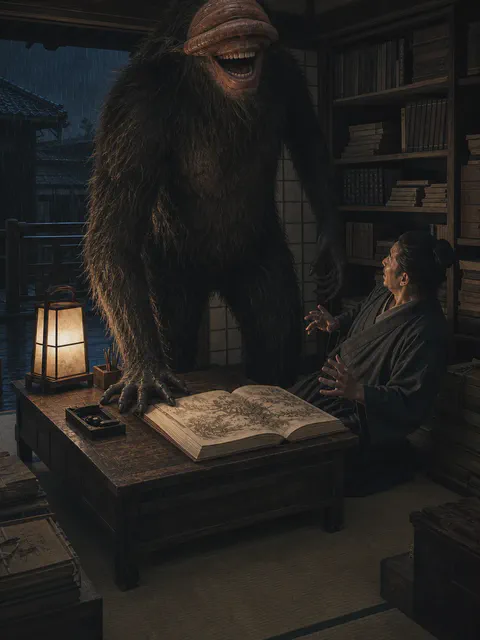
Hihi
狒々(ひひ)
A 1712 Japanese encyclopedia compiled older Chinese descriptions of a black-haired, long-lipped creature that laughs when it sees a person — and whose upper lip then rolls up over its own eyes.
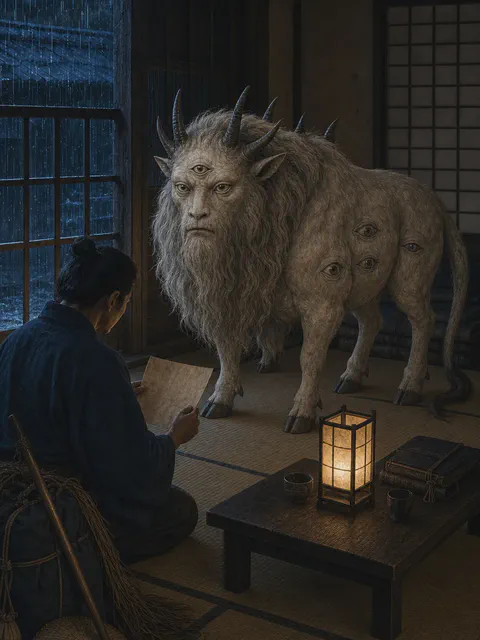
Hakutaku
白澤(はくたく)
A beast from Chinese legend that named every harmful thing in the world for the Yellow Emperor, and whose image — nine eyes, six horns, a human face — was carried by Edo travelers and set beside pillows during the cholera epidemic of 1858.
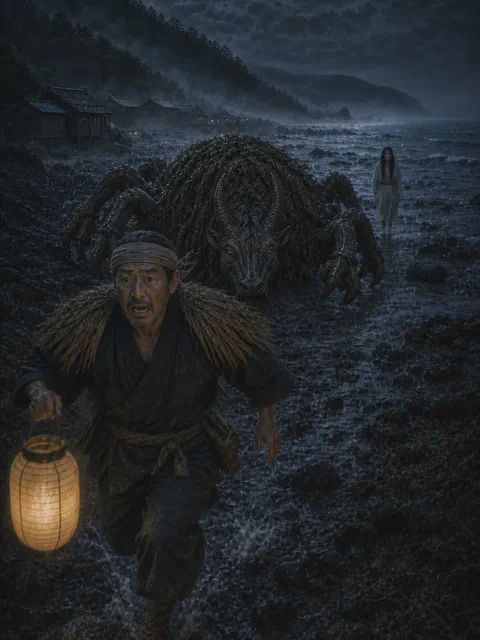
Nure-onna
濡女(ぬれおんな)
In a 1933 record from Iwami in Shimane, a fisherman walking home at night is given an infant by a wet-haired woman — and when he throws the bundle down and runs, something else comes out of the dark after him.
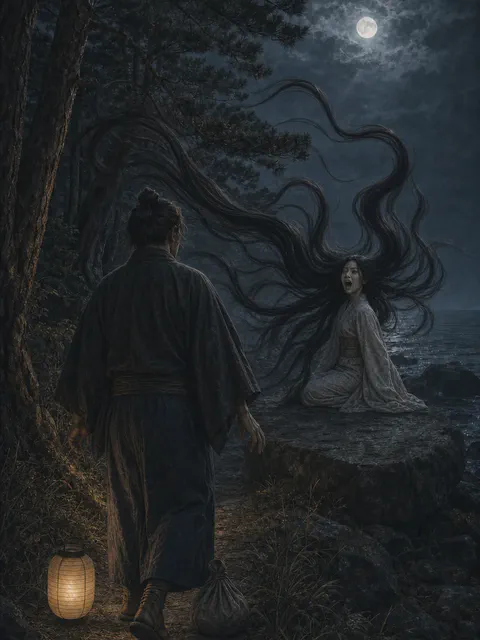
Iso-onna
磯女(いそおんな)
A 1929 record from Mizuho in Nagasaki describes a wrestler who tried to speak to a black-haired woman sitting on a shore stone at night — and other accounts from the same coastline describe something else entirely under the same name.
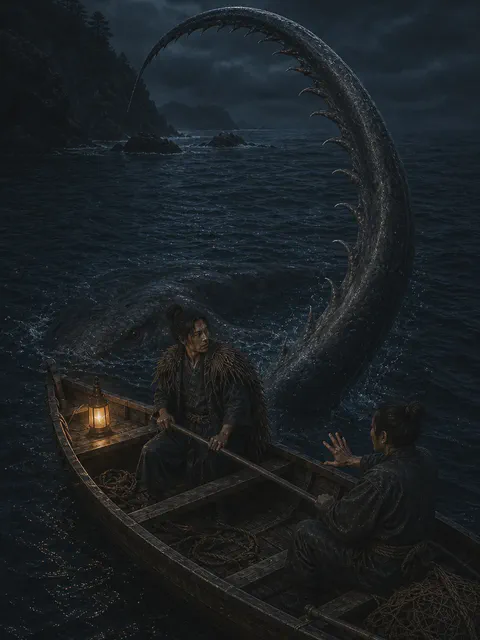
Isonade
磯撫で(いそなで)
An 1841 illustrated collection describes a shark-like creature in the western sea that attacks with its tail — and a 1960 record from Kumano shows the name still doing work as an explanation for deaths at the shore.
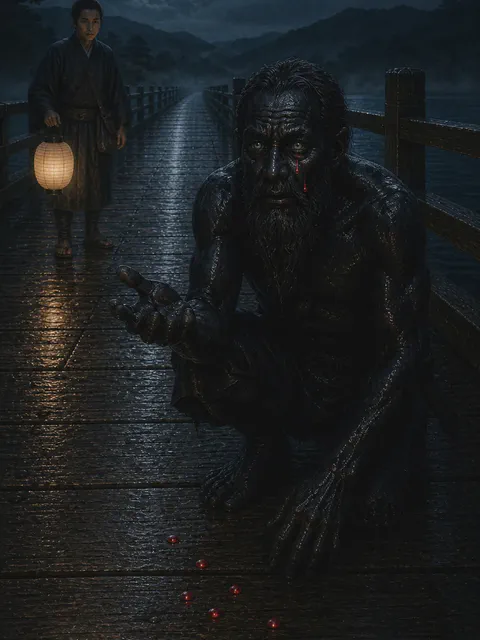
Samebito
鮫人(さめびと)
In a story Lafcadio Hearn published in English in 1900, a man on the Long Bridge of Seta shelters a creature banished from the Dragon Palace — and is repaid in tears that harden into jewels, which only come when the grief behind them is real.
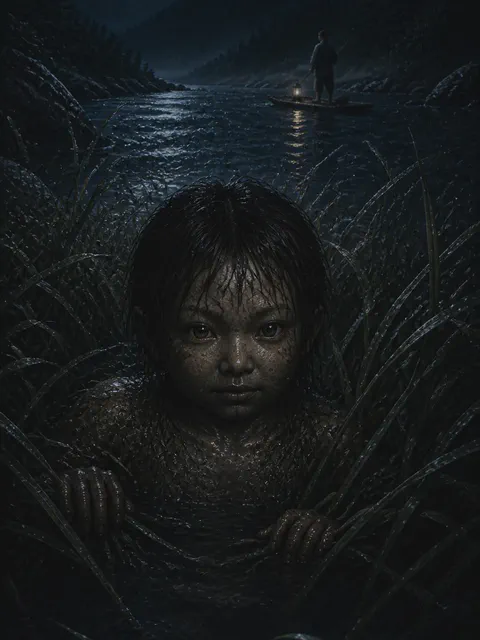
Kawa-akago
川赤子(かわあかご)
Toriyama Sekien drew an infant-shaped creature rising from the water plants of a mountain river in 1779, watching a man on a raft — and admitted in the caption that he was guessing about what it was.
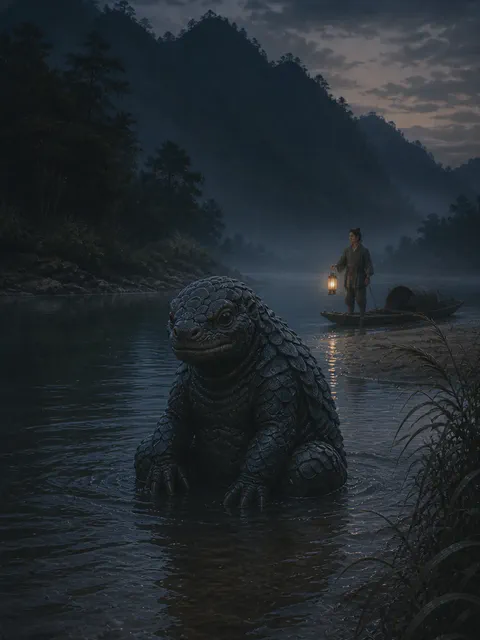
Suiko
水虎(すいこ)
A Chinese pharmacological encyclopedia describes a river creature the size of a small child, armoured in scales that arrows cannot pierce, which keeps its body underwater and lets only its two tiger-pawed knees break the surface.
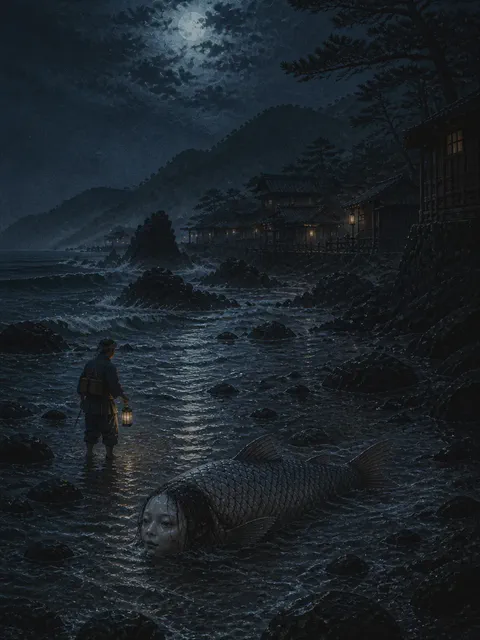
Ningyo
人魚(にんぎょ)
The Japanese ningyo of the old illustrated encyclopedias is not a mermaid — it is a fish body carrying a human face, with no arms and nothing to seduce anyone with. The famous story attached to it is not about romance either.
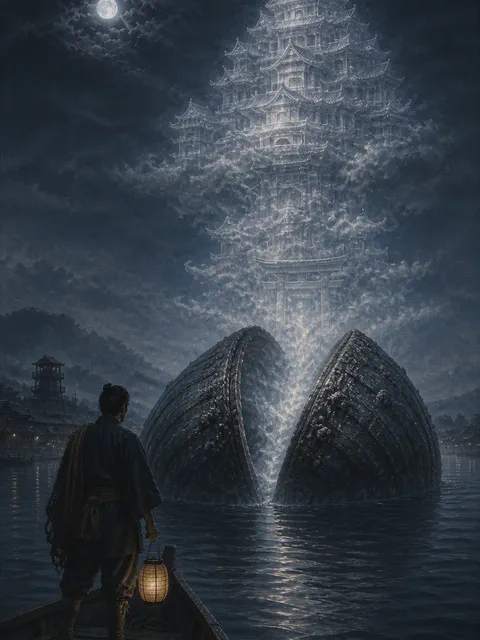
Shin
蜃(しん)
Old records describe a creature at the coast whose breath rises over the water and takes the shape of towers. The sources never agreed on what it was — and the Japanese word for a mirage is still its name.
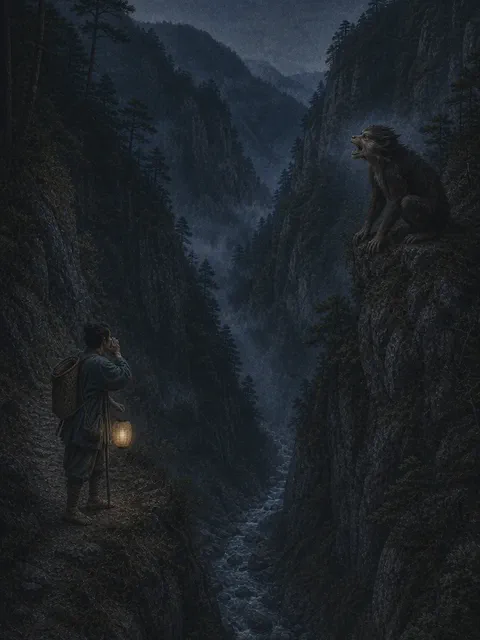
Yamabiko
山彦(やまびこ)
The echo in a Japanese valley was heard as an answer before anyone drew the thing answering — and when painters finally gave it a body, they produced a small animal that is neither quite a dog nor quite a monkey.
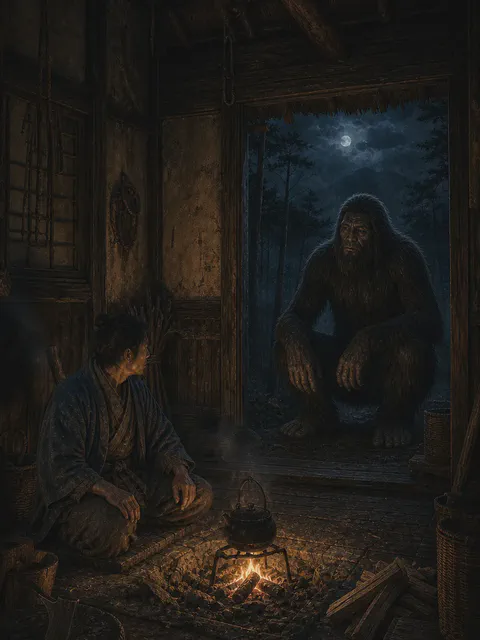
Satori
覚(さとり)
Sekien's 1779 entry describes a black, long-haired creature of the deep mountains that understands speech, reads what you are thinking, and leaves the moment you decide to kill it — and a later tale defeats it with something nobody thought at all.
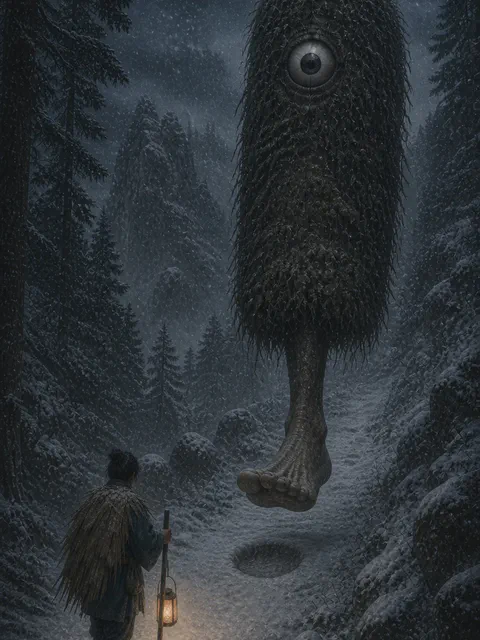
Ippon-datara
一本だたら(いっぽんだたら)
In the Kii mountains a one-legged thing leaves enormous single tracks in the snow — and Yanagita Kunio, reporting them, declined to conclude a one-legged creature from footprints alone.
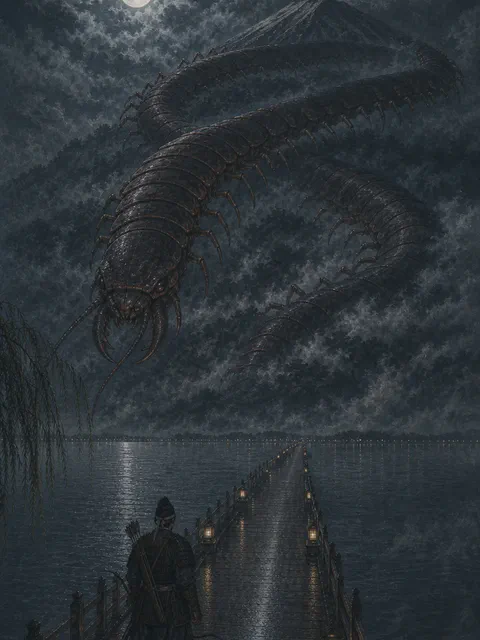
Ōmukade
大百足(おおむかで)
A warrior who walked over a serpent lying across the Long Bridge of Seta was asked by the dragon clan for help — because a centipede large enough to wrap a mountain was killing them, and they could not stop it themselves.
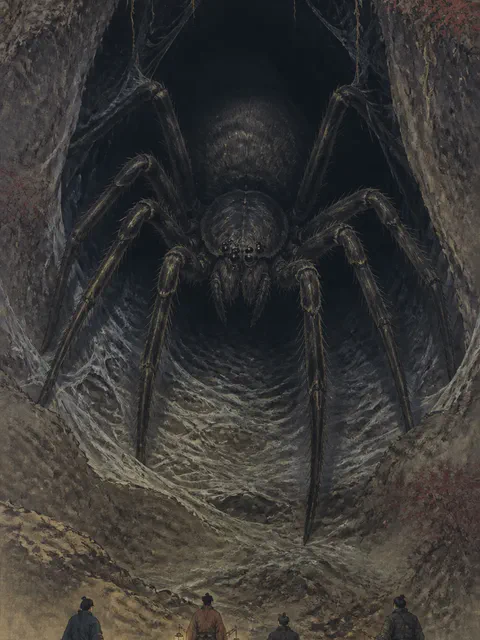
Tsuchigumo
土蜘蛛(つちぐも)
A monk appears at a sick warlord's bedside and throws spider silk at him. That is the tale. But the same word, centuries earlier, was what the court called people it wanted to treat as outsiders.
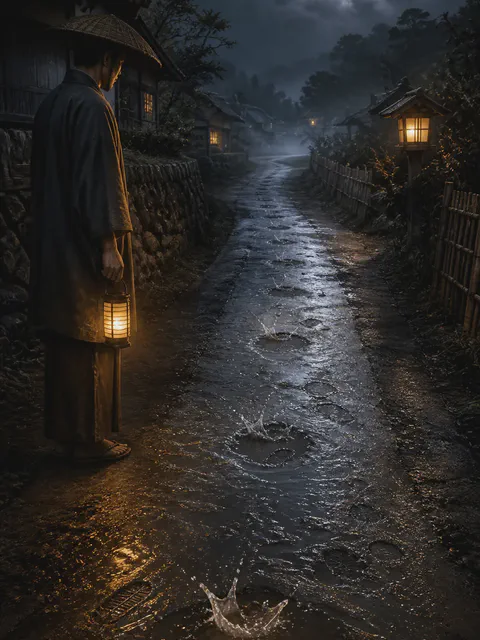
Betobeto-san
べとべとさん(べとべとさん)
On a night road in Uda you hear a bita-bita footfall coming along behind you. There is nobody there. Step aside, say the words, and it stops — which is the entire record.
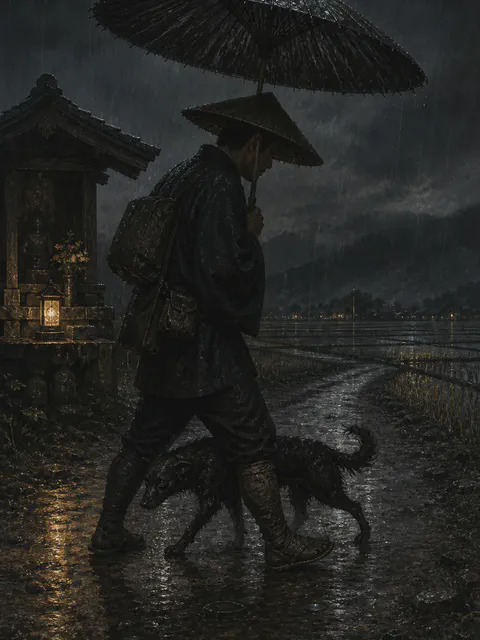
Sunekosuri
脛擦り(すねこすり)
A naturalist writing a national dictionary of yokai in 1935 gave the Sunekosuri of Oda district about one line: dog shaped, on rainy nights, brushing between a traveller's legs as it passes. Everything else you have read about it came later.
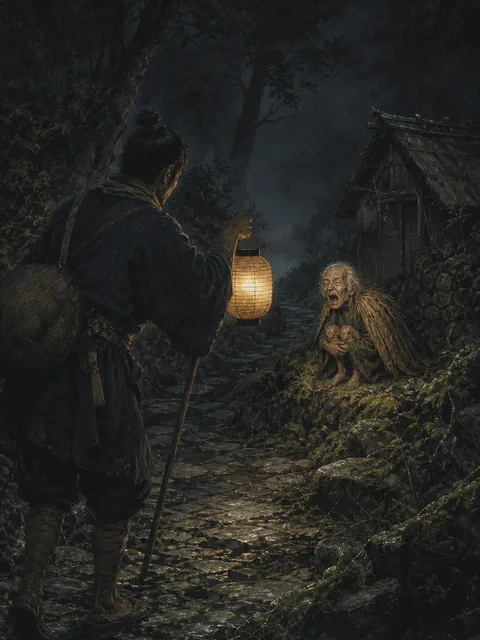
Konaki-jiji
児啼爺(こなきじじい)
A 1938 record from the Miyoshi mountains of Tokushima gives an old man's appearance and an infant's cry, in a single line. The famous part — that it grows unbearably heavy once you pick it up — is not in it.
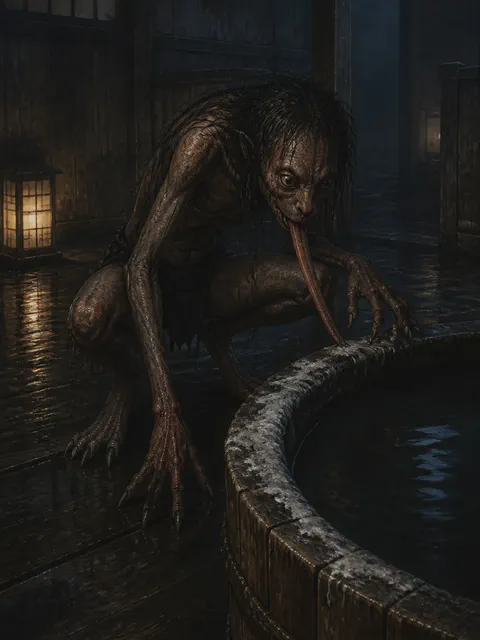
Akaname
垢嘗(あかなめ)
Sekien drew a crouching figure with a long tongue in a bathhouse in 1776 and called it the grime-licker. He wrote nothing else about it — and everything you have been told about dirty bathrooms was added afterwards.
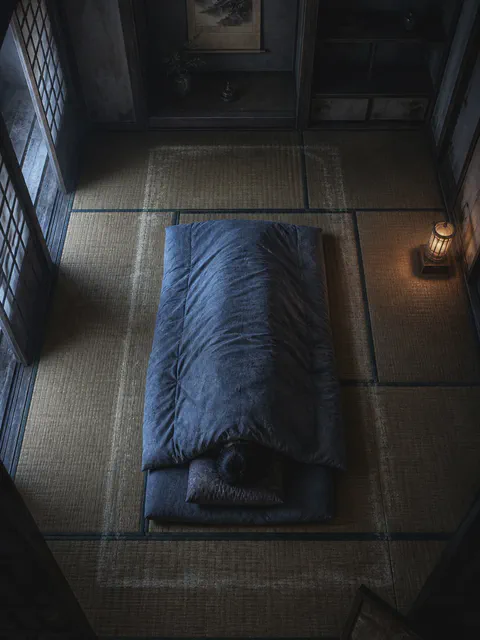
Makura-gaeshi
枕返し(まくらがえし)
From Niigata in 1935 to Ibaraki in 1998, people recorded going to sleep facing one way and waking facing the other. The culprit changes from house to house; the reversal never does.
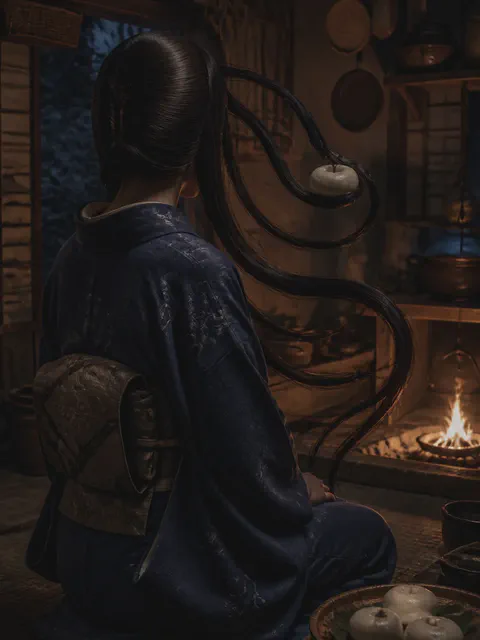
Futakuchi-onna
二口女(ふたくちおんな)
The 1841 Ehon Hyaku Monogatari made Futakuchi-onna a stepmother punished with a mouth at the back of her head. Folktales of the wife who eats nothing, recorded in the twentieth century, give the same hidden mouth to brides who turn out to be snakes, spiders, and oni.
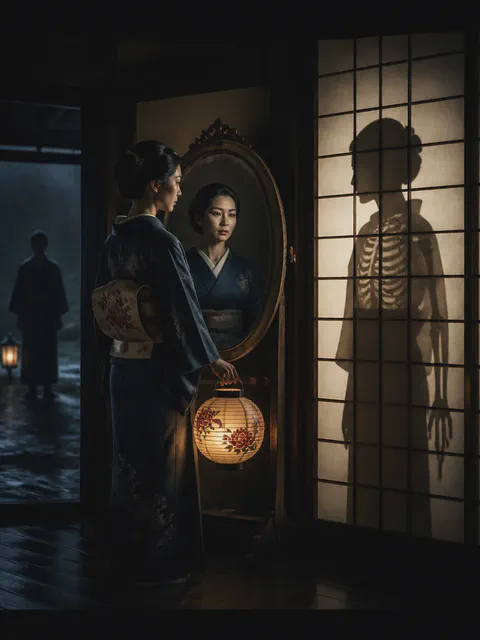
Hone-onna
骨女(ほねおんな)
Sekien drew Hone-onna in 1779 as an old skeleton carrying a peony lantern, and his caption names the 1666 tale behind it: a widower's night visitor whom only an outsider saw for what she was.
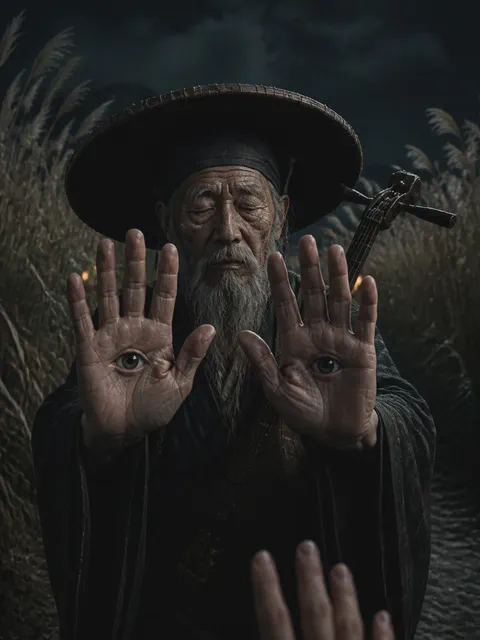
Tenome
手の目(てのめ)
Sekien's 1776 plate shows an elderly blind figure with a biwa on his back, holding out two palms, each with an open eye. He gave it a name and nothing more; the story of a murdered man hunting his killer came later.
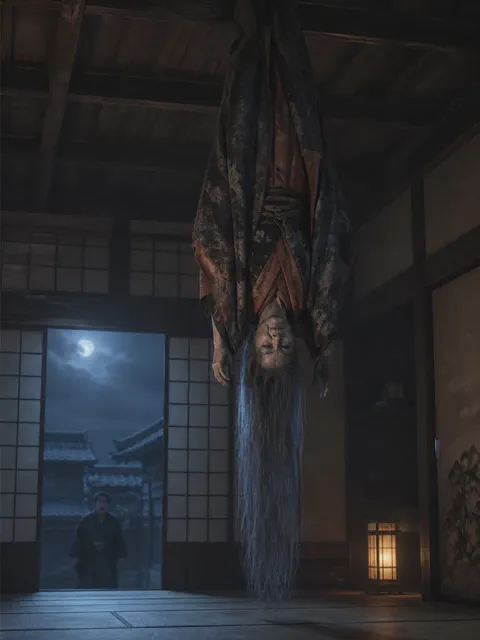
Tenjō-sagari
天井下り(てんじょうさがり)
In 1779 Sekien drew an old woman hanging upside down from the ceiling, and wrote a caption that is mostly a joke — about a demon who once escaped through a roof, and a phrase for knocking someone flat.
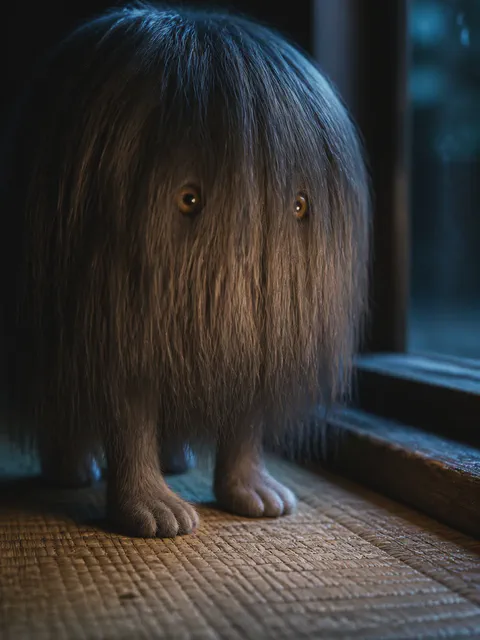
Keukegen
毛羽毛現(けうけげん)
Sekien drew Keukegen in 1781 as a small creature covered in long hair, and spent his caption on its name — which, written another way, means rarely there and rarely seen. The damp houses and disease came later.
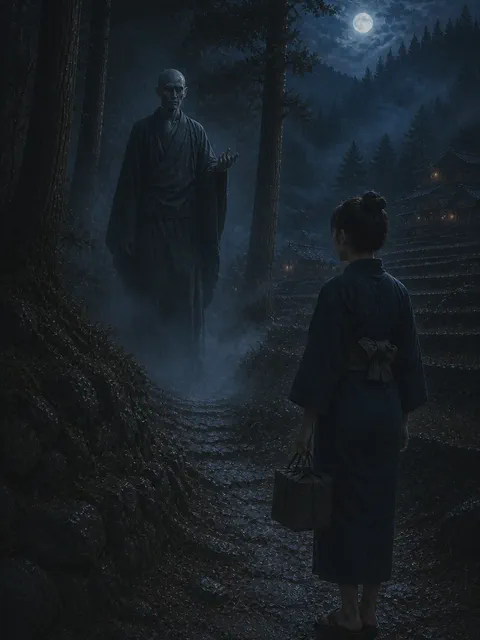
Ao-bōzu
青坊主(あおぼうず)
In a 1984 record from Miai in Kagawa, a girl carrying lunch to her family's mountain field met Ao-bōzu, the blue monk. He asked her one question. She said no, and he was gone.
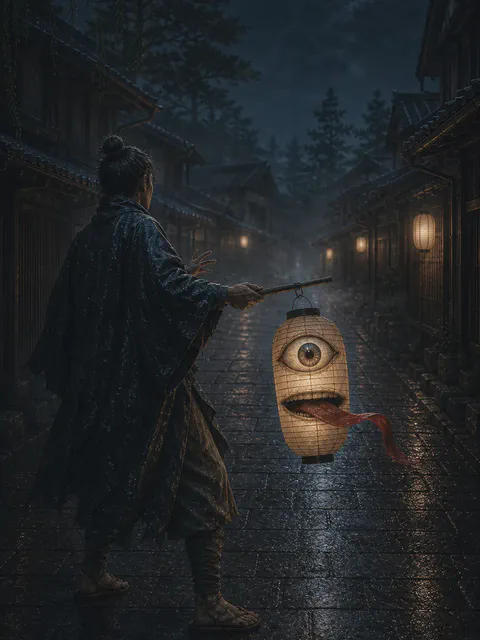
Chōchin-obake
提灯お化け(ちょうちんおばけ)
One of forty-eight monsters on Yoshimori's print Shinban Bakemono-zukushi is a paper lantern with an eye, a mouth, and something coming out of the mouth. That picture is the record — there is no story attached to it.
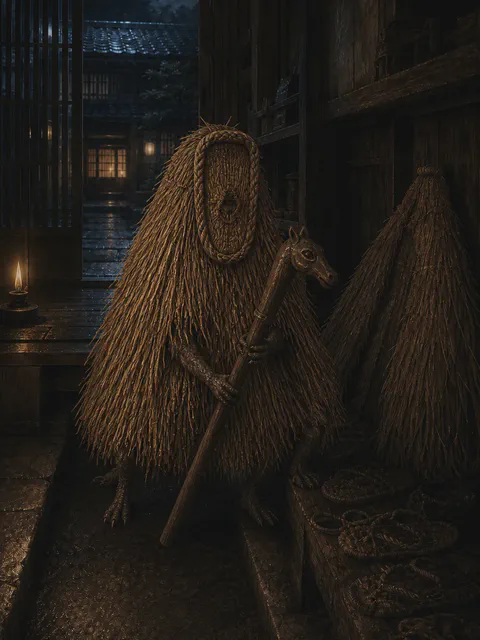
Bakezōri
化け草履(ばけぞうり)
A yokai scroll in the Nichibun collection shows a sandal monster covered in yellow straw, with a straw sandal for a face, riding a horse-head staff. It is stranger than the one-eyed singing sandal of modern books, and it comes with no story.
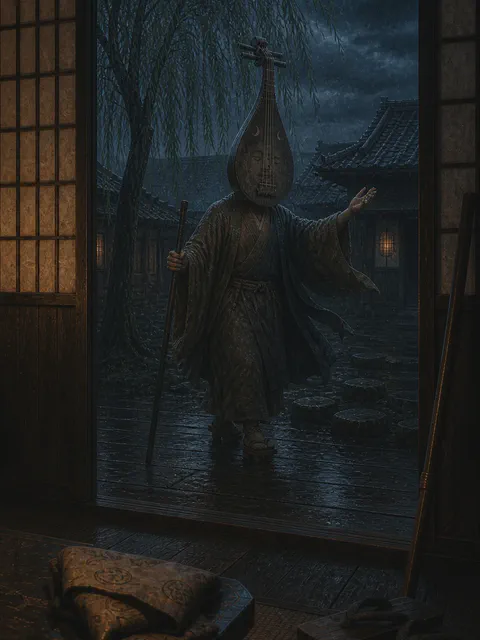
Biwa-bokuboku
琵琶牧々(びわぼくぼく)
In 1784 Sekien drew a blind biwa priest with a biwa for a head, feeling his way under a willow. His caption names two legendary court lutes, Genjō and Bokuba, and builds the creature's name out of one of them.
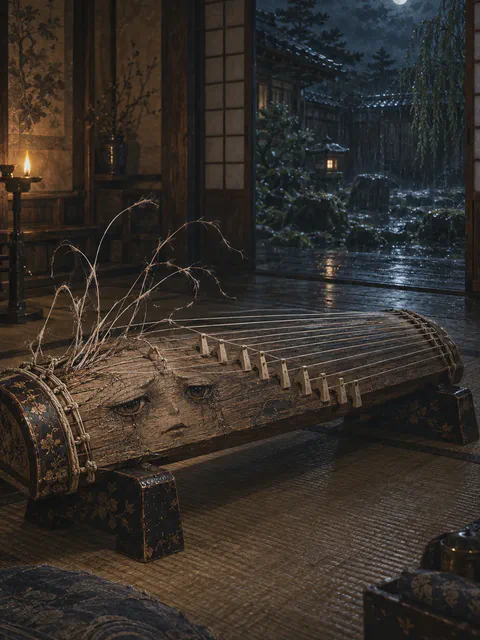
Koto-furunushi
琴古主(ことふるぬし)
Sekien's 1784 Koto-furunushi is an old koto with a face and strings like wild hair. His caption says why it appeared: after Yatsuhashi changed the music, the old Tsukushi koto survived only as a name, and it came to make its grudge known.
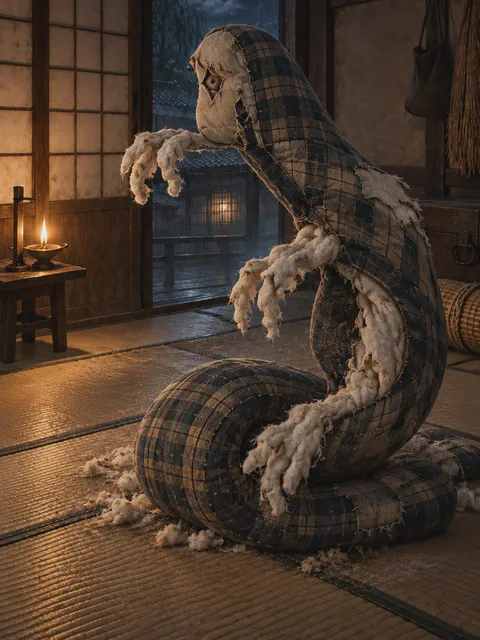
Boroboroton
暮露暮露団(ぼろぼろとん)
Sekien's 1784 Boroboroton is a worn, patched futon standing upright with cotton spilling out like hands. His caption gets there through wandering Zen mendicants, an old poetry contest, and one word that means both.
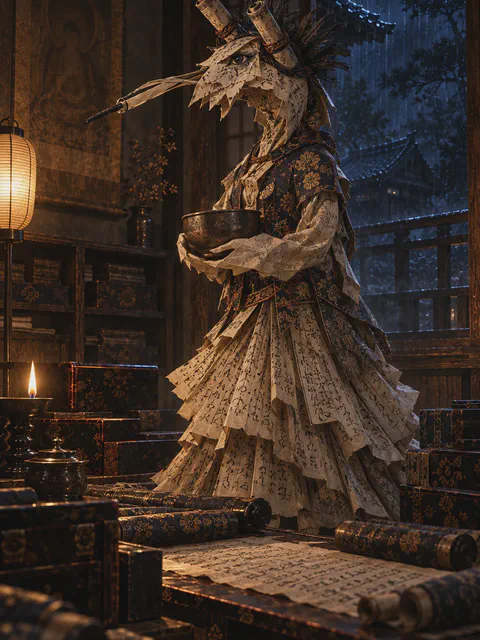
Kyōrinrin
経凛々(きょうりんりん)
Sekien's 1784 Kyōrinrin is a figure built from sutra scrolls and folded scripture. His caption wonders whether these are the scriptures thrown away by the monk Shubin, whose curse on Kūkai turned back on himself.
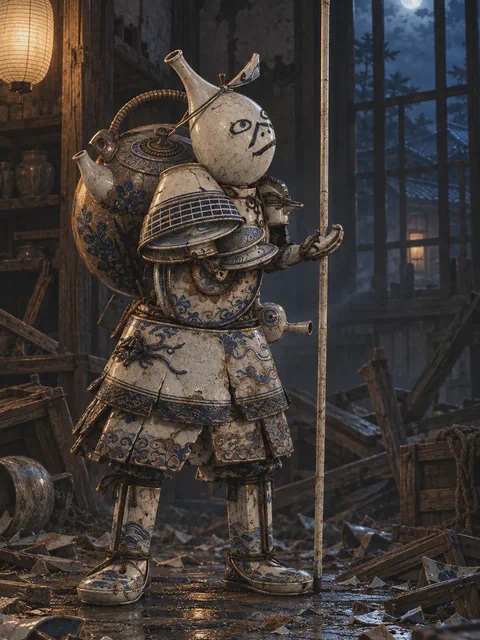
Seto-taishō
瀬戸大将(せとたいしょう)
Sekien's 1784 Seto-taishō is a warrior assembled from sake flasks, plates, bowls, a teapot, and a kettle, carrying a spear tipped with a vase. Its caption is a chain of puns on Cao Cao, Guan Yu, and the names of Japanese pottery.
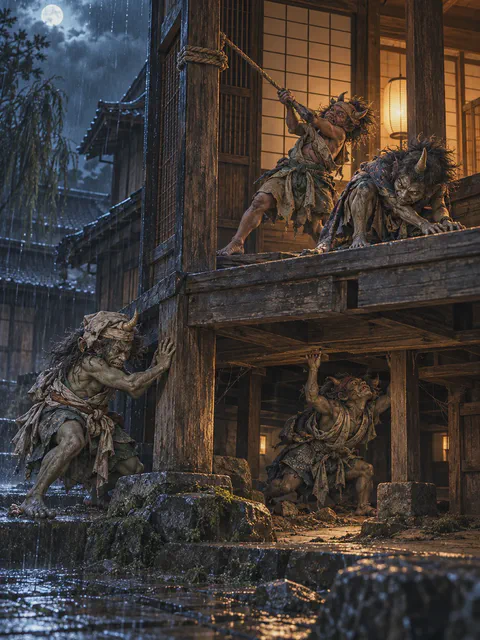
Yanari
鳴屋(やなり)
Sekien's 1776 plate shows a crew of small oni at the posts and under the veranda of a wooden house, pushing at the timbers. He named them for the sound a house makes at night and wrote nothing else.
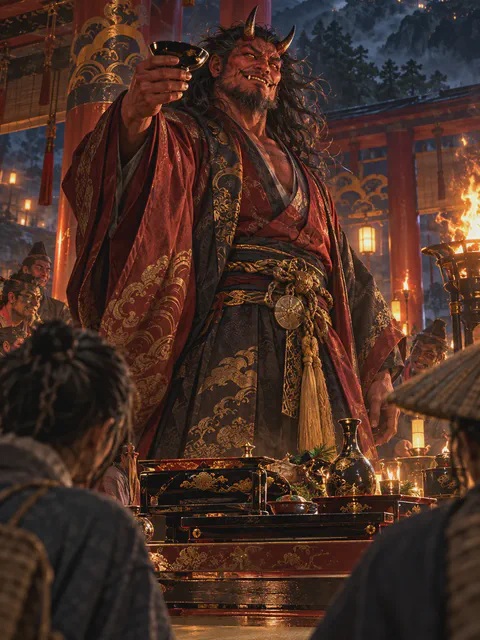
Shuten-dōji
酒呑童子(しゅてんどうじ)
The tale of Shuten-dōji appeared in the fourteenth century: an oni lord on Mt. Ōe who carried off the daughters of the capital, and the warriors who got in disguised as monks and defeated him with sake.
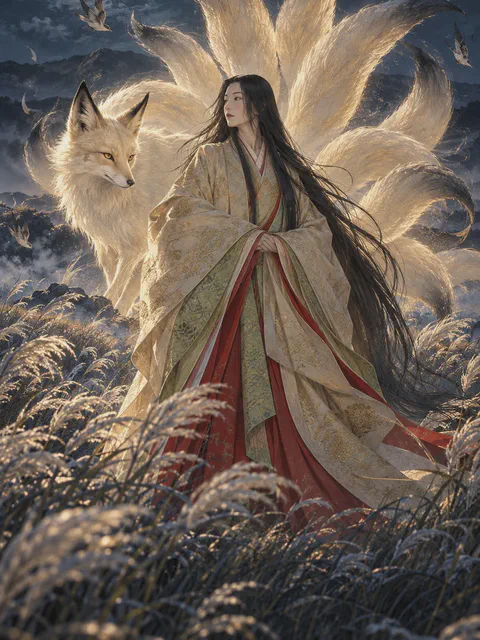
Tamamo-no-Mae
玉藻前(たまものまえ)
In the fifteenth-century tale, Tamamo-no-Mae is the most learned woman at the court of Retired Emperor Toba. He falls ill, divination names her as the cause, and she flees to Nasu as a fox. The killing stone came later.
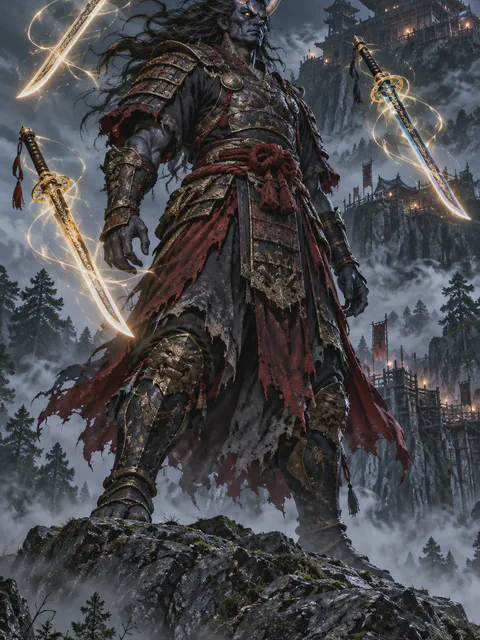
Ōtakemaru
大嶽丸(おおたけまる)
In the Muromachi tale Tamura no Sōshi, the demon god Ōtakemaru of Mt. Suzuka cannot be found or beaten by force. The hero Tamura-maru wins only because Suzuka Gozen deceives the demon and takes his swords.
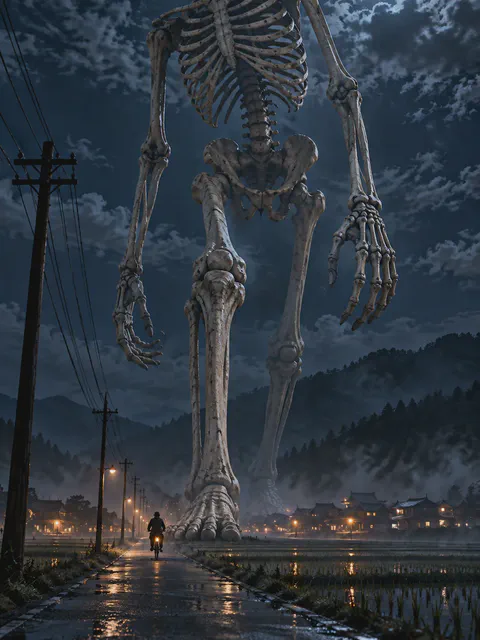
Gashadokuro
がしゃどくろ
Gashadokuro, the giant skeleton, looks ancient. It was created by the writer Saitō Morihiro in 1966, taken into Mizuki Shigeru's yokai collection in 1968, and later matched to a Kuniyoshi print from the 1840s that never used the name.
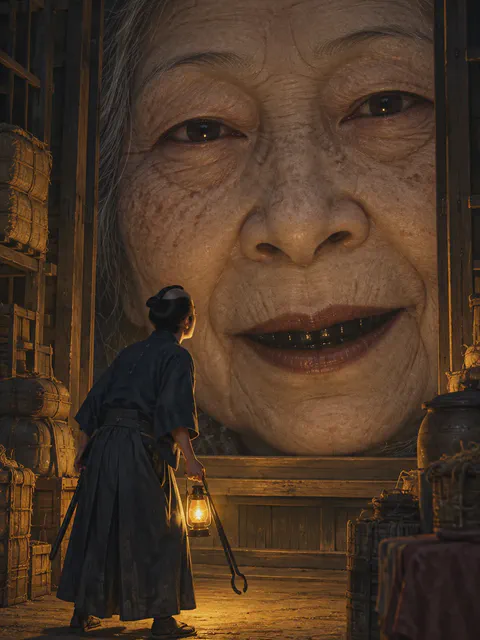
Ōkubi
大首(おおくび)
In the Inō Mononoke-roku, set in Miyoshi in 1749, sixteen-year-old Heitarō faces a month of nightly visitations. One night an old woman's face, teeth blackened, fills his doorway. He takes the fire tongs to it.
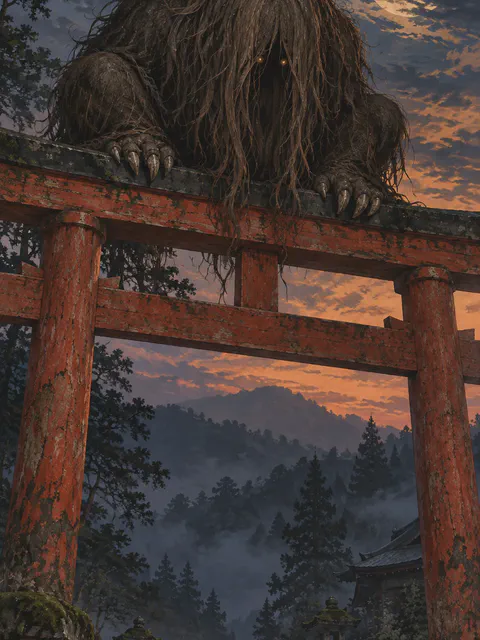
Otoroshi
おとろし
Otoroshi appears in a 1737 scroll and in Sekien's 1776 book as a hunched, hairy creature — on top of a torii in Sekien's version. Neither says what it does. The story about it dropping on the impious was read out of the picture later.
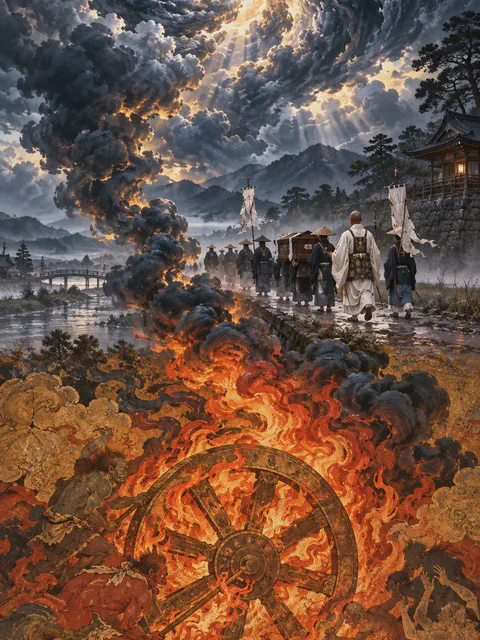
Kasha
火車(かしゃ)
Kasha began as the Buddhist fire cart that came for sinners at the hour of death. By the late sixteenth century it was a thing in the thunderstorm that stole the dead from funerals, and only from about the late seventeenth century was it said to be a cat.
Oni
鬼(おに)
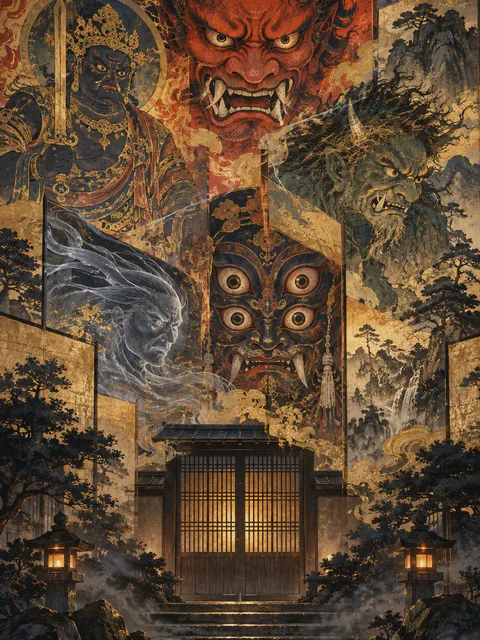
The horned, red-skinned oni with a club is a late composite. The word first named an invisible spirit of the dead, then hell's wardens, mountain monsters, outsiders — and even the figure who once chased oni away.
Kuchisake-onna
口裂け女(くちさけおんな)
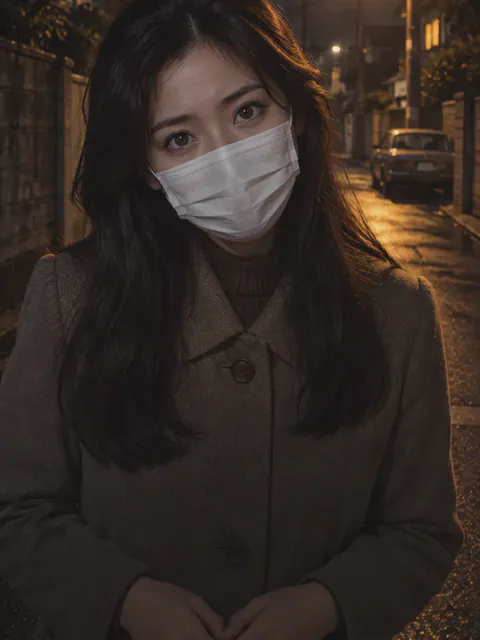
Kuchisake-onna is not an old yokai. She is a rumour that swept through Japanese schoolchildren in 1978–79: a masked woman asking 'Am I pretty?' Almost every other detail changed from school to school.
No yokai match the current search and filters.