晴明神社・一条戻橋 · Shrine or temple · Kyoto (Kamigyō), Kyoto
Seimei Shrine and Ichijō Modoribashi
The shrine on the site of the court diviner's house and, a hundred metres south, the bridge where a warrior cut off an oni's arm.
Quick Facts
- Type
- Shrine or temple
- Prefecture
- Kyoto · Kyoto (Kamigyō)
- Nearest station
- Imadegawa Station (Kyoto Subway Karasuma Line)
- From the station
- About twelve minutes on foot; or city bus to the Ichijō Modoribashi / Seimei-jinja-mae stop
- English signage
- none
- Opening hours and admission
- See the official site (external link) · information checked on 2026-11-03
Hours, admission and closing days change, and this site does not list them. The link goes to the place's own page, with the date we last checked it.
What is there
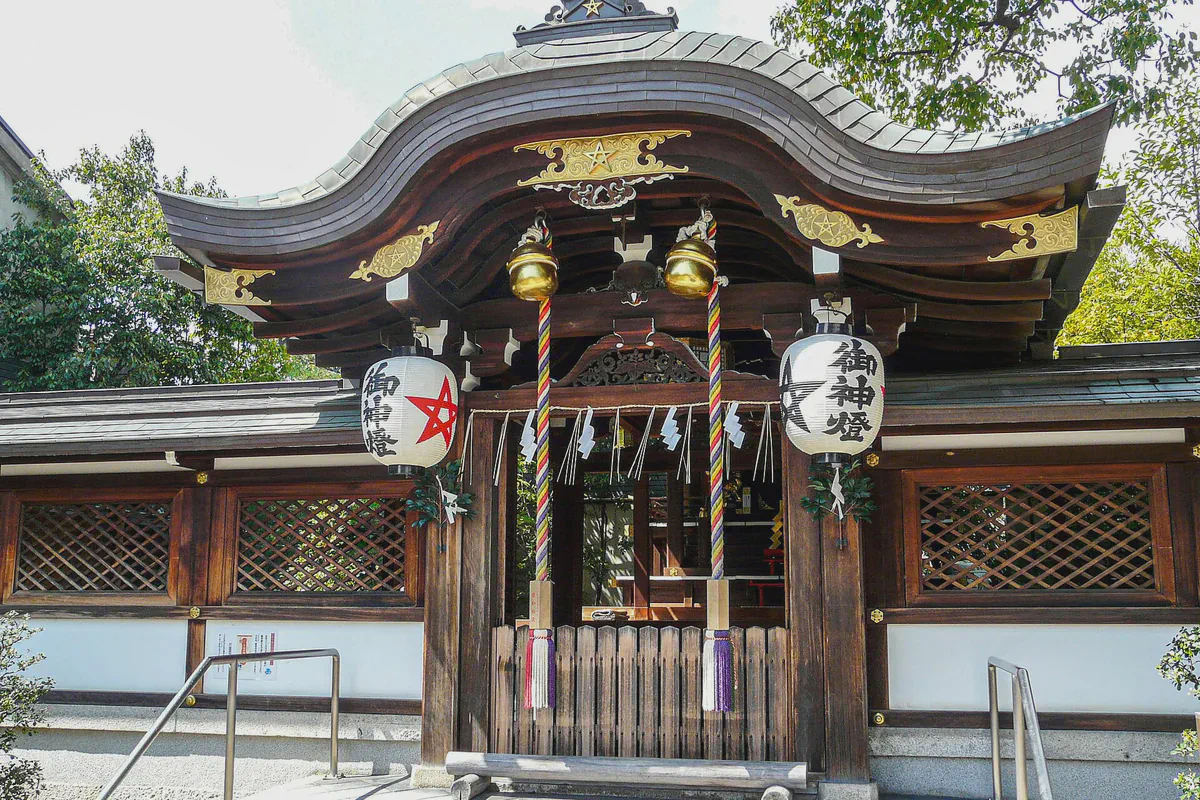
Seimei Shrine was founded in 1007 on the ground where Abe no Seimei, the court’s diviner, is said to have lived. The five-pointed star of his craft is on the lanterns, the charms and the well in the courtyard, and the bellflower that bears the same shape grows in the beds. In the grounds stands a small bridge built from the parts of the old Ichijō Modoribashi, with a figure of the shikigami, the spirits Seimei was said to keep under the real bridge; the real bridge, rebuilt in 1995, crosses the Horikawa canal a hundred metres to the south, a plain concrete span on a busy street.Why here
The bridge is where Watanabe no Tsuna, riding home one night, met a beautiful woman who asked to be carried, turned into an oni in the air and seized him by the hair; he cut off its arm with his sword, and the oni came back for the arm later in the shape of his aunt. The same bridge is where the dead were said to turn back, which gave it its name. The fox is here too: in the later tales Seimei’s mother was Kuzunoha, the white fox of Shinoda forest, who left her child when he saw her true shape.Yokai you will meet
- Oni 鬼 — The bridge where the oni's arm was cut off and later reclaimed.
- Kitsune 狐 — Seimei's mother in the later tales was the fox Kuzunoha of Shinoda forest.
Getting there
Imadegawa Station (Kyoto Subway Karasuma Line). About twelve minutes on foot; or city bus to the Ichijō Modoribashi / Seimei-jinja-mae stop.
Sources and further reading
- Reliable secondary Seimei Shrine (external link) Seimei Shrine (Kyoto) Official site: the founding in 1007, the well, the old bridge in the grounds.
- Reliable secondary Seimei Shrine: access (external link) Seimei Shrine (Kyoto) Access and visiting information.
- Database Ichijō Modoribashi (一条戻橋) (external link) Wikipedia (Japanese) The bridge's name, Watanabe no Tsuna and the oni's arm, Seimei's shikigami, and the 1995 rebuilding.
Other places with these yokai
- Mitsuishi Shrine and the Oni's Handprints 三ツ石神社(鬼の手形) Shrine or temple
- Namahage Museum and Shinzan Folklore Museum なまはげ館・男鹿真山伝承館 Museum
- Sesshōseki, the Killing Stone 殺生石 Site
- Kijin Shrine 鬼鎮神社 Shrine or temple
- Ōji Fox Parade 王子 狐の行列 Festival
- Kinasa Folk Museum and the Demon Woman Momiji 鬼無里ふるさと資料館と鬼女紅葉の里 Museum
- Japan Oni Exchange Museum 日本の鬼の交流博物館 Museum
- Kubizuka Daimyōjin 首塚大明神 Shrine or temple
- Onitake Inari Shrine on Mount Ōe 鬼嶽稲荷神社 Shrine or temple
- Abe Seimei Shrine, Osaka 安倍晴明神社(大阪) Shrine or temple
- Kuzunoha Inari Shrine, Shinoda Forest 信太森葛葉稲荷神社 Shrine or temple
- Gangōji 元興寺 Shrine or temple
- Kibitsu Shrine 吉備津神社 Shrine or temple
- Kinojō, the Oni's Castle 鬼ノ城 Site
Other places in Kyoto
- Nue Pond and Nue Daimyōjin 鵺池・鵺大明神 Site
- Kurama-dera 鞍馬寺 Shrine or temple
- Japan Oni Exchange Museum 日本の鬼の交流博物館 Museum
- Kubizuka Daimyōjin 首塚大明神 Shrine or temple
- Onitake Inari Shrine on Mount Ōe 鬼嶽稲荷神社 Shrine or temple
- Ichijō Yōkai Street and Daishōgun Hachi Shrine 一条妖怪ストリート(大将軍商店街)と大将軍八神社 Street