鬼嶽稲荷神社 · Shrine or temple · Fukuchiyama (Ōe), Kyoto
Onitake Inari Shrine on Mount Ōe
A lone shrine at the eighth station of the oni's mountain, where the trail to Shuten-dōji's summit begins and the valley below fills with cloud at dawn.
Quick Facts
- Type
- Shrine or temple
- Prefecture
- Kyoto · Fukuchiyama (Ōe)
- Nearest station
- Ōe Station (Kyoto Tango Railway Miyafuku Line)
- From the station
- City bus to Ōeyama-no-ie, about eighteen minutes, then about an hour and a half on foot; the bus does not run at weekends or holidays
- English signage
- none
- Opening hours and admission
- No official site listed · information checked on 2026-11-05
Hours, admission and closing days change, and this site does not list them. The link goes to the place's own page, with the date we last checked it.
What is there
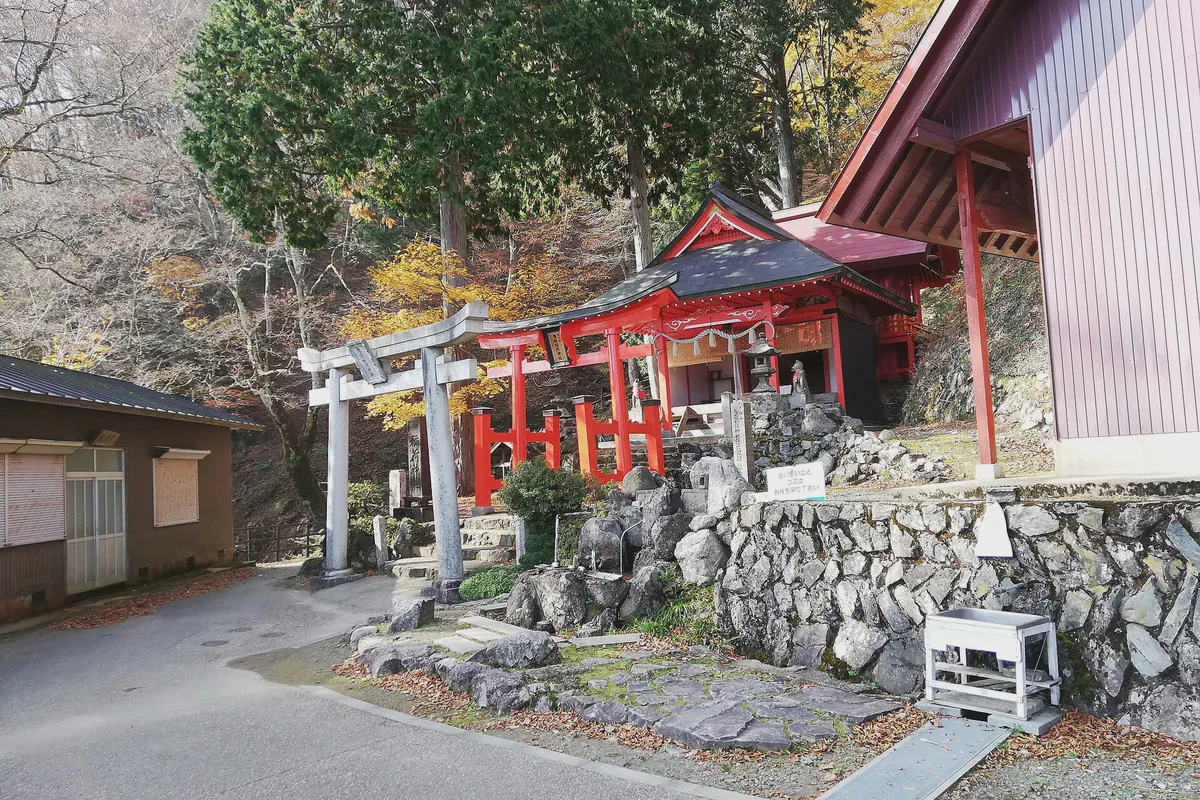
The shrine sits at about 640 metres on the flank of the Ōe range, in a forest of beech and oak, at the end of a mountain road with a small car park. Its own tradition takes it back to the general sent to pacify Tanba in the age of legend; the Inari god was brought from Fushimi in the 1840s and the farmers of the valley prayed here for their silk and their rice. It is usually unstaffed. The trail to Senjōgatake, the highest peak of the range at 832 metres, starts beside the shrine and takes about an hour, and from late October to early December people drive up before dawn for the sea of cloud that fills the Yura valley below and leaves the hills standing in it like islands. The oni museum and the rest of the Shuten-dōji village lie down the mountain on the road from the station.Why here
The whole range is the mountain of Shuten-dōji, the oni king who carried off the women of the capital to his palace here until Raikō and his four companions came disguised as mountain priests, drank with him, and cut off his head. The shrine is the high point of that geography that can be reached on foot, and the view from it is the view the oni had of the country below. The head’s journey back toward the capital ends at the pass on the city’s edge.Yokai you will meet
- Shuten-dōji 酒呑童子 — The oni king's own mountain, with the trail to the summit starting at the shrine.
- Oni 鬼 — Ōeyama is the oni mountain of the capital's tales, and the valley below has made the oni its emblem.
Getting there
Ōe Station (Kyoto Tango Railway Miyafuku Line). City bus to Ōeyama-no-ie, about eighteen minutes, then about an hour and a half on foot; the bus does not run at weekends or holidays.
Sources and further reading
- Database Onitake Inari Shrine (鬼嶽稲荷神社) (external link) Wikipedia (Japanese) The shrine at about 640 metres on Mount Ōe, its Inari tradition of the 1840s, the sea of clouds and the bus from Ōe station.
- Database Mount Ōe (大江山) (external link) Wikipedia (Japanese) The range of Shuten-dōji's tale, Senjōgatake at 832 metres, and the shrine at the eighth station as the viewpoint for the sea of clouds.
- Reliable secondary Sea-of-cloud viewpoints in Kyoto Prefecture (external link) Kyoto Prefecture (CO-KYOTO) Prefectural page listing Onitake Inari Shrine at the eighth station of Ōeyama, with the bus and walking access from Ōe station.
Other places with these yokai
- Japan Oni Exchange Museum 日本の鬼の交流博物館 Museum
- Kubizuka Daimyōjin 首塚大明神 Shrine or temple
- Mitsuishi Shrine and the Oni's Handprints 三ツ石神社(鬼の手形) Shrine or temple
- Namahage Museum and Shinzan Folklore Museum なまはげ館・男鹿真山伝承館 Museum
- Kijin Shrine 鬼鎮神社 Shrine or temple
- Kinasa Folk Museum and the Demon Woman Momiji 鬼無里ふるさと資料館と鬼女紅葉の里 Museum
- Seimei Shrine and Ichijō Modoribashi 晴明神社・一条戻橋 Shrine or temple
- Gangōji 元興寺 Shrine or temple
- Kibitsu Shrine 吉備津神社 Shrine or temple
- Kinojō, the Oni's Castle 鬼ノ城 Site
Other places in Kyoto
- Seimei Shrine and Ichijō Modoribashi 晴明神社・一条戻橋 Shrine or temple
- Nue Pond and Nue Daimyōjin 鵺池・鵺大明神 Site
- Kurama-dera 鞍馬寺 Shrine or temple
- Japan Oni Exchange Museum 日本の鬼の交流博物館 Museum
- Kubizuka Daimyōjin 首塚大明神 Shrine or temple
- Ichijō Yōkai Street and Daishōgun Hachi Shrine 一条妖怪ストリート(大将軍商店街)と大将軍八神社 Street