
王子 狐の行列 · Festival · Kita (Ōji), Tokyo
Ōji Fox Parade
On New Year's Eve a procession in fox masks walks from the shrine of the changing tree to Ōji Inari, as the foxes did in Hiroshige's print.
Quick Facts
- Type
- Festival
- Prefecture
- Tokyo · Kita (Ōji)
- When
- New Year's Eve, from late evening into the first hour of the new year
- Where
- From Shōzoku Inari to Ōji Inari, Kita, Tokyo
- Nearest station
- Ōji Station (JR Keihin-Tōhoku Line, Tokyo Metro Namboku Line)
- From the station
- Shōzoku Inari is three minutes from the station, Ōji Inari about six
- English signage
- some
- Opening hours and admission
- See the official site (external link) · information checked on 2026-11-03
Hours, admission and closing days change, and this site does not list them. The link goes to the place's own page, with the date we last checked it.
What is there
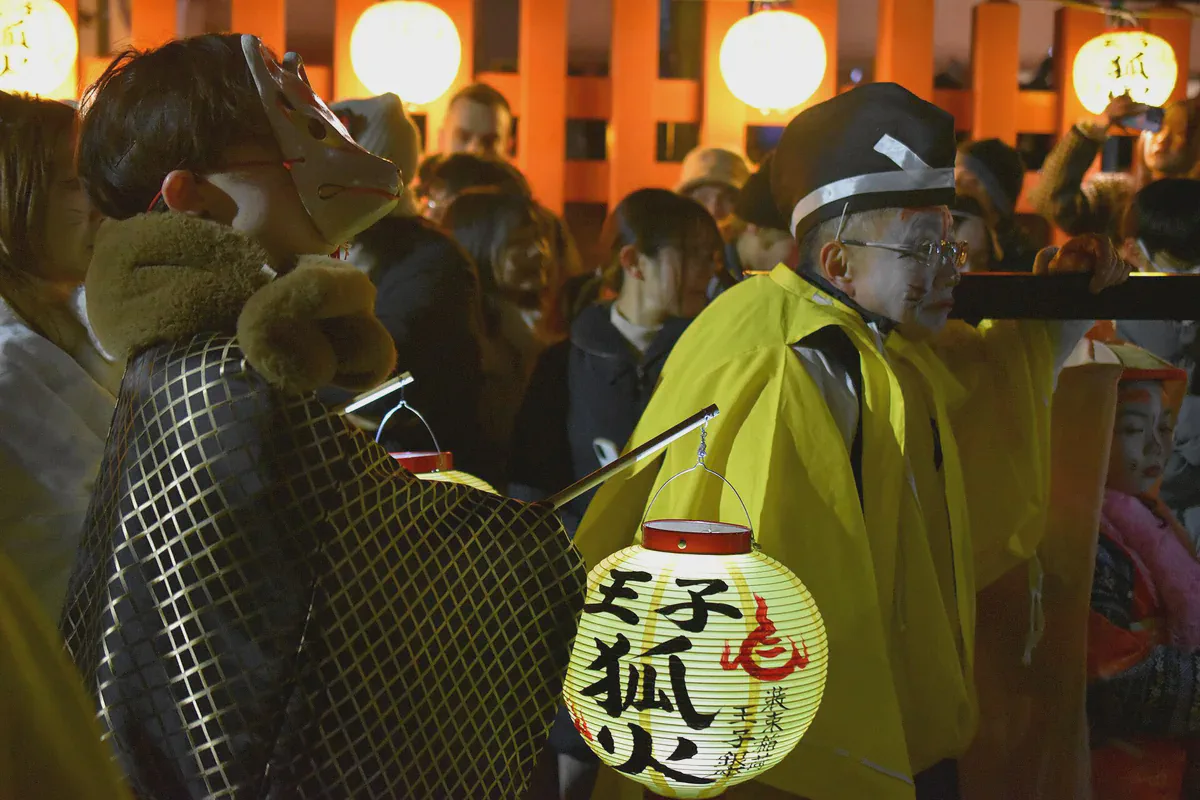
Just before midnight on New Year’s Eve a procession gathers at Shōzoku Inari, a small shrine a few streets from Ōji station, and walks by lantern light to Ōji Inari, the old head shrine of the Inari cult in the Kantō plain. The walkers wear fox masks and fox make-up over kimono, and the crowd along the route is several times their number. The parade was begun by local people in 1993 and has been held every year since; the procession itself is by application, the pavement is open to anyone. Ōji Inari, on its hillside, keeps a fox hole in the rock behind the hall, and Shōzoku Inari marks the place of the tree.Why here
The print of 1857 shows foxes gathering under a great hackberry tree at Ōji on New Year’s Eve, each with a flame at its mouth, before they go up to the shrine; the farmers of the district read the coming year’s harvest from the number of the fires. The tree is gone and the small shrine stands where it grew. The parade is a modern rite built on that picture, and the article on the fox tells where the picture came from.Yokai you will meet
- Kitsune 狐 — The foxes of Hiroshige's New Year's Eve print, walked by people in masks from the changing tree to the shrine.
Getting there
Ōji Station (JR Keihin-Tōhoku Line, Tokyo Metro Namboku Line). Shōzoku Inari is three minutes from the station, Ōji Inari about six.
Sources and further reading
- Reliable secondary Oji Fox Parade (external link) GO TOKYO (Tokyo Convention & Visitors Bureau) English event page: the route from Shōzoku Inari to Ōji Inari on New Year's Eve.
- Database Shōzoku Inari Shrine (装束稲荷神社) (external link) Wikipedia (Japanese) The shrine on the site of the changing tree of Hiroshige's print, and the fox parade that has set out from it on New Year's Eve since 1993.
- Database Ōji Inari Shrine (王子稲荷神社) (external link) Wikipedia (Japanese) The shrine's standing as head Inari shrine of the Kantō region and the fox hole behind the hall.
- Museum New Year's Eve Foxfires at the Changing Tree, Ōji (external link) The Metropolitan Museum of Art Museum record for Hiroshige's circa-1857 print and its distinct Ōji tradition of foxes, foxfire, Inari worship and harvest prediction.
Other places with these yokai
- Sesshōseki, the Killing Stone 殺生石 Site
- Seimei Shrine and Ichijō Modoribashi 晴明神社・一条戻橋 Shrine or temple
- Abe Seimei Shrine, Osaka 安倍晴明神社(大阪) Shrine or temple
- Kuzunoha Inari Shrine, Shinoda Forest 信太森葛葉稲荷神社 Shrine or temple
Other places in Tokyo
- Oiwa Inari: Tamiya Shrine and Yōunji 於岩稲荷田宮神社・陽運寺 Shrine or temple
- Takaosan Yakuōin 高尾山薬王院 Shrine or temple
- Kitarō Chaya 鬼太郎茶屋 Shop