
鵺池・鵺大明神 · Site · Kyoto (Kamigyō), Kyoto
Nue Pond and Nue Daimyōjin
A small stone-edged pond in a city park north-west of Nijō Castle, where the arrow that killed the nue was said to have been washed.
Quick Facts
- Type
- Site
- Prefecture
- Kyoto · Kyoto (Kamigyō)
- Nearest station
- Nijōjō-mae Station (Kyoto Subway Tōzai Line)
- From the station
- About ten minutes on foot, north-west past the castle
- English signage
- none
- Opening hours and admission
- No official site listed · information checked on 2026-11-03
Hours, admission and closing days change, and this site does not list them. The link goes to the place's own page, with the date we last checked it.
What is there
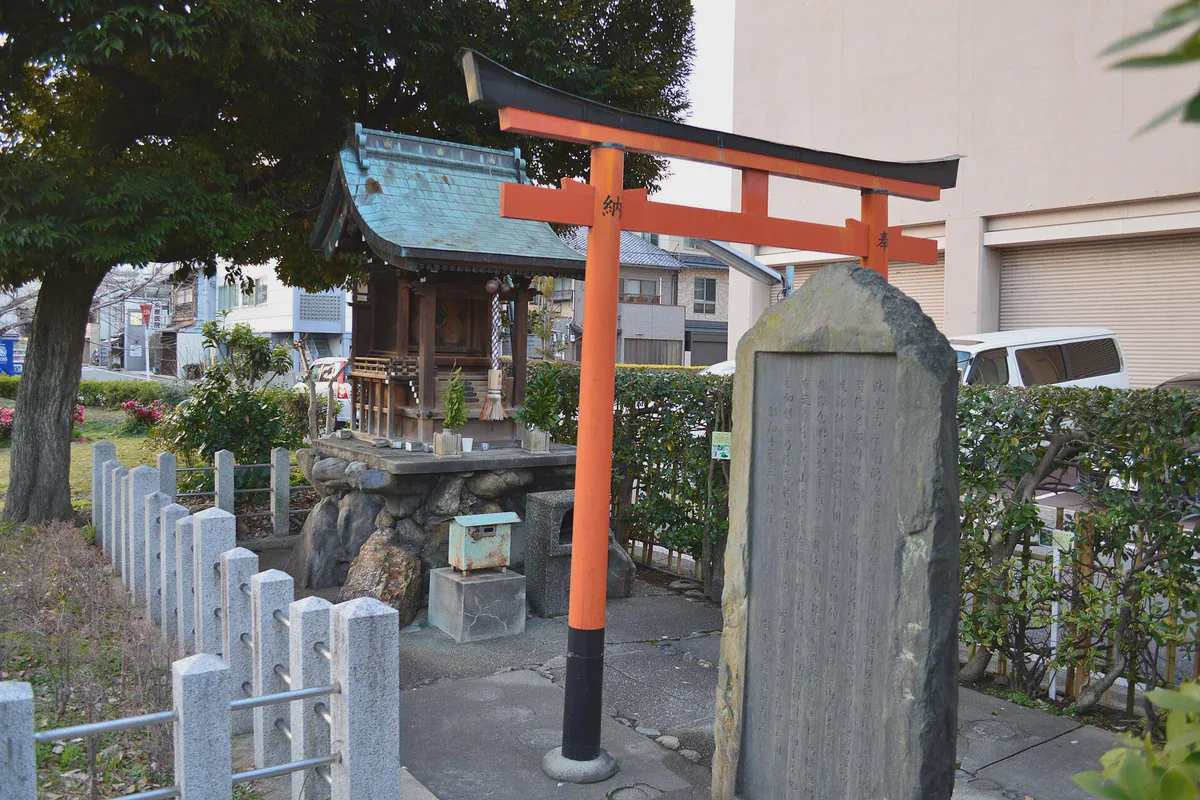
Nijō Park is a neighbourhood park a few streets north-west of Nijō Castle, with swings, a baseball cage and, in one corner, a small pond edged with stone and a shrine the size of a shed. The pond is the Nue Pond and the shrine is Nue Daimyōjin. A stone marker beside them carries the tale. There is no gate and no ticket; the park is open ground, and the pond is dry in some seasons. The site is about ten minutes on foot from the castle’s north side.Why here
In 1153 a black cloud settled over the palace each night and the emperor fell ill, until the archer Yorimasa shot into the cloud and brought down a creature with a monkey’s head, a tanuki’s body, a tiger’s limbs and a snake for a tail. Local tradition says he washed the arrowhead in this pond. The body was put in a boat and sent down the river, and a mound in Osaka claims its burial. The pond is where the tale touches the ground in the city where it happened.Yokai you will meet
- Nue 鵺 — The pond where Yorimasa was said to wash the arrowhead after shooting the nue in 1153.
Getting there
Nijōjō-mae Station (Kyoto Subway Tōzai Line). About ten minutes on foot, north-west past the castle.
Sources and further reading
- Reliable secondary Nue Pond: a yokai of Kyoto (external link) Leaf Kyoto (English edition) English article on the pond in Nijō Park, the shrine beside it and the local tradition of the arrowhead.
- Database Nue (鵺) (external link) Wikipedia (Japanese) The 1153 tale, the pond in Nijō Park where the arrowhead was washed, and the mounds that claim the body.
Other places with these yokai
- Nuezuka, the Nue Mound 鵺塚(都島) Site
- Fukusaki: Yanagita Kunio's Birthplace and the Yokai Benches 福崎町(柳田國男・松岡家記念館と妖怪ベンチ) Site
Other places in Kyoto
- Seimei Shrine and Ichijō Modoribashi 晴明神社・一条戻橋 Shrine or temple
- Kurama-dera 鞍馬寺 Shrine or temple
- Japan Oni Exchange Museum 日本の鬼の交流博物館 Museum
- Kubizuka Daimyōjin 首塚大明神 Shrine or temple
- Onitake Inari Shrine on Mount Ōe 鬼嶽稲荷神社 Shrine or temple
- Ichijō Yōkai Street and Daishōgun Hachi Shrine 一条妖怪ストリート(大将軍商店街)と大将軍八神社 Street