
三ツ石神社(鬼の手形) · Shrine or temple · Morioka, Iwate
Mitsuishi Shrine and the Oni's Handprints
Three granite boulders in a city grove where an oni pressed its hands into the rock as an oath, and gave the prefecture its name.
Quick Facts
- Type
- Shrine or temple
- Prefecture
- Iwate · Morioka
- Nearest station
- Morioka Station (JR Tōhoku Shinkansen)
- From the station
- Bus about ten minutes to the Ōizumiguchi stop, then five minutes on foot
- English signage
- some
- Opening hours and admission
- See the official site (external link) · information checked on 2026-11-03
Hours, admission and closing days change, and this site does not list them. The link goes to the place's own page, with the date we last checked it.
What is there
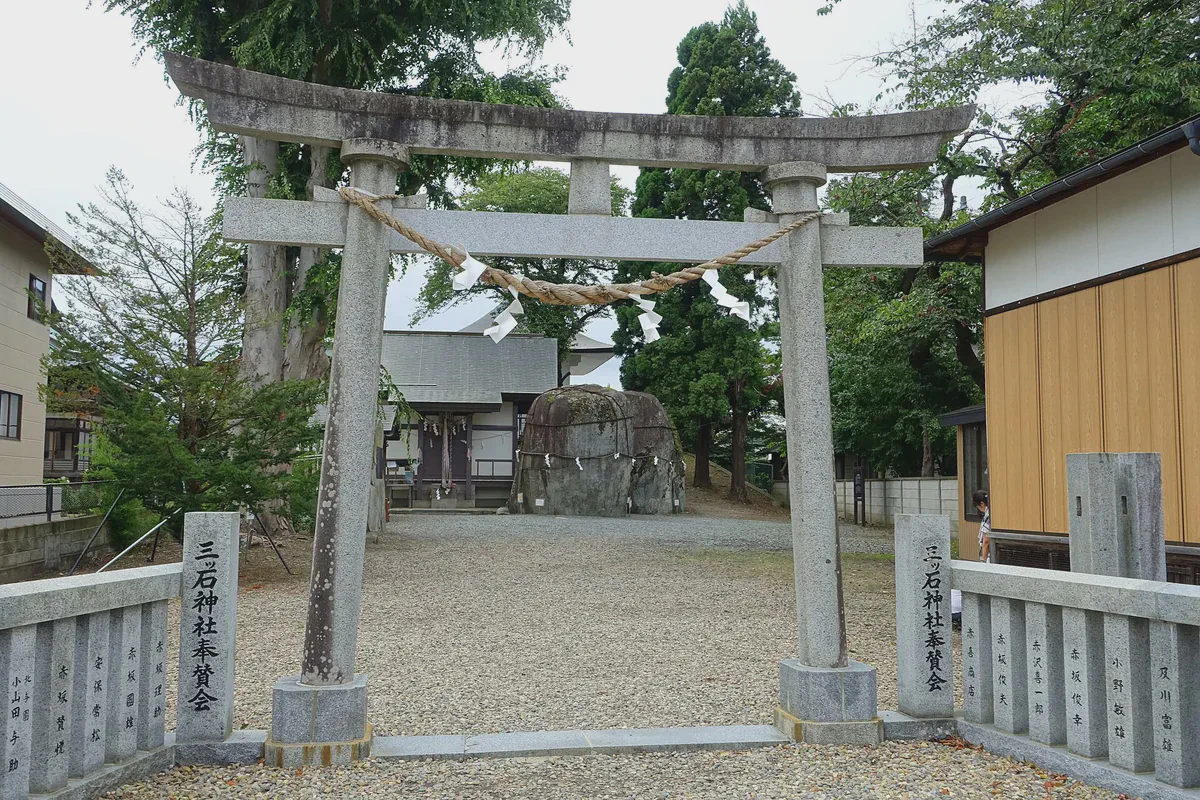
In a residential quarter east of Morioka station, a small shrine stands in front of three granite boulders taller than the houses around them, with a gap between the stones and a rope across the largest. The handprints are said to show on the rock face after rain. The shrine is plain, the grove is quiet, and the place is best known for the summer dance of Morioka, whose drummers and dancers trace their festival to the oath sworn here.Why here
A demon called Rasetsu had been robbing the valley, and the people prayed to the god of the three stones. The god bound the demon to the rocks, and the demon swore never to come back, pressing its hands into the granite as the seal of its oath. The name of the prefecture, Iwate, is read as “rock hand”, and the old name of the castle town, Fukōzu, as “never to come”; the people’s dance of joy at the demon’s going became the Sansa dance of August. The oni of this tale is the kind that can be bound and made to keep its word.Yokai you will meet
- Oni 鬼 — The handprints the bound demon left in the rock, and the names of the prefecture and the town that came from them.
Getting there
Morioka Station (JR Tōhoku Shinkansen). Bus about ten minutes to the Ōizumiguchi stop, then five minutes on foot.
Sources and further reading
- Reliable secondary Mitsuishi Shrine (external link) Tōhoku Tourism Promotion Organization Regional tourism page for the shrine and the three stones with the oni's handprints.
- Database Mitsuishi Shrine (三ツ石神社) (external link) Wikipedia (Japanese) The three granite boulders, the legend of the bound demon, and the origin of the names Iwate and Fukōzu and of the Sansa dance.
Other places with these yokai
- Namahage Museum and Shinzan Folklore Museum なまはげ館・男鹿真山伝承館 Museum
- Kijin Shrine 鬼鎮神社 Shrine or temple
- Kinasa Folk Museum and the Demon Woman Momiji 鬼無里ふるさと資料館と鬼女紅葉の里 Museum
- Seimei Shrine and Ichijō Modoribashi 晴明神社・一条戻橋 Shrine or temple
- Japan Oni Exchange Museum 日本の鬼の交流博物館 Museum
- Kubizuka Daimyōjin 首塚大明神 Shrine or temple
- Onitake Inari Shrine on Mount Ōe 鬼嶽稲荷神社 Shrine or temple
- Gangōji 元興寺 Shrine or temple
- Kibitsu Shrine 吉備津神社 Shrine or temple
- Kinojō, the Oni's Castle 鬼ノ城 Site
Other places in Iwate
- Kappa-buchi and Jōkenji カッパ淵と常堅寺 Site
- Denshōen 伝承園 Museum
- Tōno Municipal Museum 遠野市立博物館 Museum
- Tōno Folktale Museum とおの物語の館 Museum
- Ryokufusō, the Inn of the Zashiki-warashi 緑風荘(座敷わらしの宿) Site