
鞍馬寺 · Shrine or temple · Kyoto (Sakyō), Kyoto
Kurama-dera
The mountain temple north of Kyoto where the king of the tengu taught a boy to fight, reached past a giant tengu head at the station.
Quick Facts
- Type
- Shrine or temple
- Prefecture
- Kyoto · Kyoto (Sakyō)
- Nearest station
- Kurama Station (Eizan Railway Kurama Line)
- From the station
- Three minutes to the Niō gate; about 30 minutes uphill to the main hall, or the cable car for part of the way
- English signage
- none
- Opening hours and admission
- See the official site (external link) · information checked on 2026-11-03
Hours, admission and closing days change, and this site does not list them. The link goes to the place's own page, with the date we last checked it.
What is there
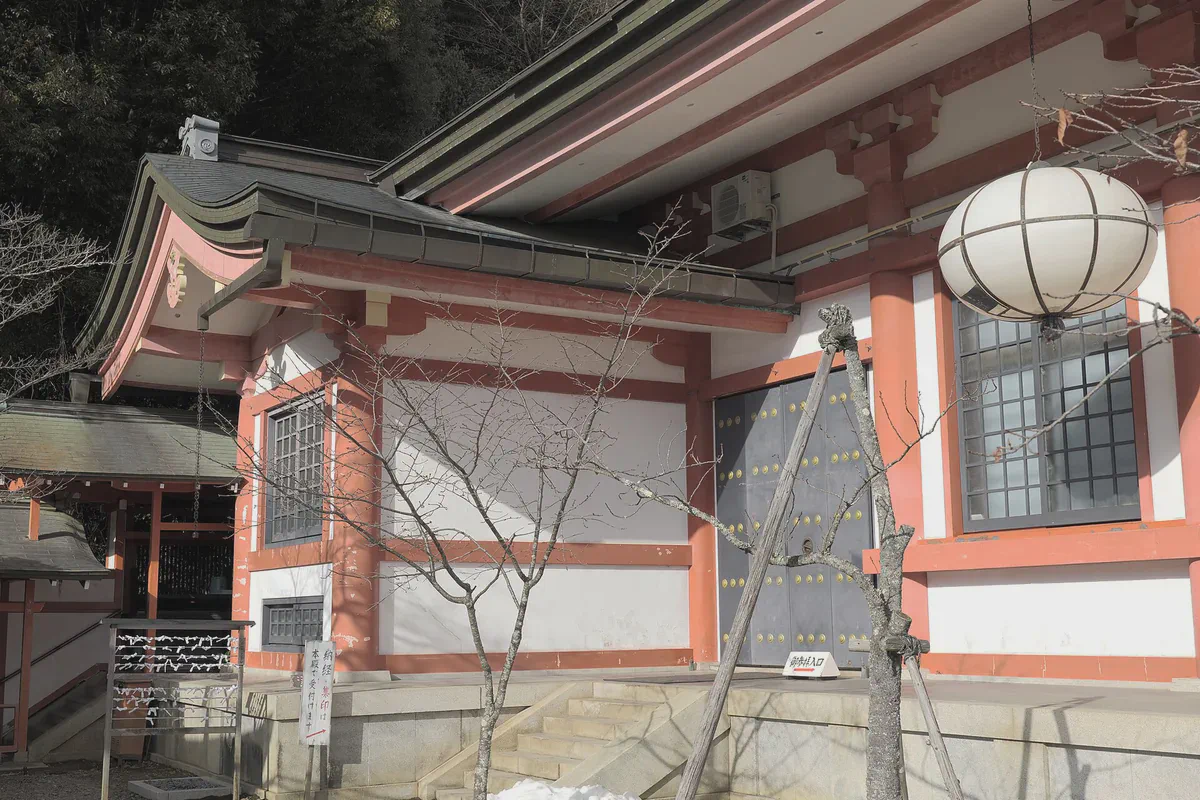
Kurama-dera sits on the mountain of the same name, half an hour north of the city by the little Eizan railway, whose terminus is guarded by a tengu head taller than a person. The temple was founded in 770. From the Niō gate a path and a cable car climb to the main hall, and beyond it a trail runs over the exposed roots of the cedars to the inner sanctuary and down the far side to Kibune. The temple’s own teaching treats the mountain as a source of power, and the tengu is everywhere in its imagery, from the gate to the charms.Why here
Sōjōbō, the king of the tengu, is said to have lived in the valley of the inner sanctuary and to have taught the boy Ushiwakamaru, later the general Yoshitsune, to fight with a sword by night. The Noh play on the subject and the shrine to Yoshitsune in the valley keep the story on the mountain. The tengu of Kurama is the proud, powerful master of the medieval tales, closer to a mountain god than to the bird-faced creature that steals children in the village records.Yokai you will meet
- Tengu 天狗 — Sōjōbō's mountain, where the king of the tengu trained Yoshitsune; the great tengu head outside the station.
In manga: Kamisama Kiss
Getting there
Kurama Station (Eizan Railway Kurama Line). Three minutes to the Niō gate; about 30 minutes uphill to the main hall, or the cable car for part of the way.
Sources and further reading
- Reliable secondary Kurama-dera (external link) Kurama-dera Official site of the temple.
- Reliable secondary Kurama-dera: entering the mountain (external link) Kurama-dera The mountain entry fee page and the route from the gate to the main hall.
- Database Kurama-dera (鞍馬寺) (external link) Wikipedia (Japanese) Foundation in 770, Sōjōbō and Ushiwakamaru, the inner sanctuary trail and the tengu at the station.
Other places with these yokai
- Tōno Municipal Museum 遠野市立博物館 Museum
- Tōno Folktale Museum とおの物語の館 Museum
- Kashōzan Mirokuji 迦葉山弥勒寺 Shrine or temple
- Takaosan Yakuōin 高尾山薬王院 Shrine or temple
- Daiyūzan Saijōji 大雄山最乗寺 Shrine or temple
- Fukusaki: Yanagita Kunio's Birthplace and the Yokai Benches 福崎町(柳田國男・松岡家記念館と妖怪ベンチ) Site
- Mizuki Shigeru Road 水木しげるロード Street
- Yokai Yashiki at Ōboke 妖怪屋敷と石の博物館(道の駅大歩危) Museum
Other places in Kyoto
- Seimei Shrine and Ichijō Modoribashi 晴明神社・一条戻橋 Shrine or temple
- Nue Pond and Nue Daimyōjin 鵺池・鵺大明神 Site
- Japan Oni Exchange Museum 日本の鬼の交流博物館 Museum
- Kubizuka Daimyōjin 首塚大明神 Shrine or temple
- Onitake Inari Shrine on Mount Ōe 鬼嶽稲荷神社 Shrine or temple
- Ichijō Yōkai Street and Daishōgun Hachi Shrine 一条妖怪ストリート(大将軍商店街)と大将軍八神社 Street