
鬼太郎茶屋 · Shop · Chōfu, Tokyo
Kitarō Chaya
The yokai tea house of the town where Mizuki Shigeru lived for half a century, now on the shopping street by Chōfu station.
Quick Facts
- Type
- Shop
- Prefecture
- Tokyo · Chōfu
- Nearest station
- Chōfu Station (Keiō Line)
- From the station
- A few minutes on foot from the north exit along Tenjin-dōri
- English signage
- none
- Opening hours and admission
- See the official site (external link) · information checked on 2026-11-03
Hours, admission and closing days change, and this site does not list them. The link goes to the place's own page, with the date we last checked it.
What is there
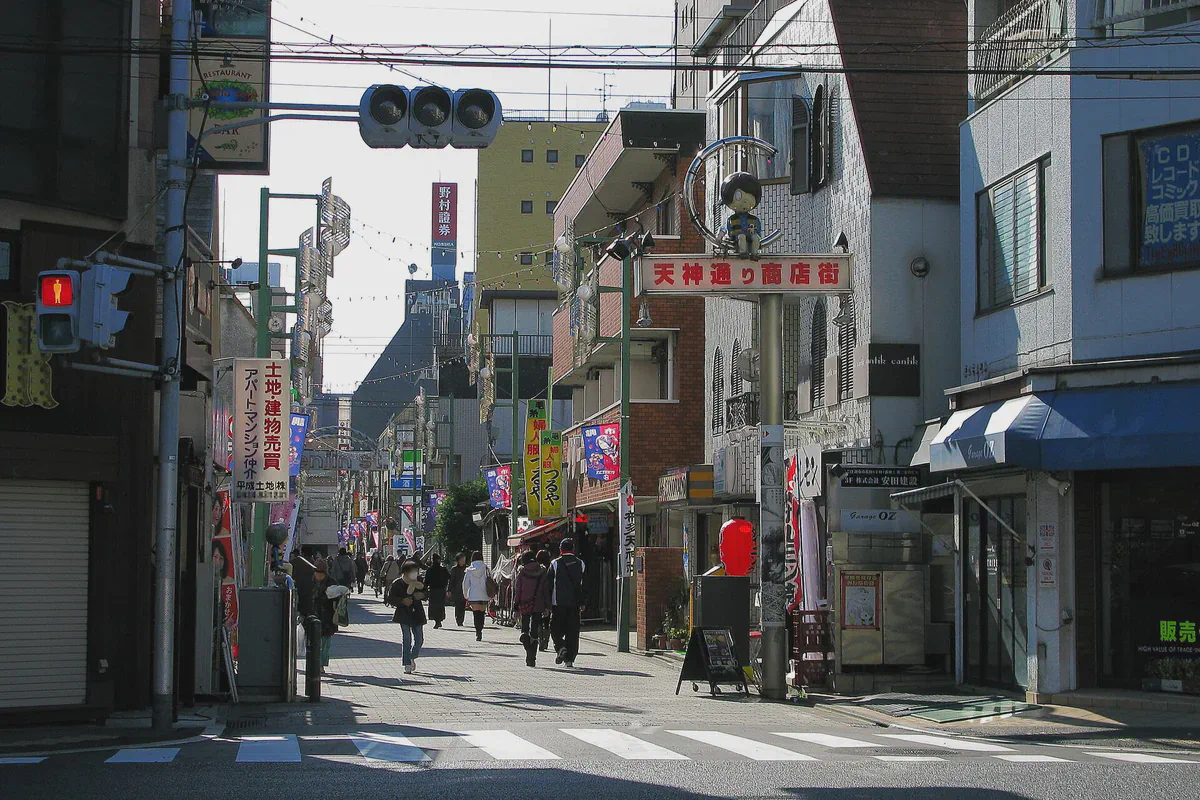
Mizuki Shigeru lived in Chōfu from 1959 until his death, and the town has kept his yokai on its streets. The tea house opened in 2003 at the gate of Jindaiji temple and moved in August 2024 to the Tenjin-dōri shopping street beside Chōfu station, where bronze figures of Kitarō and his companions already stood along the pavement. The shop sells the yokai as sweets, toys and prints, and a café under the same name opened nearby in 2025. The Mizuki Shigeru Road in Sakaiminato is the town of his childhood; this street is the town of his working life.Why here
The yokai in the shop are the ones Mizuki drew from the folklore cards of the 1930s and the picture scrolls of Edo: the wall of the night road, the flying cotton, the crying old man, the thing that rubs your shins. Their records are in the articles; the shop is where the drawn versions are sold as the town’s own.Yokai you will meet
- Nurikabe 塗り壁 — The night-road wall of the Fukuoka record, in Mizuki's shape, on the shelves and on the street.
- Ittan-momen 一反木綿 — The flying cotton of Kagoshima among the goods.
- Konaki-jiji 児啼爺 — The crying old man of Tokushima, as Mizuki drew him.
- Sunekosuri 脛擦り — The shin-rubber of the Okayama records, given a body here.
In manga: GeGeGe no Kitarō
Getting there
Chōfu Station (Keiō Line). A few minutes on foot from the north exit along Tenjin-dōri.
Sources and further reading
- Reliable secondary Kitarō Chaya (external link) Kitarō Chaya (Chōfu) Official site of the tea house: the 2003 opening at Jindaiji and the 2024 move to Tenjin-dōri.
- Reliable secondary Kitarō Chaya: access (external link) Kitarō Chaya (Chōfu) Address of the shop and the café on Tenjin-dōri and the hours notice; hours are kept there, not here.
Other places with these yokai
- Mizuki Shigeru Road 水木しげるロード Street
- Mizuki Shigeru Memorial Museum 水木しげる記念館 Museum
- The Konaki-jiji Statue at Fujikawa Valley 児啼爺の碑(藤川谷) Site
- Yokai Yashiki at Ōboke 妖怪屋敷と石の博物館(道の駅大歩危) Museum
Other places in Tokyo
- Oiwa Inari: Tamiya Shrine and Yōunji 於岩稲荷田宮神社・陽運寺 Shrine or temple
- Ōji Fox Parade 王子 狐の行列 Festival
- Takaosan Yakuōin 高尾山薬王院 Shrine or temple