鬼鎮神社 · Shrine or temple · Ranzan, Saitama
Kijin Shrine
The shrine that worships oni as its guardians, where iron clubs are offered and the Setsubun cry is "oni, come in".
Quick Facts
- Type
- Shrine or temple
- Prefecture
- Saitama · Ranzan
- Nearest station
- Musashi-Ranzan Station (Tōbu Tōjō Line)
- From the station
- About 10 to 15 minutes on foot
- English signage
- none
- Opening hours and admission
- See the official site (external link) · information checked on 2026-11-03
Hours, admission and closing days change, and this site does not list them. The link goes to the place's own page, with the date we last checked it.
What is there
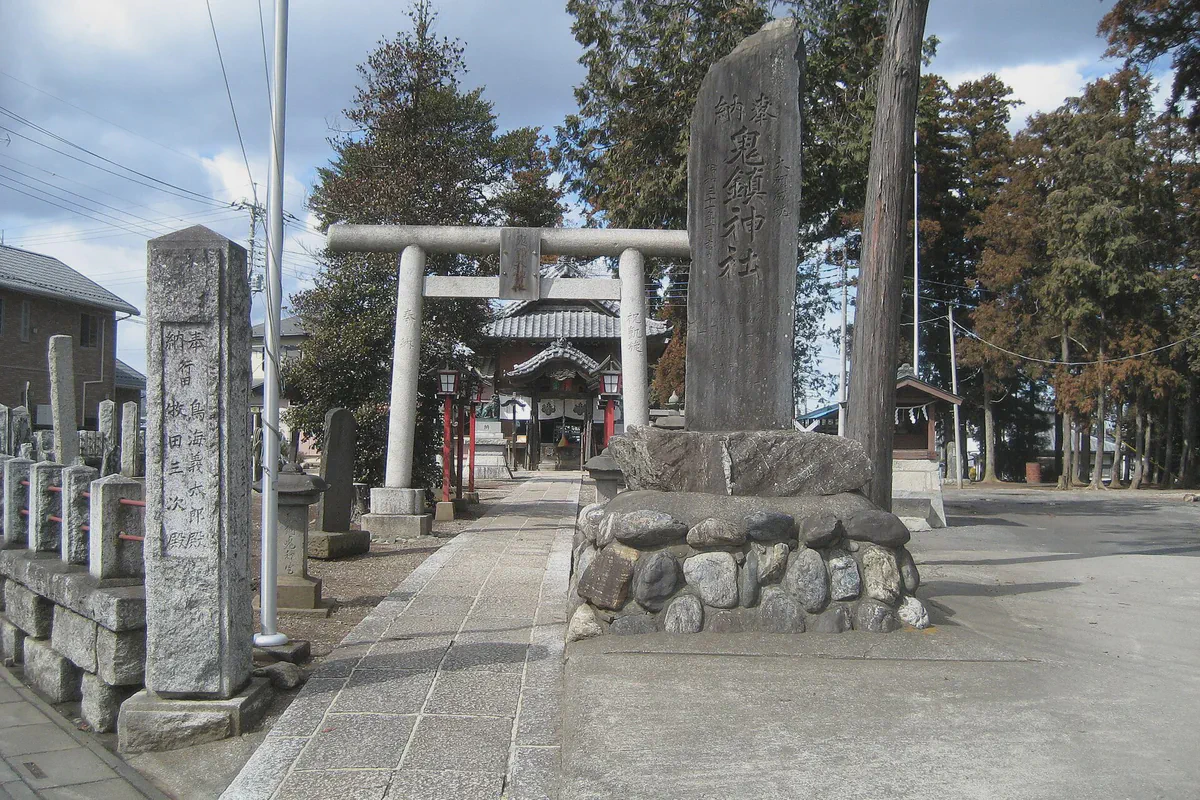
Kijin Shrine stands on the edge of the town of Ranzan, an hour from Tokyo, and it is the one shrine in Japan whose deities are oni. Iron clubs of every size are offered at the hall, the amulets carry an oni’s face, and at Setsubun in February, when the rest of the country throws beans at the oni to drive them out, the cry here is “fortune in, oni in, devils out”. The shrine’s own tradition dates it to 1182, as the guardian of the castle that stood across the river.Why here
The oni here is the guardian rather than the raider: a strength that keeps worse things out. The shrine tells of a swordsmith’s apprentice of great power who was an oni in disguise, and of the clubs offered in his memory. The article on the oni follows the creature from the mountain fortress to the household rite, and this shrine is the rite turned inside out.Yokai you will meet
- Oni 鬼 — Oni as the shrine's own deities: iron clubs on the altar and a Setsubun that calls them in.
Getting there
Musashi-Ranzan Station (Tōbu Tōjō Line). About 10 to 15 minutes on foot.
Sources and further reading
- Reliable secondary Kijin Shrine (external link) Ranzan Town Tourism Association The shrine that enshrines oni, its iron clubs and its Setsubun cry; access from Musashi-Ranzan.
- Database Kijin Shrine (鬼鎮神社) (external link) Wikipedia (Japanese) The 1182 tradition as guardian of Sugaya castle, the oni deities and the Setsubun rite.
Other places with these yokai
- Mitsuishi Shrine and the Oni's Handprints 三ツ石神社(鬼の手形) Shrine or temple
- Namahage Museum and Shinzan Folklore Museum なまはげ館・男鹿真山伝承館 Museum
- Kinasa Folk Museum and the Demon Woman Momiji 鬼無里ふるさと資料館と鬼女紅葉の里 Museum
- Seimei Shrine and Ichijō Modoribashi 晴明神社・一条戻橋 Shrine or temple
- Japan Oni Exchange Museum 日本の鬼の交流博物館 Museum
- Kubizuka Daimyōjin 首塚大明神 Shrine or temple
- Onitake Inari Shrine on Mount Ōe 鬼嶽稲荷神社 Shrine or temple
- Gangōji 元興寺 Shrine or temple
- Kibitsu Shrine 吉備津神社 Shrine or temple
- Kinojō, the Oni's Castle 鬼ノ城 Site