
一条妖怪ストリート(大将軍商店街)と大将軍八神社 · Street · Kyoto (Kamigyō), Kyoto
Ichijō Yōkai Street and Daishōgun Hachi Shrine
Four hundred metres of shops on the road the night parade once took, with yokai figures at their doors and the shrine of the direction god at the west end.
Quick Facts
- Type
- Street
- Prefecture
- Kyoto · Kyoto (Kamigyō)
- Nearest station
- Kitano-Hakubaichō Station (Randen Kitano Line)
- From the station
- A few minutes on foot to the west end of the street; Emmachi Station on the JR Sagano Line is about fifteen minutes away
- English signage
- some
- Opening hours and admission
- See the official site (external link) · information checked on 2026-11-05
Hours, admission and closing days change, and this site does not list them. The link goes to the place's own page, with the date we last checked it.
What is there
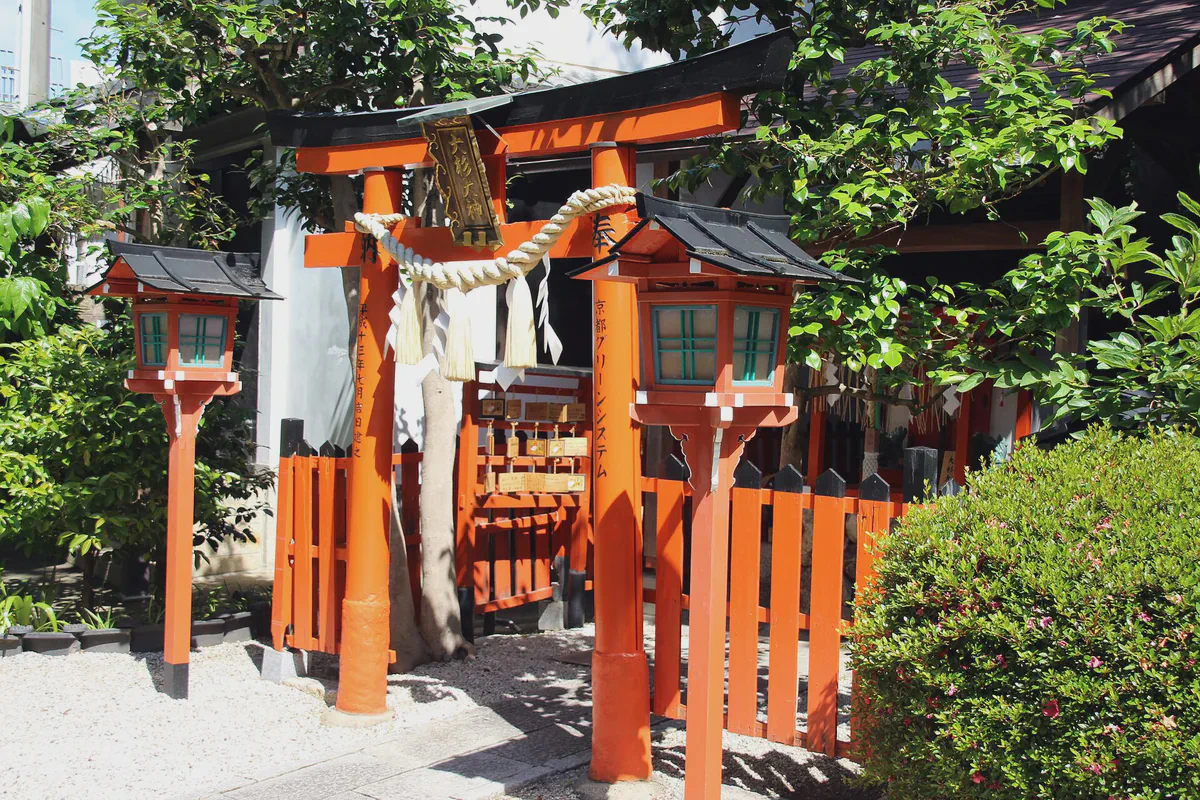
The Daishōgun shopping street runs along Ichijō-dōri for about four hundred metres between Nishiōji and Nakadachiuri, a few minutes south of Kitano Tenmangū. Since the 2000s its shops have set yokai figures in front of their doors, dozens of them, made by the shopkeepers and by students, under banners reading Yōkai Street; there are yokai sweets, yokai goods and a shrine market called Mononoke-ichi in summer. The costume parade that walked the street each October is suspended for the present. At the west end stands Daishōgun Hachi Shrine, founded in 794 when the capital was laid out, as the hall of the direction god guarding the north-western gate of heaven of the palace; its treasure hall keeps eighty wooden statues of the god, and the shrine has an English page of its own.Why here
The tale behind the street is the oldest night parade of all. In the 960s, it says, household tools thrown out at the year’s end gained souls, took shape as creatures, and paraded along Ichijō-dōri at night; anyone who met them died, until the procession ran from a charm carried by a regent’s party and the monks were sent to burn out their lair. The umbrella, the lantern and the lute of the articles are the descendants of those parading tools, and the picture scrolls of the night parade painted in the centuries after put the same road under their feet.Yokai you will meet
- Karakasa-kozō 唐傘小僧 — The one-legged umbrella of the night parade, among the figures at the shop doors.
- Chōchin-obake 提灯お化け — The lantern with a face, a tool-spirit of the kind the Ichijō tale set parading.
- Biwa-bokuboku 琵琶牧々 — The lute with a head, one of the instruments the night-parade scrolls set walking.
Getting there
Kitano-Hakubaichō Station (Randen Kitano Line). A few minutes on foot to the west end of the street; Emmachi Station on the JR Sagano Line is about fifteen minutes away.
Sources and further reading
- Reliable secondary Daishōgun Hachi Shrine (external link) Daishōgun Hachi Shrine (Kyoto) Official site: the founding in 794 at the north-western corner of the palace, the treasure hall and access by bus.
- Reliable secondary Daishogun-hachi jinja Shrine (English) (external link) Daishōgun Hachi Shrine (Kyoto) English page on the shrine's origin as the direction god's hall.
- Database Daishōgun Hachi Shrine (大将軍八神社) (external link) Wikipedia (Japanese) The 794 founding, the eighty wooden statues of the direction god and the shrine's history.
- Database Yokai town revival in Japan (日本の妖怪街おこし) (external link) Wikipedia (Japanese) The Daishōgun shopping street on Ichijō-dōri as the Kyoto yokai street, with the other yokai towns of Japan.
- Reliable secondary Yokai journey: the night parade of Ichijō-dōri (external link) Keihan Group (Kyoto-tsū no Susume, no. 88) The tsukumogami of the 960s, their parade along Ichijō-dōri and the picture scrolls of the night parade.
Other places in Kyoto
- Seimei Shrine and Ichijō Modoribashi 晴明神社・一条戻橋 Shrine or temple
- Nue Pond and Nue Daimyōjin 鵺池・鵺大明神 Site
- Kurama-dera 鞍馬寺 Shrine or temple
- Japan Oni Exchange Museum 日本の鬼の交流博物館 Museum
- Kubizuka Daimyōjin 首塚大明神 Shrine or temple
- Onitake Inari Shrine on Mount Ōe 鬼嶽稲荷神社 Shrine or temple