
伝承園 · Museum · Tōno, Iwate
Denshōen
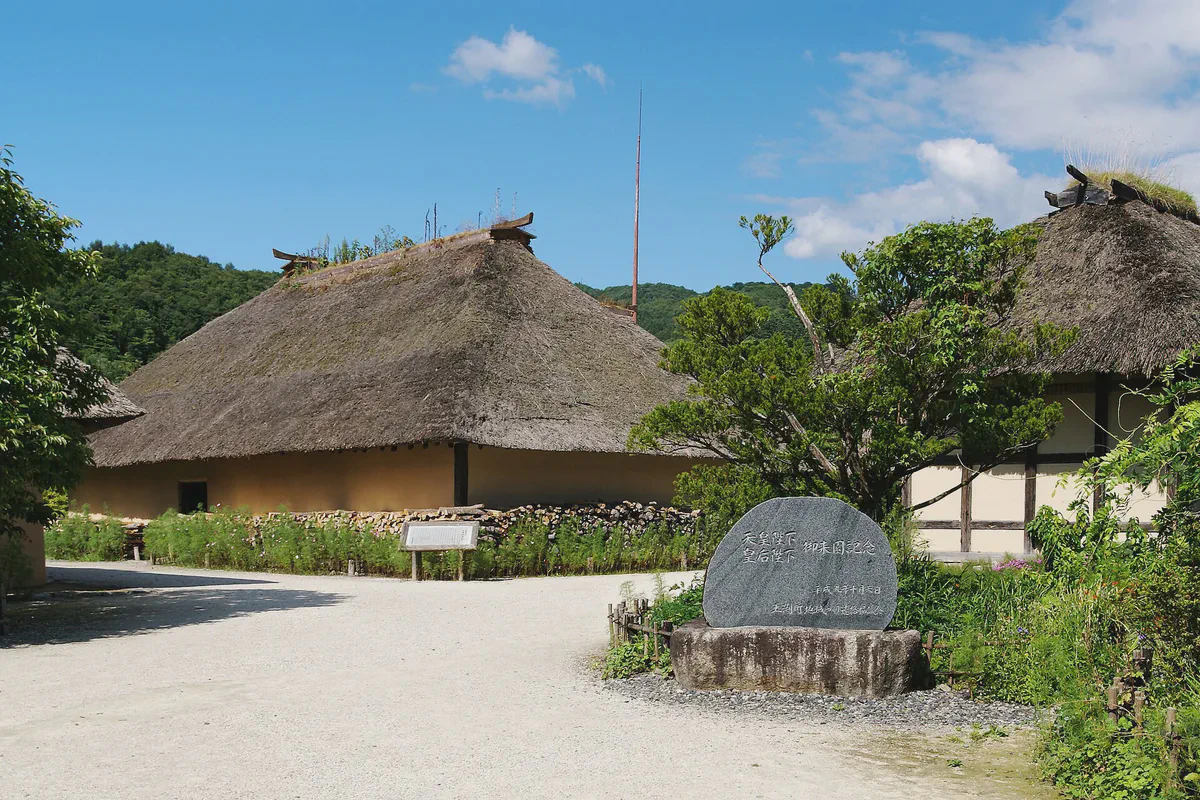
A folk park built around an old L-shaped farmhouse, with a hall of a thousand silkworm deities and a room for the storyteller whose tales became Tōno Monogatari.
Quick Facts
- Type
- Museum
- Prefecture
- Iwate · Tōno
- Nearest station
- Tōno Station (JR Kamaishi Line)
- From the station
- Hayachine bus (Tsuchibuchi line) about 22 minutes to the Denshōen stop
- English signage
- full
- Opening hours and admission
- See the official site (external link) · information checked on 2026-11-03
Hours, admission and closing days change, and this site does not list them. The link goes to the place's own page, with the date we last checked it.
What is there
Denshōen is a working reconstruction of a Tōno farm: an L-shaped farmhouse where people and horses lived under one roof, a water mill, a storehouse and a hall where a thousand oshira-sama, the paired wooden figures of the silkworm deity, stand in rows wrapped in layers of cloth. One room is given to Sasaki Kizen, the storyteller born in this village whose tales were written down as Tōno Monogatari. Storytellers still sit by the hearth on set days, and the kitchen serves the local noodles. Kappa-buchi is five minutes away on foot, and the park is one of the places that sells the kappa-catching licence.Why here
Every tale in the 1910 collection came from this valley. Sasaki Kizen told them in Tokyo over the winter of 1908 to 1909, and the book keeps the zashiki-warashi in the old houses of Tōno, the oshira-sama in the kitchens, and the kappa in the rivers, in the order he told them. The oshira-sama hall shows the deity the tales describe: a horse’s head and a girl’s head on two sticks, the pair wrapped anew each year.Yokai you will meet
- Zashiki-warashi 座敷童子 — The storyteller who put the child spirit of Tōno's old houses into the 1910 tales was born a few minutes' walk from here.
- Kappa 河童 — Kappa-buchi is five minutes away; the park sells the catching licence.
In manga: Tono Monogatari
Getting there
Tōno Station (JR Kamaishi Line). Hayachine bus (Tsuchibuchi line) about 22 minutes to the Denshōen stop.
Sources and further reading
- Museum Denshōen (external link) Denshōen (Tōno) Official site: the farmhouse, the oshira-sama hall, the Sasaki Kizen room and the storytelling sessions.
- Reliable secondary Denshōen (external link) Tōno Tourism Association (Tōno Jikan) Opening information and access by the Hayachine bus.
- Primary text Tōno Monogatari (遠野物語) (external link) Yanagita Kunio (1910); Aozora Bunko edition Tale 17 records a spirit of old Tōno houses often seen as a child of about twelve or thirteen, sounds in an empty room, and prosperity tied to the spirit's presence.
Other places with these yokai
- Tōno Municipal Museum 遠野市立博物館 Museum
- Tōno Folktale Museum とおの物語の館 Museum
- Kappa-buchi and Jōkenji カッパ淵と常堅寺 Site
- Ryokufusō, the Inn of the Zashiki-warashi 緑風荘(座敷わらしの宿) Site
- Fukusaki: Yanagita Kunio's Birthplace and the Yokai Benches 福崎町(柳田國男・松岡家記念館と妖怪ベンチ) Site
- Mizuki Shigeru Road 水木しげるロード Street
- Yokai Art Museum, Shōdoshima 妖怪美術館(小豆島) Museum
- Tanushimaru Station, the Kappa Station 田主丸駅(河童駅舎) Site
- Kurume Suitengū 久留米水天宮(全国総本宮) Shrine or temple
- The Kappa Landing Stone at Yatsushiro 河童渡来之碑(徳渕の津) Site
Other places in Iwate
- Kappa-buchi and Jōkenji カッパ淵と常堅寺 Site
- Tōno Municipal Museum 遠野市立博物館 Museum
- Mitsuishi Shrine and the Oni's Handprints 三ツ石神社(鬼の手形) Shrine or temple
- Tōno Folktale Museum とおの物語の館 Museum
- Ryokufusō, the Inn of the Zashiki-warashi 緑風荘(座敷わらしの宿) Site