
大雄山最乗寺 · Shrine or temple · Minamiashigara, Kanagawa
Daiyūzan Saijōji
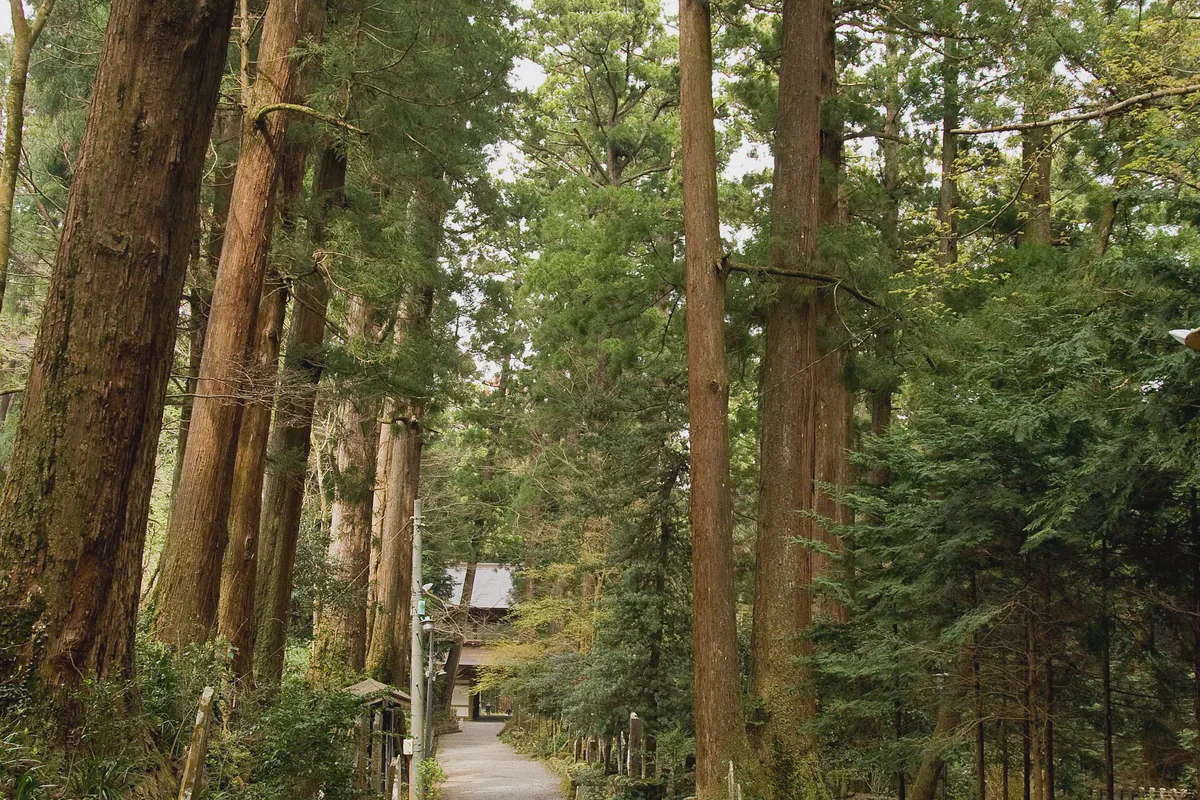
A Zen temple in a cedar forest, guarded by the monk who became a tengu, with giant iron sandals left as offerings.
Quick Facts
- Type
- Shrine or temple
- Prefecture
- Kanagawa · Minamiashigara
- Nearest station
- Daiyūzan Station (Izuhakone Railway Daiyūzan Line)
- From the station
- Bus about ten minutes to the Dōryōson stop at the gate
- English signage
- full
- Opening hours and admission
- See the official site (external link) · information checked on 2026-11-03
Hours, admission and closing days change, and this site does not list them. The link goes to the place's own page, with the date we last checked it.
What is there
Saijōji was founded in 1394 in a cedar forest on the slopes above the Ashigara plain, and more than thirty halls stand along the stream. The hall at the top of the stone steps is given to Dōryō, the monk who built the temple and, the tale says, turned into a tengu when the founder died in 1411, flying off with a vow to guard the mountain for ever. Tengu with long noses and with beaks flank his hall, and beside it pairs of iron geta, the tengu’s one-toothed sandals, stand in every size up to one that several men could not lift, offered by the faithful as a wish for a sound pair of feet and a sound marriage.Why here
The monk who becomes a tengu is one of the oldest forms of the creature: the medieval tales fill the mountains with proud or powerful clerics reborn with wings and a beak. Dōryō is the kindly end of that line, a guardian rather than a tempter, and the iron sandals are the offering that grew up around him. The tengu that carries children away in the village records is another creature with the same name.Yokai you will meet
- Tengu 天狗 — Dōryō, the monk who became a tengu to guard the temple, and the iron sandals offered to him.
Getting there
Daiyūzan Station (Izuhakone Railway Daiyūzan Line). Bus about ten minutes to the Dōryōson stop at the gate.
Sources and further reading
- Reliable secondary Daiyūzan Saijōji (external link) Daiyūzan Saijōji Official site: the founding in 1394, Dōryō and the iron geta.
- Reliable secondary Daiyūzan Saijōji: frequently asked questions (external link) Daiyūzan Saijōji Visiting information, kept on the temple's site rather than here.
- Database Saijōji (最乗寺) (external link) Wikipedia (Japanese) The Dōryō legend of 1411, the halls and the offerings of geta.
Other places with these yokai
- Tōno Municipal Museum 遠野市立博物館 Museum
- Tōno Folktale Museum とおの物語の館 Museum
- Kashōzan Mirokuji 迦葉山弥勒寺 Shrine or temple
- Takaosan Yakuōin 高尾山薬王院 Shrine or temple
- Kurama-dera 鞍馬寺 Shrine or temple
- Fukusaki: Yanagita Kunio's Birthplace and the Yokai Benches 福崎町(柳田國男・松岡家記念館と妖怪ベンチ) Site
- Mizuki Shigeru Road 水木しげるロード Street
- Yokai Yashiki at Ōboke 妖怪屋敷と石の博物館(道の駅大歩危) Museum