
浮世絵(うきよえ)
Ukiyo-e
Woodblock prints, and the artists who gave the yokai their most famous faces.
The print artists of the nineteenth century drew yokai for a mass market, and their pictures are the ones most people now carry in their heads. Hokusai’s Hyaku Monogatari of about 1831 has Oiwa’s face in a lantern; Utagawa Kuniyoshi’s triptych of the 1840s has a vast skeleton leaning through the ruined palace at Sōma, the picture later attached to the invented gashadokuro; Kuniyoshi drew the rokurokubi and a hundred others; Tsukioka Yoshitoshi’s New Forms of Thirty-Six Ghosts (1889–92) closes the era.
Cheaper prints did more. Actor prints show a kabuki dancer as a one-legged umbrella in 1857; omocha-e, toy prints, and sugoroku board games line up dozens of named yokai in rows for children, and the mikoshi-nyūdō and nure-onna on this site are met in them.
Related yokai
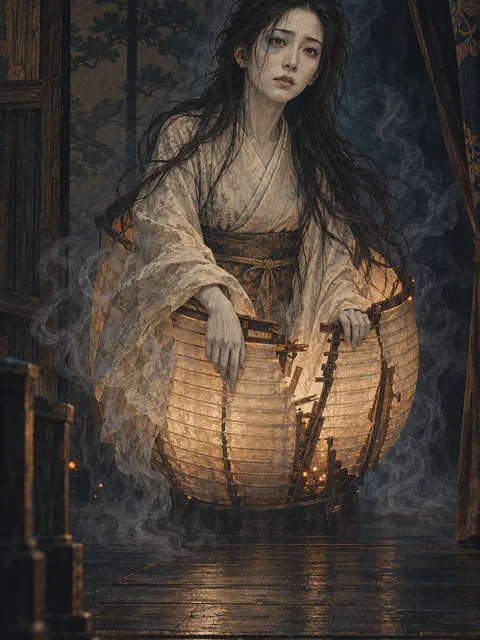
Oiwa
お岩(おいわ)
Oiwa is the wronged wife of Tsuruya Nanboku's 1825 kabuki play Tōkaidō Yotsuya Kaidan — poisoned under the name of medicine, betrayed, and returning to pursue her husband. On stage, she emerges from a burning lantern.
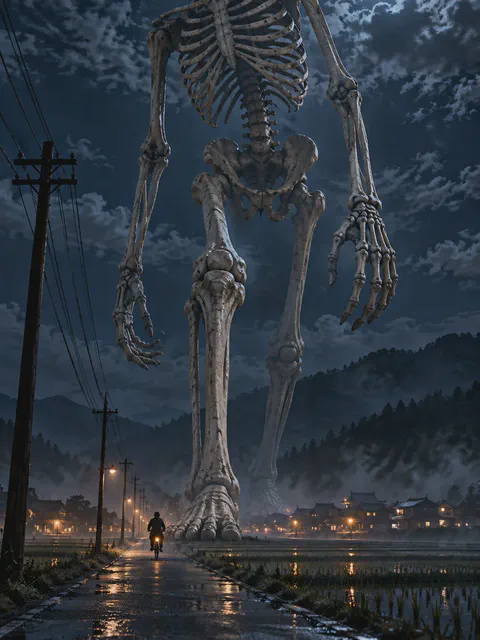
Gashadokuro
がしゃどくろ
Gashadokuro, the giant skeleton, looks ancient. It was created by the writer Saitō Morihiro in 1966, taken into Mizuki Shigeru's yokai collection in 1968, and later matched to a Kuniyoshi print from the 1840s that never used the name.
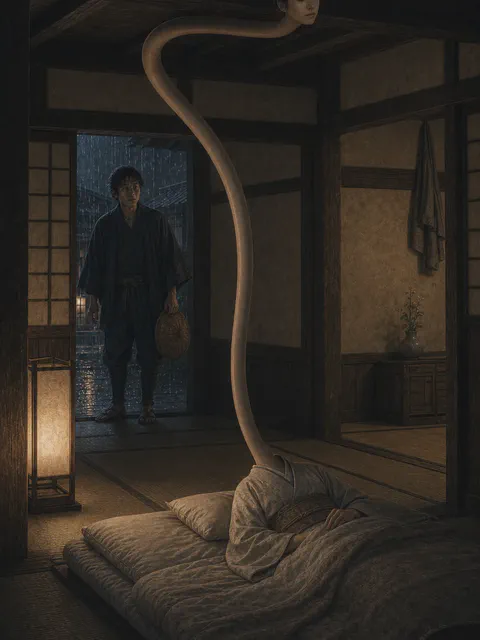
Rokurokubi
轆轤首(ろくろくび)
A seemingly human figure whose neck stretches at night—and one name that once covered more than one uncanny form.
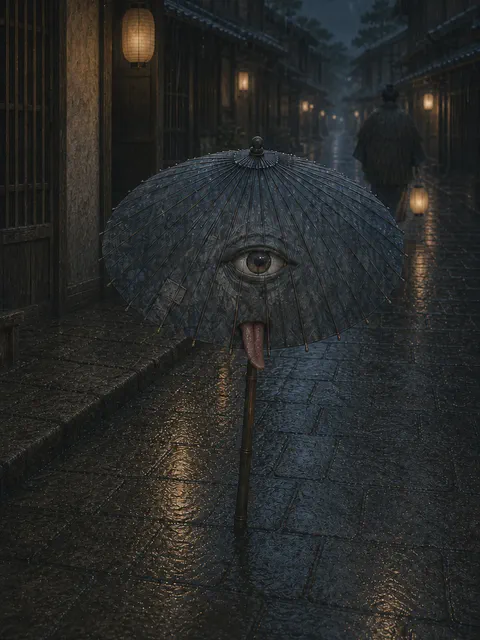
Karakasa-kozō
唐傘小僧(からかさこぞう)
An 1857 Osaka print shows a kabuki actor playing a one-legged umbrella monster — the clearest history of a yokai known through pictures rather than encounters.
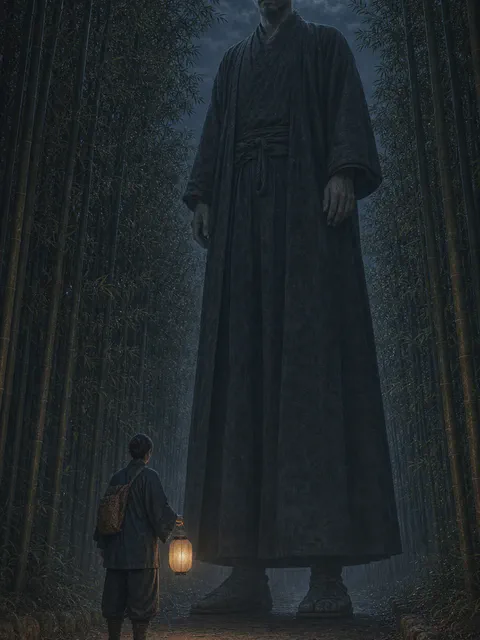
Mikoshi-nyūdō
見越入道(みこしにゅうどう)
A 1938 Nagasaki record warns of bamboo rustling over a night road and a looming figure that must be recognized aloud.
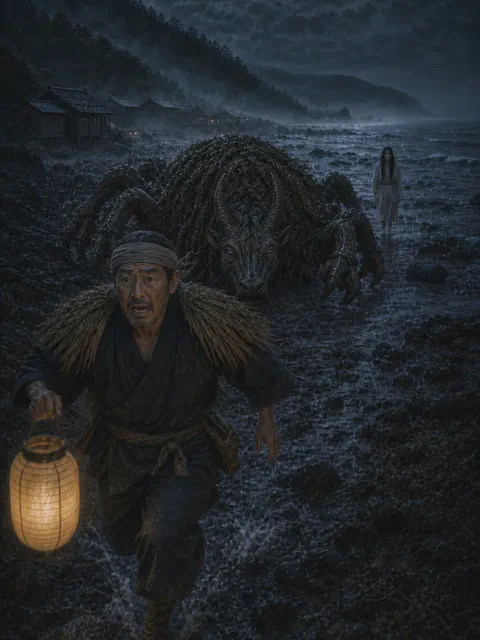
Nure-onna
濡女(ぬれおんな)
In Iwami in 1933, a fisherman walking home at night was handed an infant by a wet-haired woman — and when he threw the bundle down and ran, something else came out of the dark after him.