時代区分
Periods of Japanese history
The era names used across the site, with their dates.
Articles and the timeline name periods rather than centuries where that is how the sources speak. The conventional dates:
| Period | Dates | On this site |
|---|---|---|
| Nara | 710–794 | The first chronicles and the earliest tales |
| Heian | 794–1185 | The court, the setsuwa collections, the night parade |
| Kamakura | 1185–1333 | The Tale of the Heike, the tale collections continued |
| Muromachi | 1336–1573 | Otogi-zōshi, the Noh stage, the first yokai scrolls |
| Azuchi–Momoyama | 1573–1603 | Transition; the Morinji kettle tale is set here |
| Edo | 1603–1868 | Sekien, kaidan, kabuki, prints and broadsheets |
| Meiji | 1868–1912 | Hearn, Inoue Enryō, Tōno Monogatari |
| Taishō | 1912–1926 | The first folklore journals |
| Shōwa | 1926–1989 | Most of the records; Mizuki Shigeru; the 1979 rumour |
| Heisei | 1989–2019 | Urban legends, school ghost stories, the online database |
| Reiwa | 2019– | The Amabie revival of 2020 |
Edo is the period most often named, because so much of what we know about yokai was printed then; the folklore records that place a creature in a village are mostly twentieth-century.
Related yokai
Oni
鬼(おに)
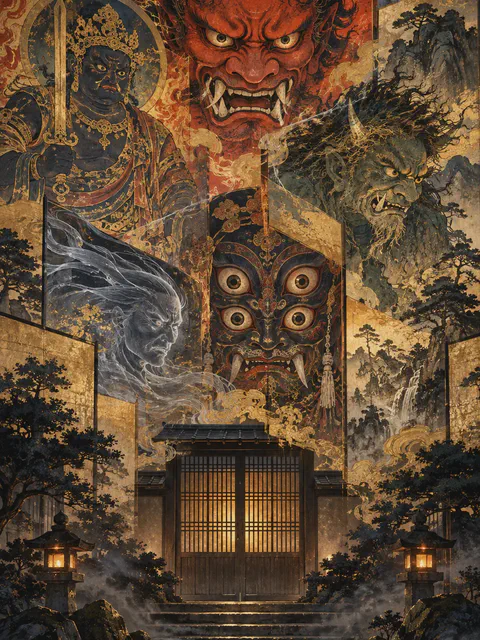
The horned, red-skinned oni with a club is a late composite. The word first named an invisible spirit of the dead, then hell's wardens, mountain monsters, outsiders — and even the figure who once chased oni away.
Nue
鵺(ぬえ)
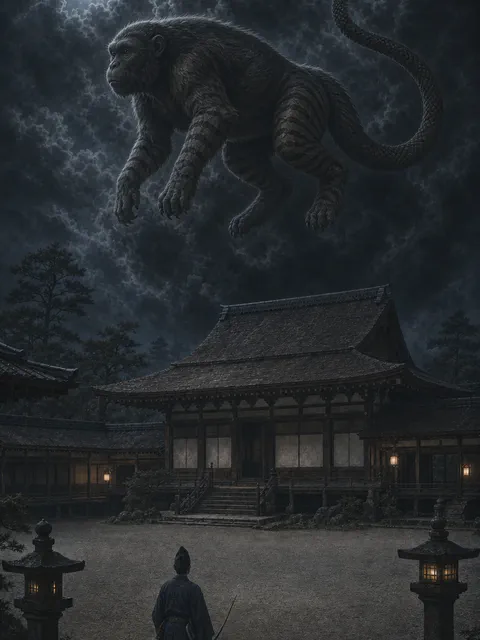
In The Tale of the Heike, a black cloud and a bird's cry sicken the emperor until an archer shoots the creature down — and the versions disagree on what fell.
Shuten-dōji
酒呑童子(しゅてんどうじ)
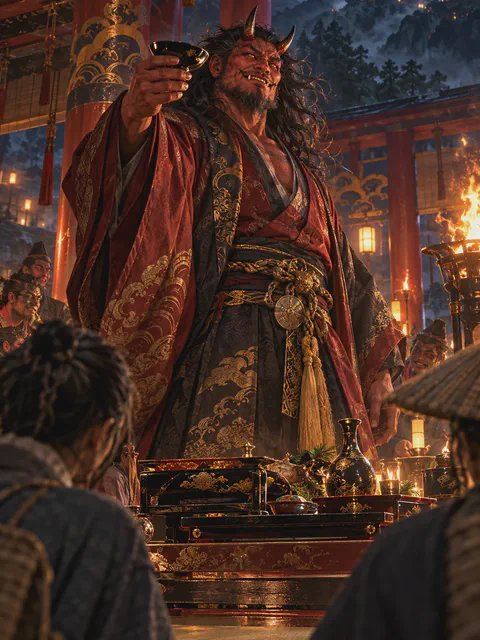
The tale of Shuten-dōji appeared in the fourteenth century: an oni lord on Mt. Ōe who carried off the daughters of the capital, and the warriors who got in disguised as monks and defeated him with sake.
Oiwa
お岩(おいわ)
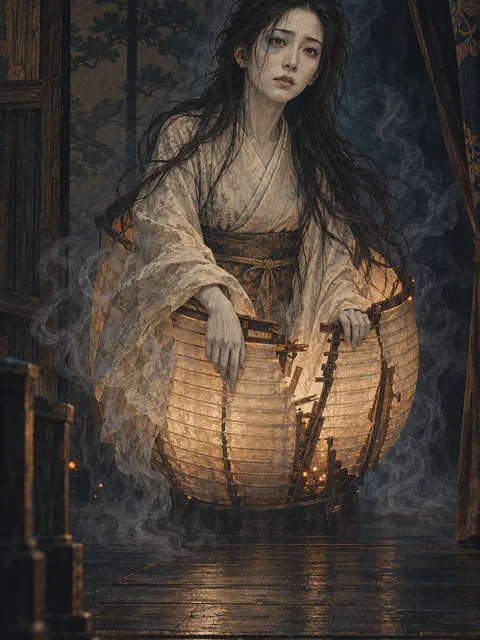
Oiwa is the wronged wife of Tsuruya Nanboku's 1825 kabuki play Tōkaidō Yotsuya Kaidan — poisoned under the name of medicine, betrayed, and returning to pursue her husband. On stage, she emerges from a burning lantern.

Kuchisake-onna
口裂け女(くちさけおんな)
Kuchisake-onna is not an old yokai. She is a rumour that swept through Japanese schoolchildren in 1978–79: a masked woman asking 'Am I pretty?' Almost every other detail changed from school to school.
Amabie
アマビエ
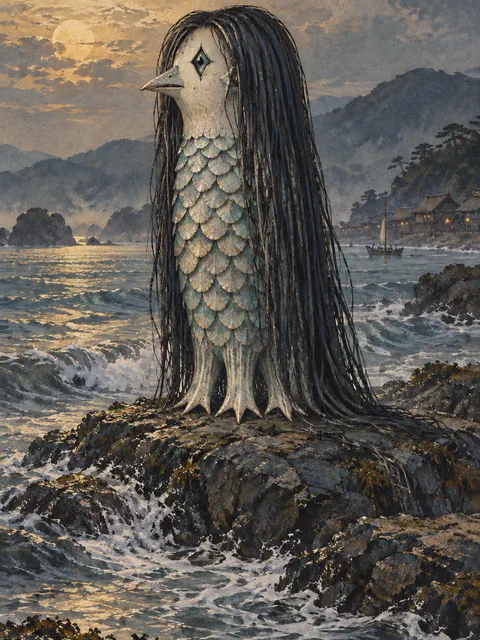
A printed sheet dated 1846 tells of a creature with long hair and a beak that rose from the sea off Higo, foretold six years of good harvests and an epidemic, and asked people to copy its picture and show it around.