
御伽草子(おとぎぞうし)
Otogi-zōshi
Short illustrated tales of the Muromachi and early Edo periods, the home of the monster-slaying legends.
Otogi-zōshi are the popular tales of the fourteenth to seventeenth centuries: short, illustrated, anonymous, copied as scrolls and booklets and read aloud. Many are about warriors and monsters, and the great demon-slaying stories reach their full form here. Shuten-dōji on Mount Ōe, the giant centipede of Mount Mikami, Ōtakemaru on Suzuka, the earth spider at Yorimitsu’s bedside, the fox Tamamo-no-Mae at the court of Retired Emperor Toba: all have otogi-zōshi versions, and several have none older.
The name was given later, from a set of twenty-three tales printed in Osaka in the eighteenth century, and it is used loosely for the whole genre. The Tsukumogami-ki, in which the discarded tools rise, belongs to it too.
Related yokai

Shuten-dōji
酒呑童子(しゅてんどうじ)
The tale of Shuten-dōji appeared in the fourteenth century: an oni lord on Mt. Ōe who carried off the daughters of the capital, and the warriors who got in disguised as monks and defeated him with sake.
Ōmukade
大百足(おおむかで)
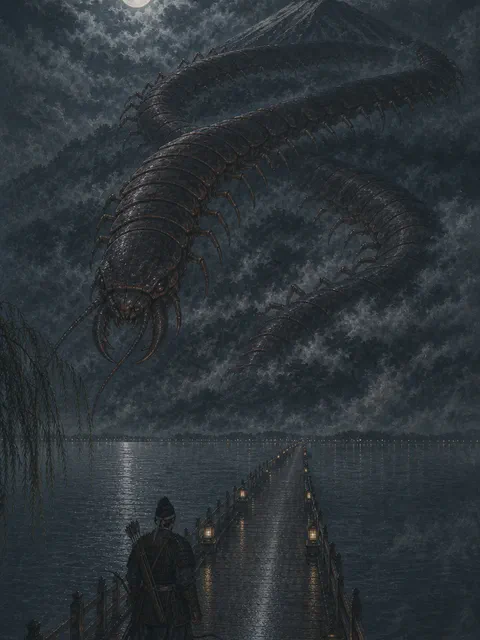
A warrior who walked over a serpent lying across the Long Bridge of Seta was asked by the dragon clan for help — because a centipede large enough to wrap a mountain was killing them, and they could not stop it themselves.
Ōtakemaru
大嶽丸(おおたけまる)
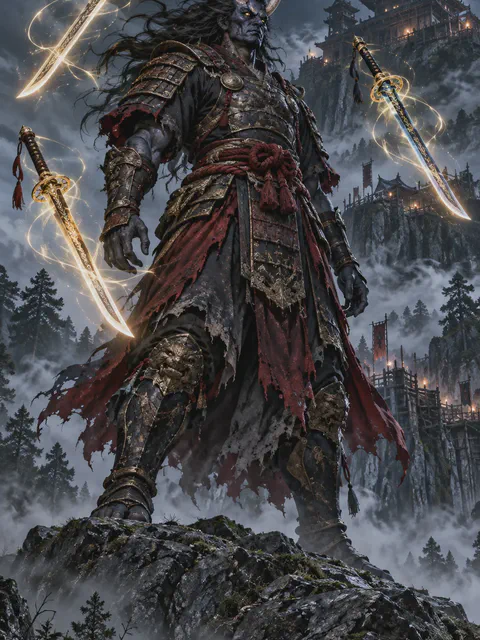
In the Muromachi tale Tamura no Sōshi, the demon god Ōtakemaru of Mt. Suzuka cannot be found or beaten by force. The hero Tamura-maru wins only because Suzuka Gozen deceives the demon and takes his swords.
Tsuchigumo
土蜘蛛(つちぐも)
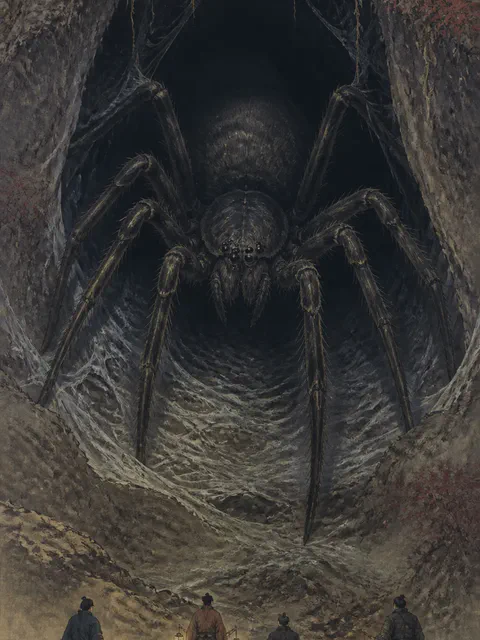
A monk appears at a sick warlord's bedside and throws spider silk at him. That is the tale. But the same word, centuries earlier, was what the court called people it wanted to treat as outsiders.

Tamamo-no-Mae
玉藻前(たまものまえ)
In the fifteenth-century tale, Tamamo-no-Mae is the most learned woman at the court of Retired Emperor Toba. He falls ill, divination names her as the cause, and she flees to Nasu as a fox. The killing stone came later.
On the timeline
- c. 1000 The court of Emperor Ichijō, where the demon-slaying tales are set
- 14th century The first monster-slaying scrolls
- c. 1370 The Taiheiki tells of Tawara Tōda and the centipede
- 1453–1470 The Tamamo-no-Mae tale is written down
- 15th–16th century Tsukumogami-ki and the otogi-zōshi