
能・歌舞伎(のう・かぶき)
Noh and kabuki
The stage: where monsters were played, and where several got their final form.
Noh, the masked drama of the fourteenth century onward, took its plots from the tales and gave them a shape that lasted. Nue has Yorimasa’s monster; Tsuchigumo has the spider throwing its threads across the stage; Sesshōseki gives Tamamo-no-Mae her killing stone, which the earlier tale did not have; Ōeyama has Shuten-dōji; Yamanba has the mountain woman as a wanderer who dances. The demon mask with its horns and the fox mask are Noh’s.
Kabuki, from the seventeenth century, made the ghost play a summer genre: Oiwa in Tōkaidō Yotsuya Kaidan (1825) bursts from a burning lantern by a stage trick, and the umbrella monster hopping on one bound leg, printed in Osaka in 1857, is a dancer’s role before it is anyone’s sighting.
Related yokai
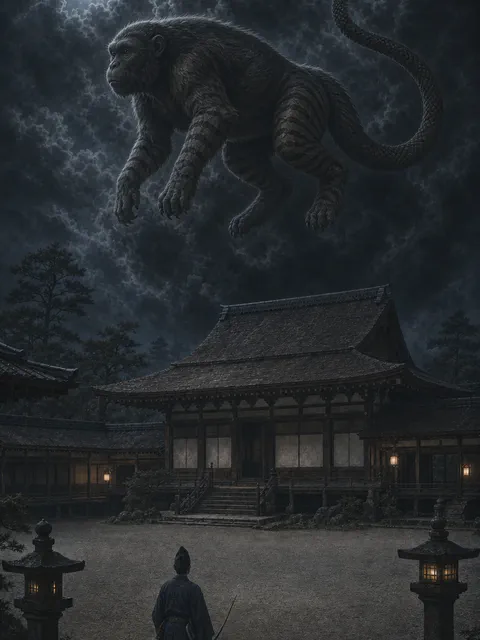
Nue
鵺(ぬえ)
In The Tale of the Heike, a black cloud and a bird's cry sicken the emperor until an archer shoots the creature down — and the versions disagree on what fell.
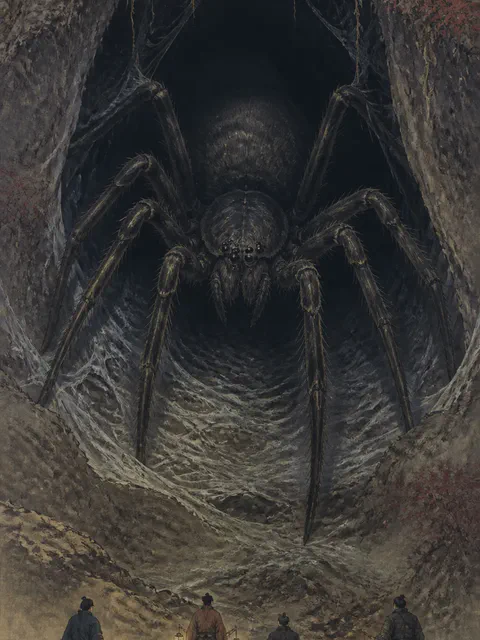
Tsuchigumo
土蜘蛛(つちぐも)
A monk appears at a sick warlord's bedside and throws spider silk at him. That is the tale. But the same word, centuries earlier, was what the court called people it wanted to treat as outsiders.
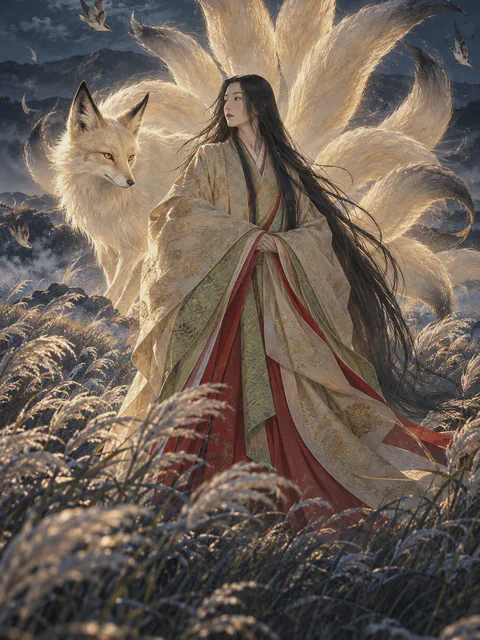
Tamamo-no-Mae
玉藻前(たまものまえ)
In the fifteenth-century tale, Tamamo-no-Mae is the most learned woman at the court of Retired Emperor Toba. He falls ill, divination names her as the cause, and she flees to Nasu as a fox. The killing stone came later.
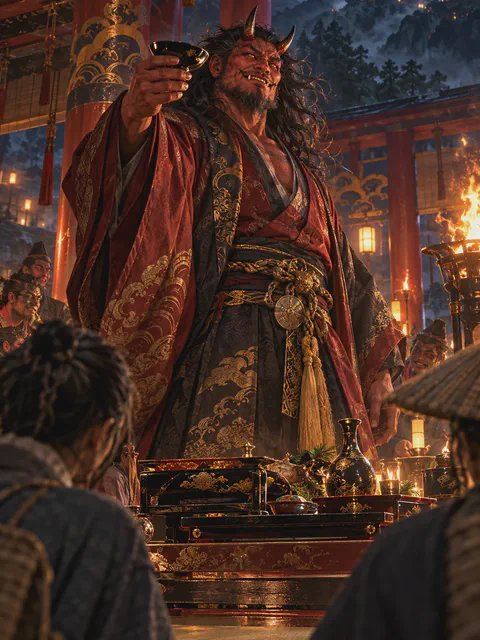
Shuten-dōji
酒呑童子(しゅてんどうじ)
The tale of Shuten-dōji appeared in the fourteenth century: an oni lord on Mt. Ōe who carried off the daughters of the capital, and the warriors who got in disguised as monks and defeated him with sake.
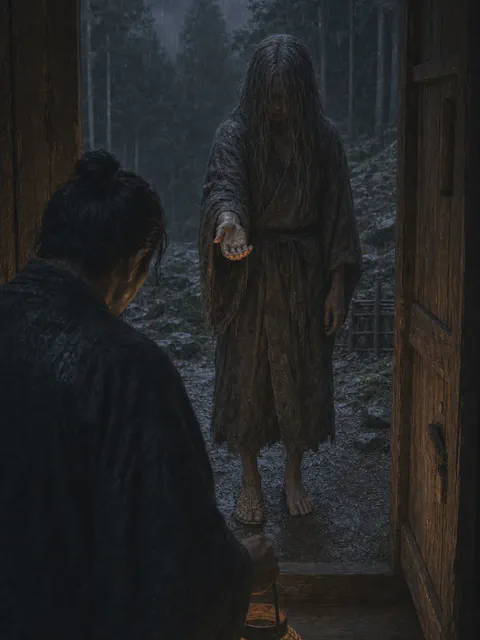
Yamauba
山姥(やまうば)
A man carries a woven object home from the hills, and that night a woman's voice demands the return of her ashinaka.
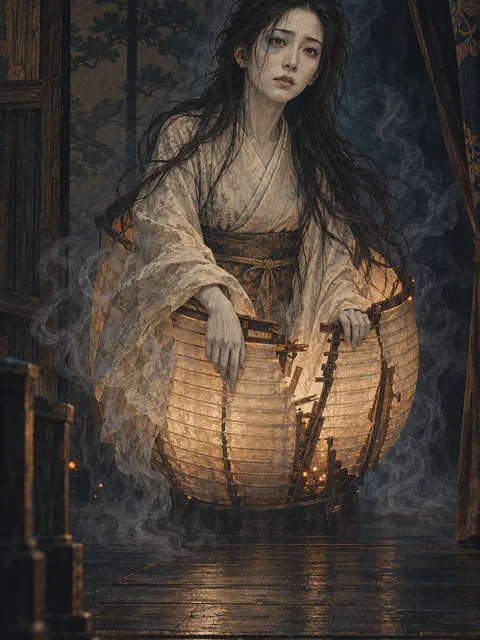
Oiwa
お岩(おいわ)
Oiwa is the wronged wife of Tsuruya Nanboku's 1825 kabuki play Tōkaidō Yotsuya Kaidan — poisoned under the name of medicine, betrayed, and returning to pursue her husband. On stage, she emerges from a burning lantern.
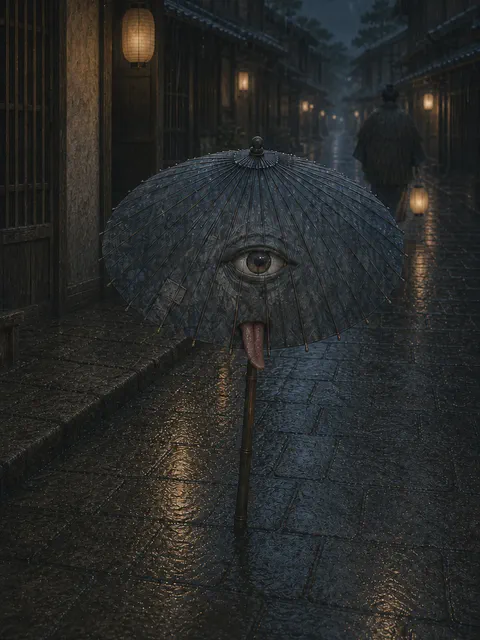
Karakasa-kozō
唐傘小僧(からかさこぞう)
An 1857 Osaka print shows a kabuki actor playing a one-legged umbrella monster — the clearest history of a yokai known through pictures rather than encounters.