物の怪(もののけ)
Mononoke
A Heian word for an unseen spirit that causes illness; later, a word for monsters in general.
In the Heian court mononoke meant the thing behind a sickness: a spirit, of someone dead or of someone living and jealous, that had attached itself to the patient. The treatment was ritual. Monks and mediums drew the spirit out of the sufferer into a medium, made it speak and name itself, and sent it away. The Tale of Genji has the most famous case, the living spirit of Lady Rokujō.
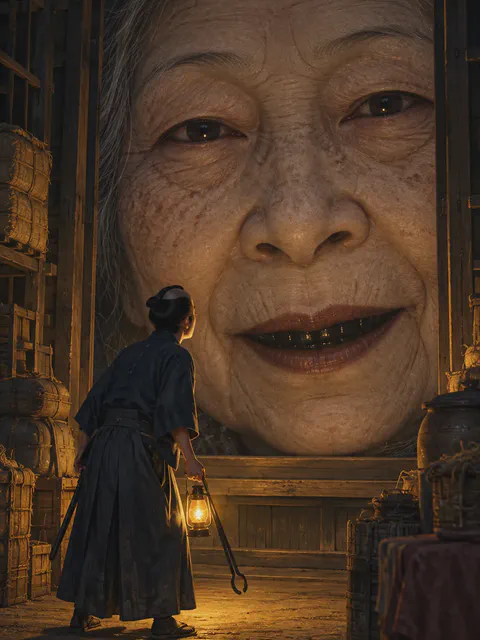
By the Edo period the word had loosened into a general term for strange beings, and that is the sense in Inō Mononoke-roku, the illustrated account of a month of apparitions in a samurai boy’s house in Bingo in 1749, in which the giant face called ōkubi fills a doorway. The 1997 film Princess Mononoke gave the word its current fame; its mononoke are gods of the forest, a different thing again.
Related yokai
Ōkubi
大首(おおくび)
In the Inō Mononoke-roku, set in Miyoshi in 1749, sixteen-year-old Heitarō faces a month of nightly visitations. One night an old woman's face, teeth blackened, fills his doorway. He takes the fire tongs to it.