今昔百鬼拾遺(こんじゃくひゃっきしゅうい)
Konjaku Hyakki Shūi
Sekien's third book, 1781: gleanings, with more borrowed from Chinese texts.
Shūi means gleanings, the things picked up after the harvest, and the third book of 1781 reaches further for its subjects: Chinese encyclopaedias and histories, classical poetry, Buddhist lore. The shin, the giant clam whose breath builds mirages, comes from Chinese natural history by way of the Wakan Sansai Zue; the keukegen, a lump of long hair that brings sickness to a house, is a pun on an unlucky phrase; the mokumokuren, the eyes that open in every panel of a torn paper screen, is a joke about a neglected house.
This book and the fourth are Sekien at his most inventive, and the yokai in them are among the ones most likely to have begun as drawings.
Related yokai
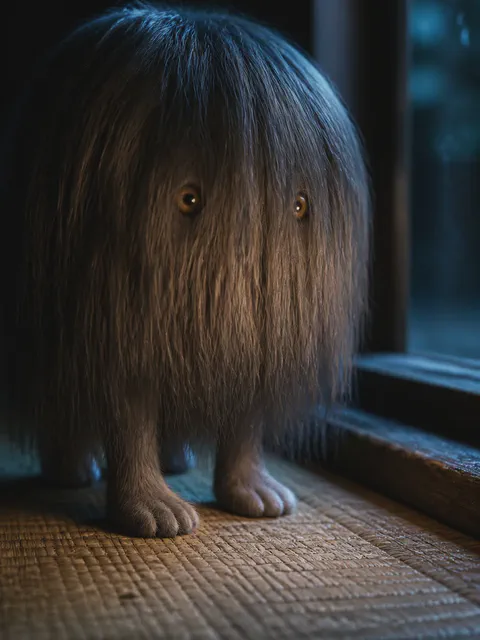
Keukegen
毛羽毛現(けうけげん)
Sekien drew Keukegen in 1781 as a small creature covered in long hair, and spent his caption on its name — which, written another way, means rarely there and rarely seen. The damp houses and disease came later.
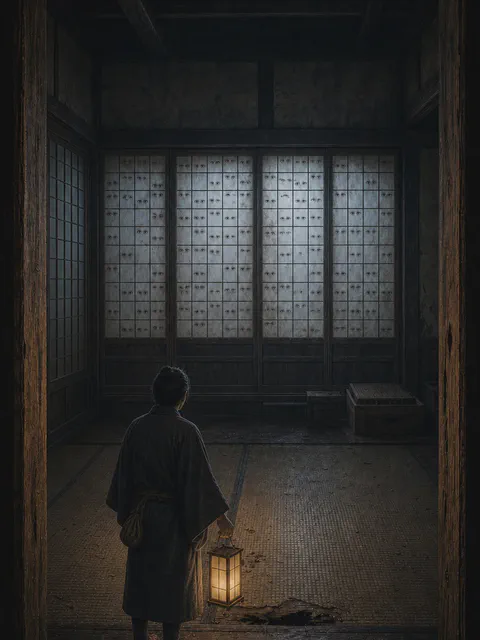
Mokumokuren
目目連(もくもくれん)
Rows of human eyes appear across old shoji in Toriyama Sekien's 1781 picture-book image.
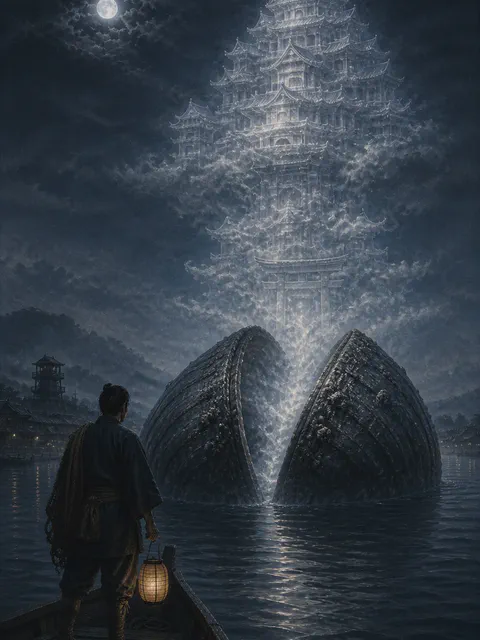
Shin
蜃(しん)
Old records describe a creature at the coast whose breath rises over the water and takes the shape of towers. The sources never agreed on what it was — and the Japanese word for a mirage is still its name.