
瓦版(かわらばん)
Kawaraban
Single-sheet news prints of the Edo period: disasters, wonders and prophecies to pin on the wall.
A kawaraban was a broadsheet printed from a block and hawked in the street: an earthquake, a fire, a double suicide, a strange birth, a monster seen off the coast. They were fast, cheap and unsigned, and they are the closest the Edo period comes to a newspaper. They are also the medium through which several yokai first reached a public.
The kudan of 1836, the calf with a human face that prophesied a good harvest on a mountain in Tango, is known from such a sheet, which promised prosperity to any house that put up its picture. Amabie, the long-haired, beaked sea creature of Higo, is known from a single sheet dated 1846, and from nothing else at all until 2020.
Related yokai
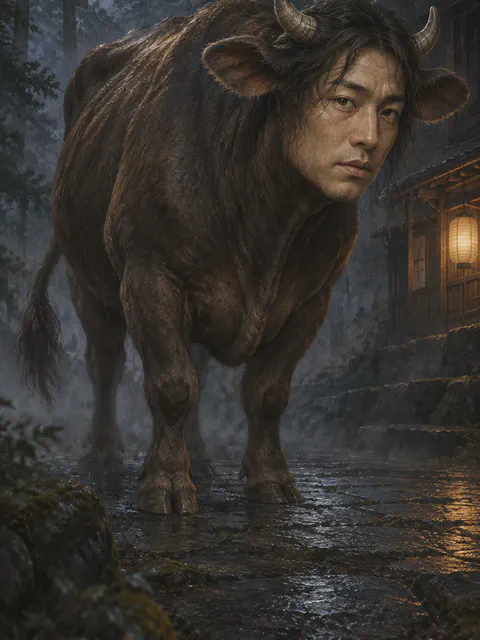
Kudan
件(くだん)
An 1836 broadsheet from Tango described a kudan — a cow's body with a human face — and promised that any house that put up its picture would prosper. Other kudan of the same century foretold disaster instead.
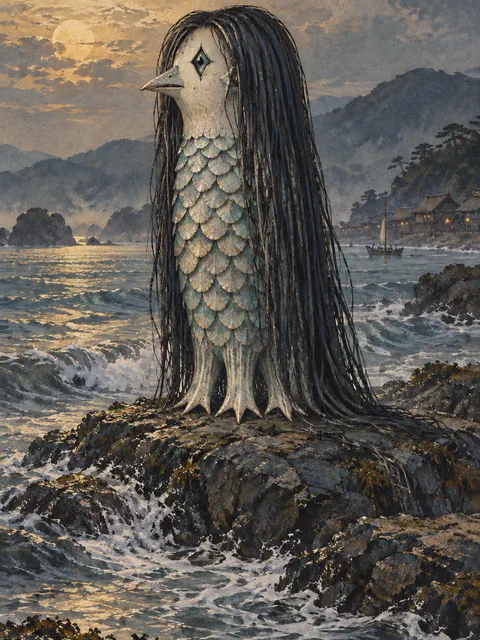
Amabie
アマビエ
A printed sheet dated 1846 tells of a creature with long hair and a beak that rose from the sea off Higo, foretold six years of good harvests and an epidemic, and asked people to copy its picture and show it around.