
絵巻(えまき)
Emaki
Horizontal picture scrolls, where yokai were first drawn in numbers.
An emaki is a scroll read right to left, picture and text alternating or picture alone, unrolled an arm’s length at a time. The oldest yokai pictures that survive are in scrolls: the Hyakki Yagyō Emaki in Shinjuan, Kyoto, from the sixteenth century, with its parade of walking tools; the Shuten-dōji scrolls from the fourteenth century on; the Tsuchigumo Zōshi; the Tsukumogami-ki. Edo collectors commissioned copies and new sets, and the bakemono-zukushi scroll, a row of named monsters with no story, became a genre of its own.
The Inō Mononoke-roku scrolls record a month of apparitions in a house in Bingo in 1749, one a night. The library of the International Research Center for Japanese Studies holds a Yōkai Emaki in which the walking straw sandal makes one of its earliest appearances.
Related yokai
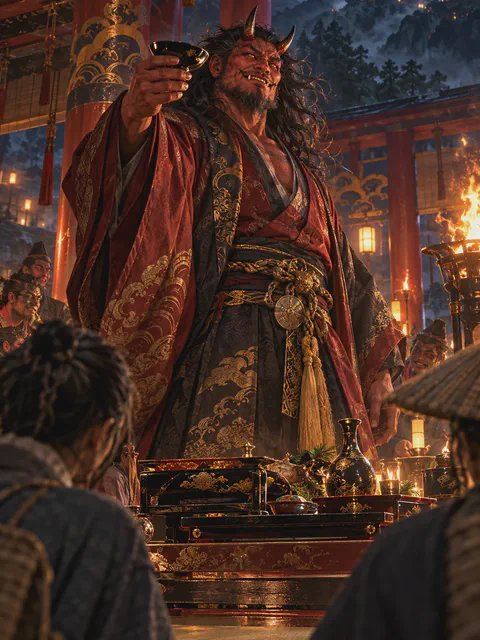
Shuten-dōji
酒呑童子(しゅてんどうじ)
The tale of Shuten-dōji appeared in the fourteenth century: an oni lord on Mt. Ōe who carried off the daughters of the capital, and the warriors who got in disguised as monks and defeated him with sake.
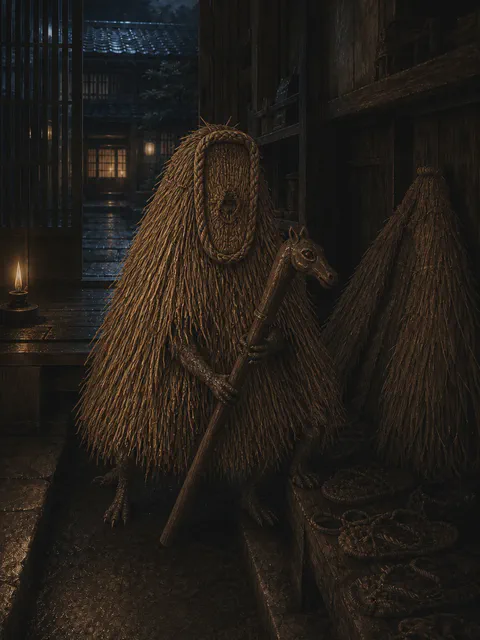
Bakezōri
化け草履(ばけぞうり)
A yokai scroll in the Nichibun collection shows a sandal monster covered in yellow straw, with a straw sandal for a face, riding a horse-head staff. It is stranger than the one-eyed singing sandal of modern books, and it comes with no story.
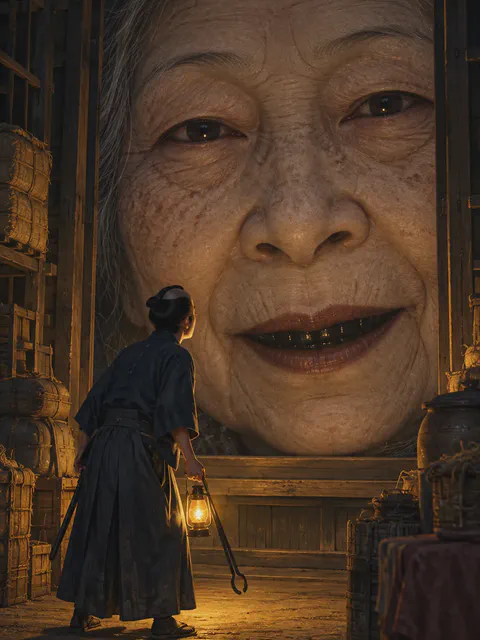
Ōkubi
大首(おおくび)
In the Inō Mononoke-roku, set in Miyoshi in 1749, sixteen-year-old Heitarō faces a month of nightly visitations. One night an old woman's face, teeth blackened, fills his doorway. He takes the fire tongs to it.
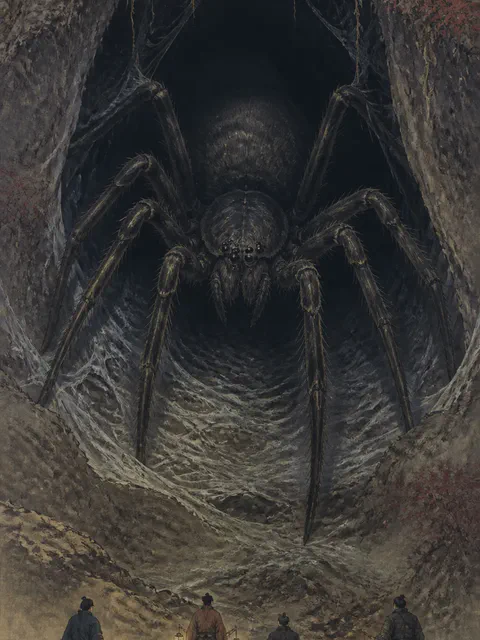
Tsuchigumo
土蜘蛛(つちぐも)
A monk appears at a sick warlord's bedside and throws spider silk at him. That is the tale. But the same word, centuries earlier, was what the court called people it wanted to treat as outsiders.
On the timeline
- 14th century The first monster-slaying scrolls
- 16th century The Hyakki Yagyō Emaki of Shinjuan
- 1749 A month of apparitions in a house in Bingo