Yuki-onna
雪女(ゆきおんな)
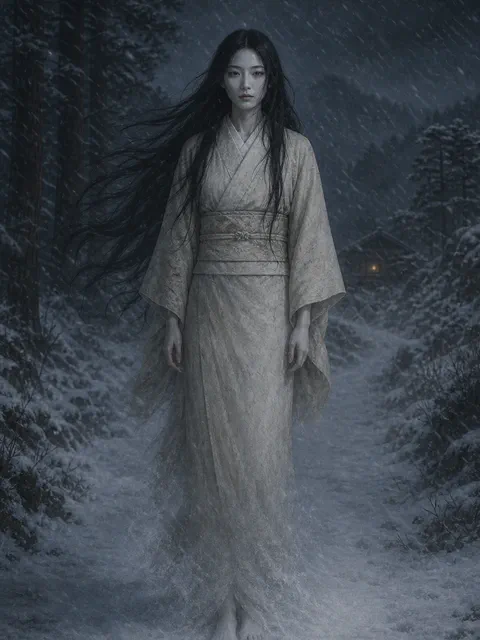
A pale woman seen on winter roads, sometimes deadly, sometimes harmless, and never described the same way everywhere.
Snow women, wet women, bone women and the ghosts of wronged wives
A striking number of Japan’s most famous yokai are women: in the snow, on the shore, at the pillow, at the court. Some are dangerous, some are wronged, and in nearly every case the story is also about the man who met her and what he did.
13 yokai
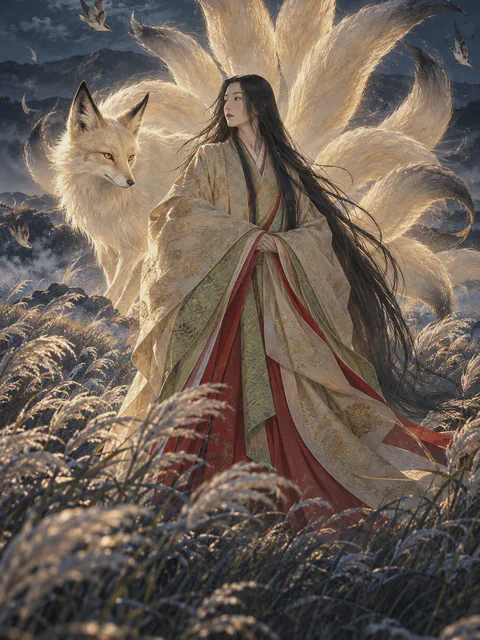
雪女(ゆきおんな)
A pale woman seen on winter roads, sometimes deadly, sometimes harmless, and never described the same way everywhere.
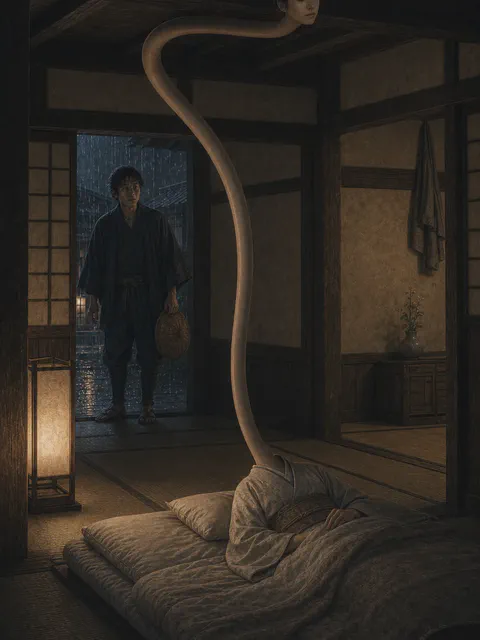
轆轤首(ろくろくび)
A seemingly human figure whose neck stretches at night—and one name that once covered more than one uncanny form.
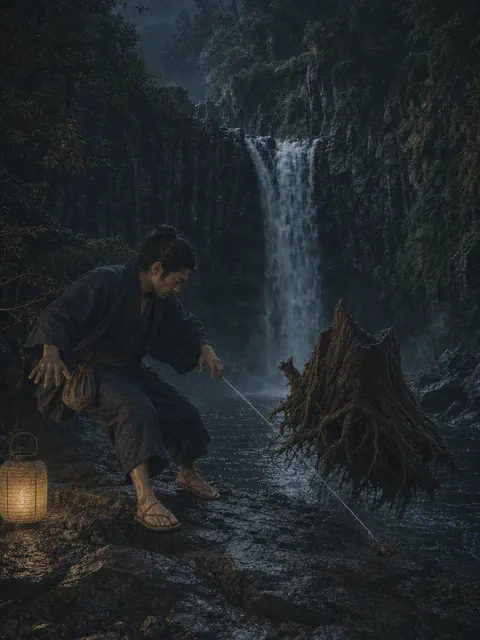
絡新婦(じょろうぐも)
At a waterfall in Shizuoka, a spider winds one fine thread around a man's foot—and reveals enough strength to tear a mulberry stump from the earth.
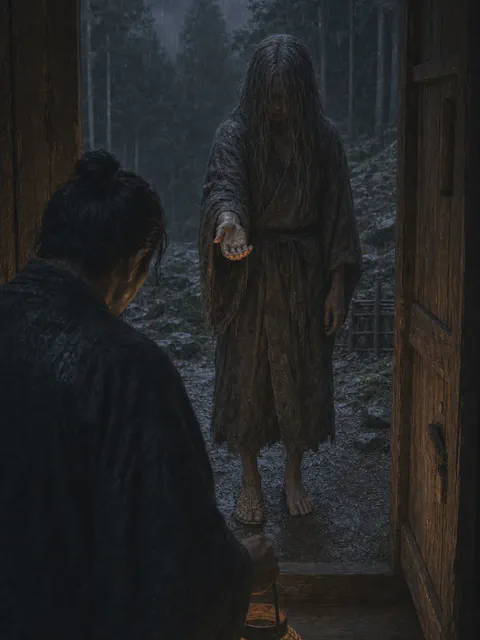
山姥(やまうば)
A man carries a woven object home from the hills, and that night a woman's voice demands the return of her ashinaka.
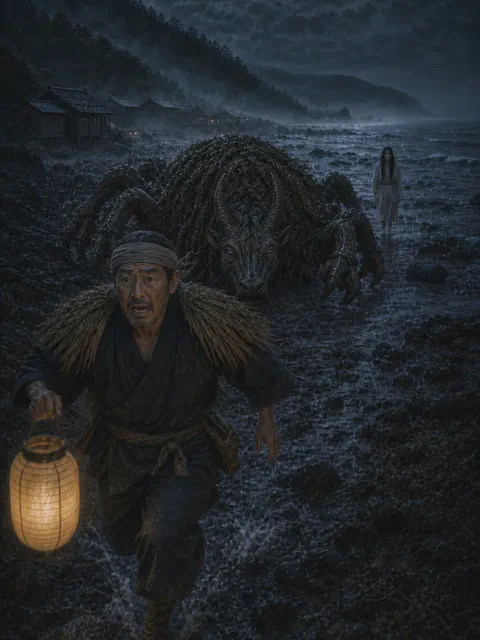
濡女(ぬれおんな)
In Iwami in 1933, a fisherman walking home at night was handed an infant by a wet-haired woman — and when he threw the bundle down and ran, something else came out of the dark after him.
磯女(いそおんな)
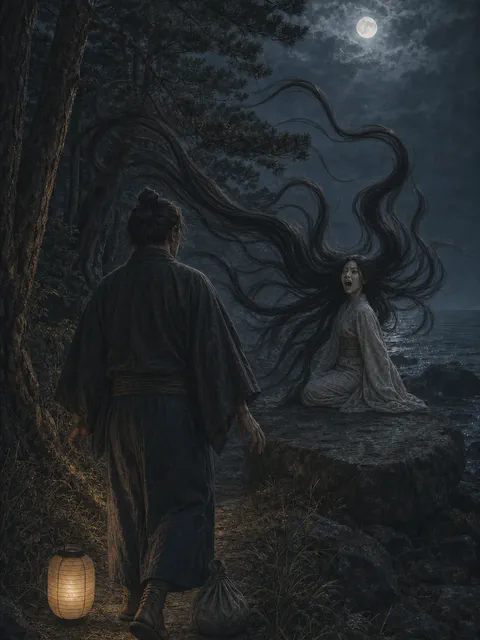
A 1929 record from Mizuho in Nagasaki describes a wrestler who tried to speak to a black-haired woman sitting on a shore stone at night — and other accounts from the same coastline describe something else entirely under the same name.
二口女(ふたくちおんな)
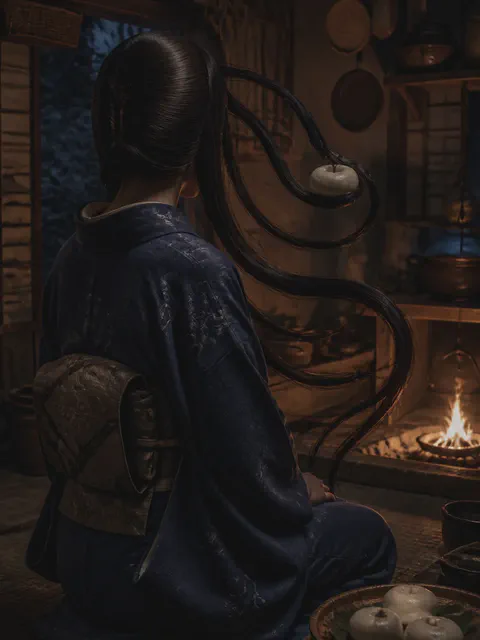
The 1841 Ehon Hyaku Monogatari made Futakuchi-onna a stepmother punished with a mouth at the back of her head. Folktales of the wife who eats nothing, recorded in the twentieth century, give the same hidden mouth to brides who turn out to be snakes, spiders, and oni.
骨女(ほねおんな)
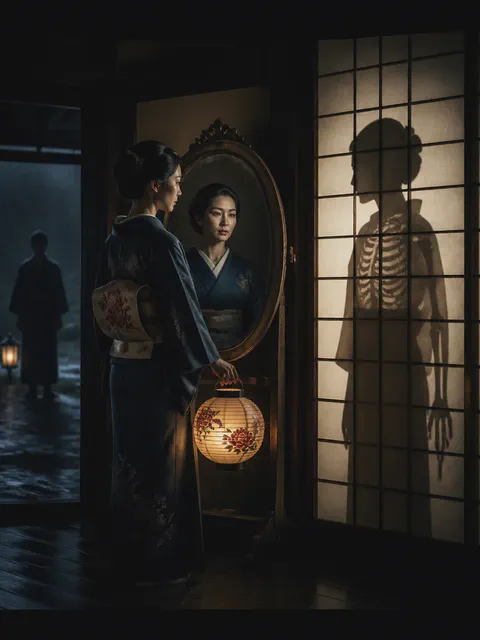
Sekien drew Hone-onna in 1779 as an old skeleton carrying a peony lantern, and his caption names the 1666 tale behind it: a widower's night visitor whom only an outsider saw for what she was.
青坊主(あおぼうず)
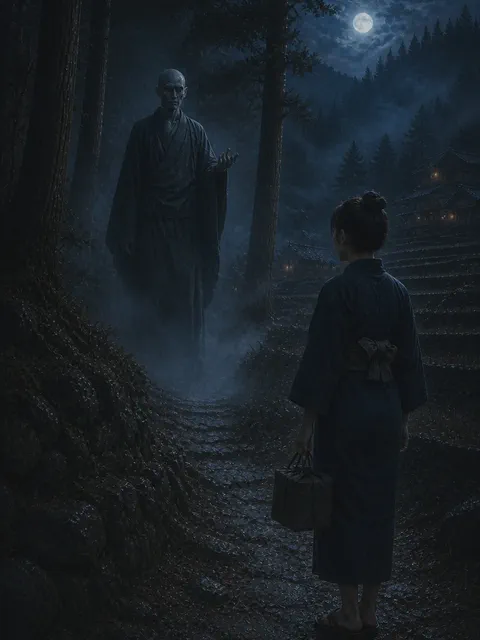
In a 1984 record from Miai in Kagawa, a girl carrying lunch to her family's mountain field met Ao-bōzu, the blue monk. He asked her one question. She said no, and he was gone.
玉藻前(たまものまえ)
In the fifteenth-century tale, Tamamo-no-Mae is the most learned woman at the court of Retired Emperor Toba. He falls ill, divination names her as the cause, and she flees to Nasu as a fox. The killing stone came later.
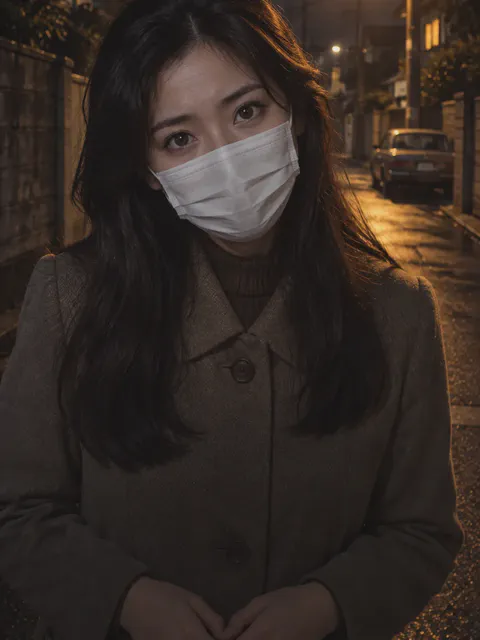
口裂け女(くちさけおんな)
Kuchisake-onna is not an old yokai. She is a rumour that swept through Japanese schoolchildren in 1978–79: a masked woman asking 'Am I pretty?' Almost every other detail changed from school to school.
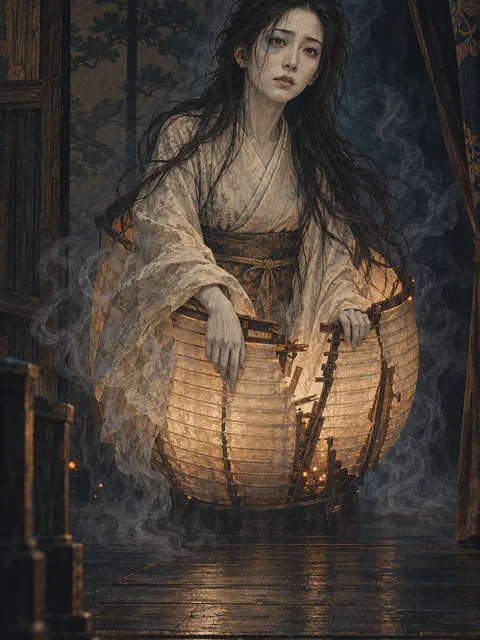
お岩(おいわ)
Oiwa is the wronged wife of Tsuruya Nanboku's 1825 kabuki play Tōkaidō Yotsuya Kaidan — poisoned under the name of medicine, betrayed, and returning to pursue her husband. On stage, she emerges from a burning lantern.
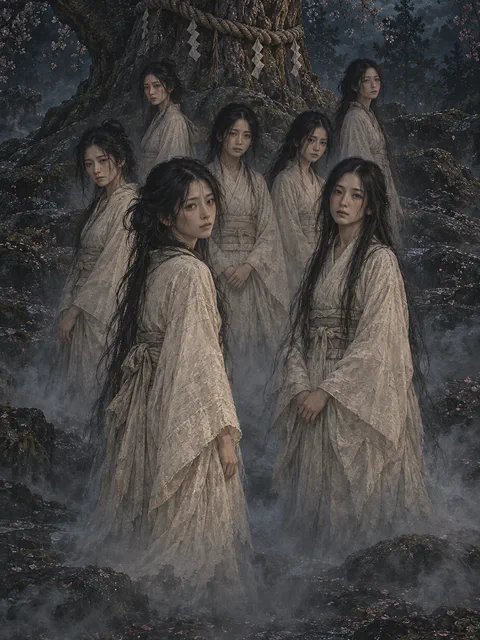
七人ミサキ(しちにんみさき)
In a tale told in Sukumo, Kōchi, seven women fleeing a political upheaval were caught at the border and put to death beneath an old cherry tree. Seven figures in white appeared there until the people began holding memorial rites.