Ittan-momen
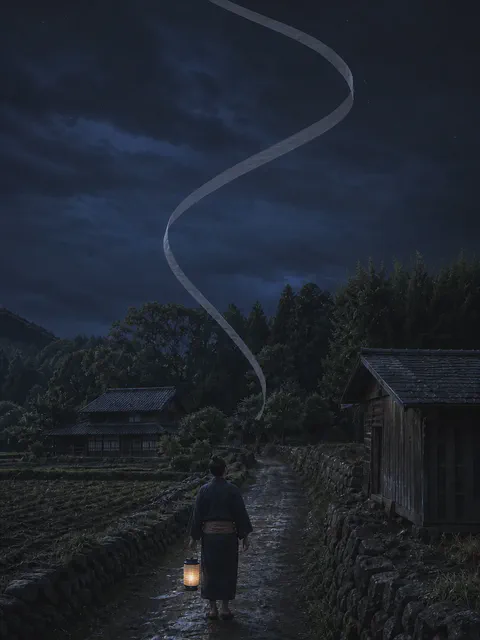
一反木綿(いったんもめん)
A white bolt of cloth that flutters across a rural night road, dazzles a traveler and attacks.
Umbrellas, lanterns, sandals, futons and instruments that came to life
The Japanese word is tsukumogami: a household thing that has lived long enough to acquire a spirit. Most of these come from Edo picture scrolls and books, where umbrellas hop, lanterns blink and the bedding stands up — drawn to be laughed at as much as feared.
11 yokai
一反木綿(いったんもめん)
A white bolt of cloth that flutters across a rural night road, dazzles a traveler and attacks.
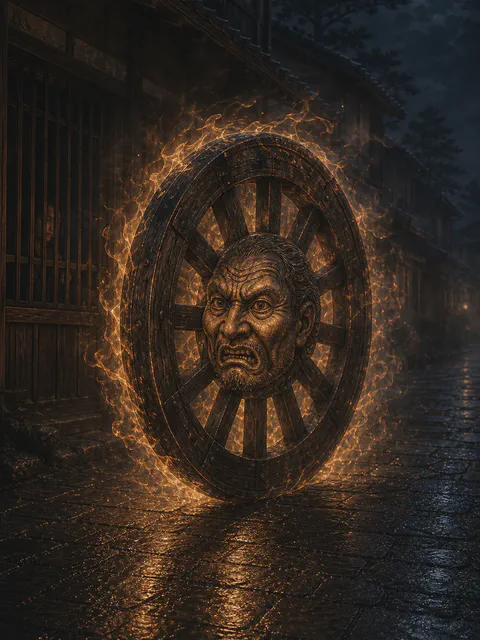
輪入道(わにゅうどう)
In Toriyama Sekien's 1779 picture book, a single ox-cart wheel rolls through the night by itself — and anyone who sees it is said to lose their soul.
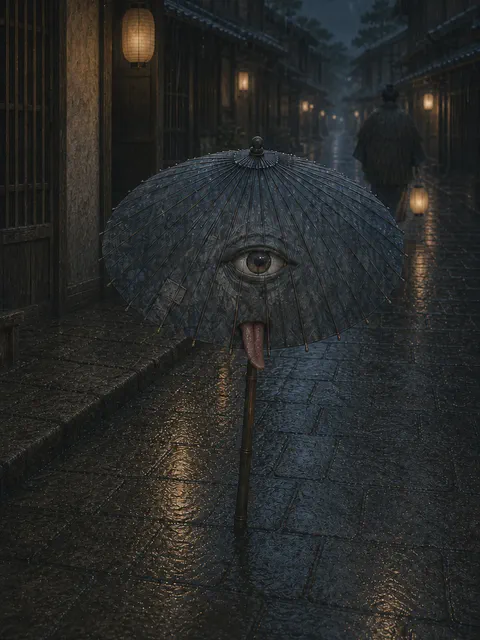
唐傘小僧(からかさこぞう)
An 1857 Osaka print shows a kabuki actor playing a one-legged umbrella monster — the clearest history of a yokai known through pictures rather than encounters.
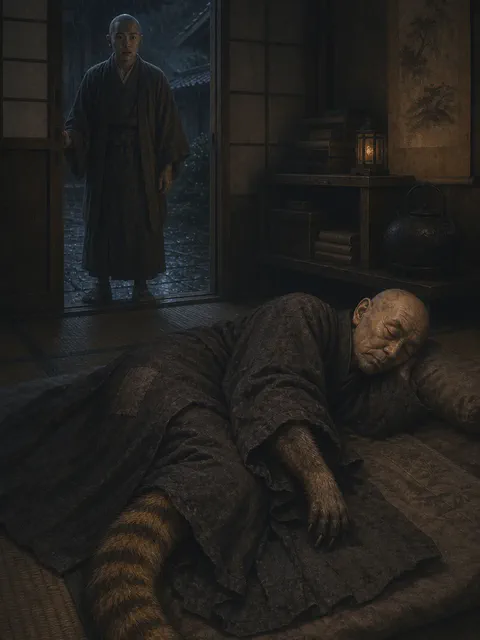
化け狸(ばけだぬき)
Morinji tradition tells of the monk Shukaku, an inexhaustible iron kettle, and the mujina or tanuki form revealed while he slept.
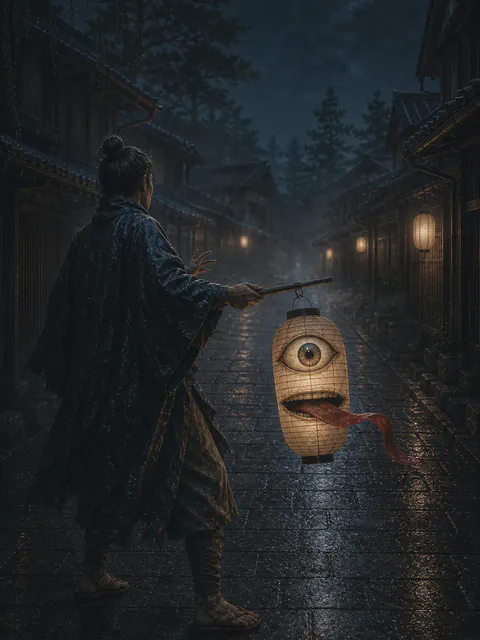
提灯お化け(ちょうちんおばけ)
One of forty-eight monsters on Yoshimori's print Shinban Bakemono-zukushi is a paper lantern with an eye, a mouth, and something coming out of the mouth. That picture is the record — there is no story attached to it.
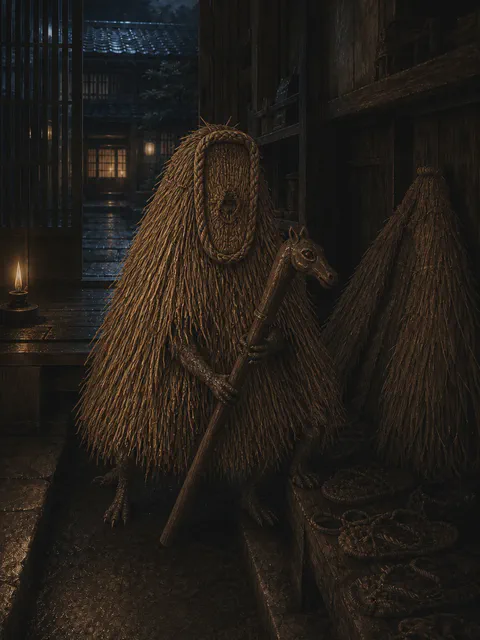
化け草履(ばけぞうり)
A yokai scroll in the Nichibun collection shows a sandal monster covered in yellow straw, with a straw sandal for a face, riding a horse-head staff. It is stranger than the one-eyed singing sandal of modern books, and it comes with no story.
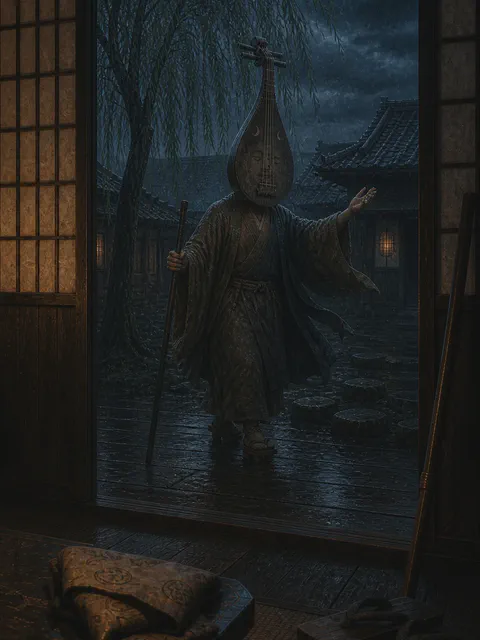
琵琶牧々(びわぼくぼく)
In 1784 Sekien drew a blind biwa priest with a biwa for a head, feeling his way under a willow. His caption names two legendary court lutes, Genjō and Bokuba, and builds the creature's name out of one of them.
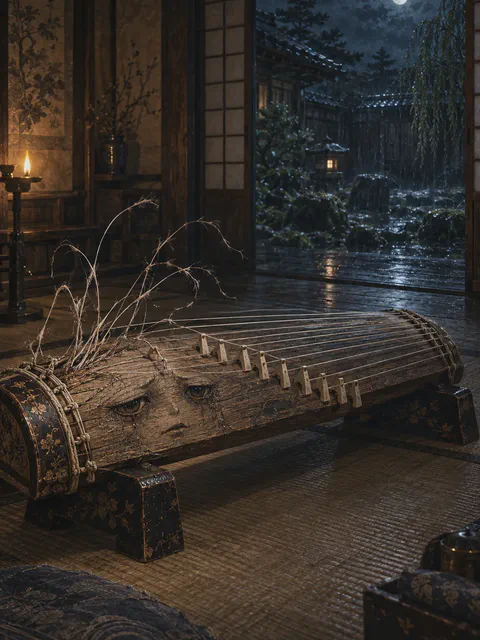
琴古主(ことふるぬし)
Sekien's 1784 Koto-furunushi is an old koto with a face and strings like wild hair. His caption says why it appeared: after Yatsuhashi changed the music, the old Tsukushi koto survived only as a name, and it came to make its grudge known.
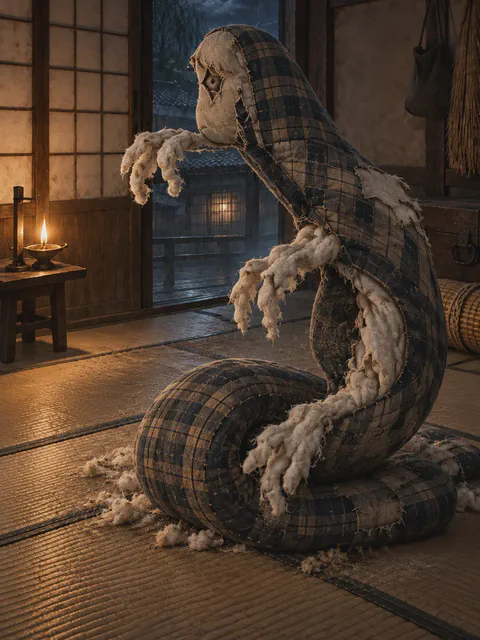
暮露暮露団(ぼろぼろとん)
Sekien's 1784 Boroboroton is a worn, patched futon standing upright with cotton spilling out like hands. His caption gets there through wandering Zen mendicants, an old poetry contest, and one word that means both.
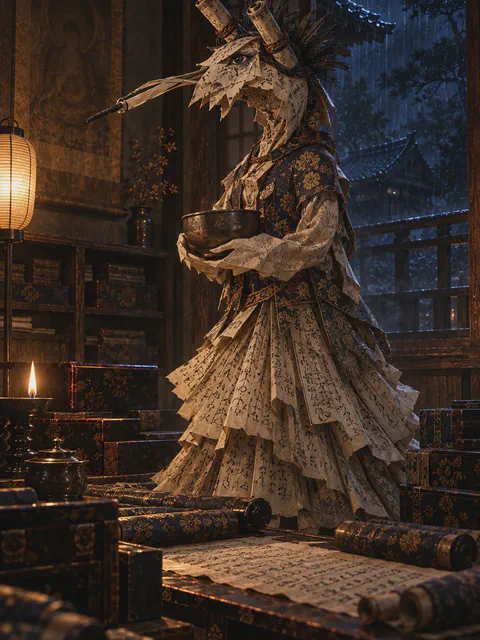
経凛々(きょうりんりん)
Sekien's 1784 Kyōrinrin is a figure built from sutra scrolls and folded scripture. His caption wonders whether these are the scriptures thrown away by the monk Shubin, whose curse on Kūkai turned back on himself.
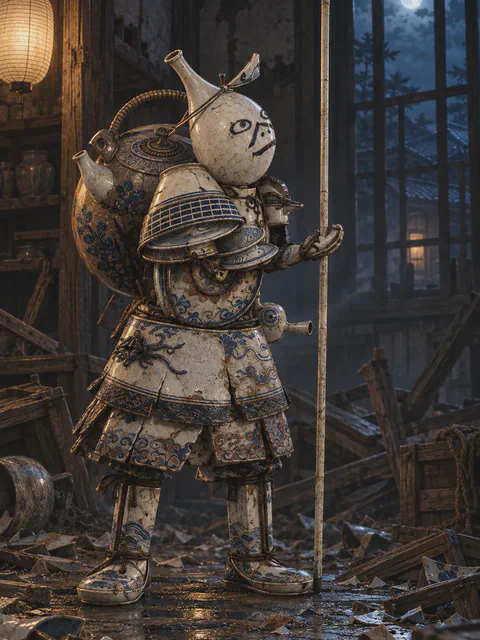
瀬戸大将(せとたいしょう)
Sekien's 1784 Seto-taishō is a warrior assembled from sake flasks, plates, bowls, a teapot, and a kettle, carrying a spear tipped with a vase. Its caption is a chain of puns on Cao Cao, Guan Yu, and the names of Japanese pottery.