
Toriyama Sekien's Yokai
The creatures of the Edo picture books of 1776–1784
Between 1776 and 1784 the Edo artist Toriyama Sekien published four picture books of yokai, and a large part of what Japan now calls its yokai tradition is in them. Many of his creatures have a name and a picture and no explanation at all; the stories came later. These are the ones on the site.
30 yokai
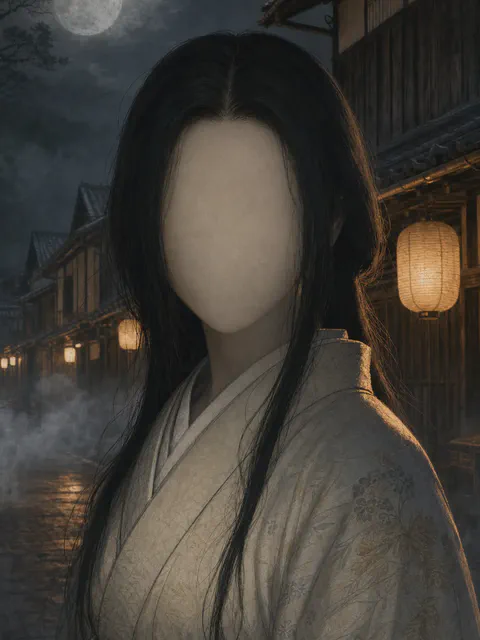
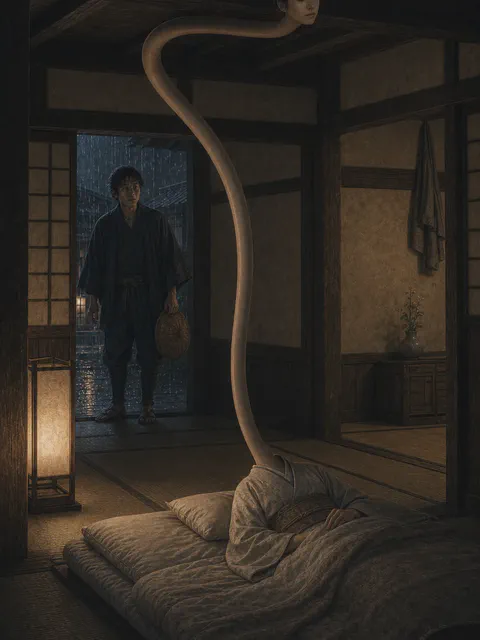
Rokurokubi
轆轤首(ろくろくび)
A seemingly human figure whose neck stretches at night—and one name that once covered more than one uncanny form.
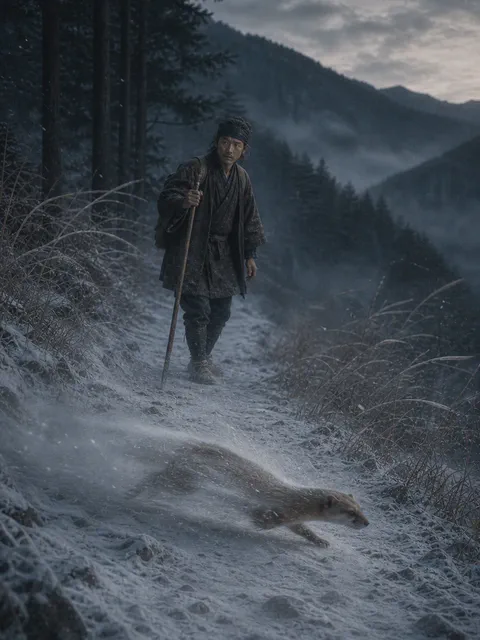
Kamaitachi
鎌鼬(かまいたち)
In Nagano in 1955 the kamaitachi was a weasel so fast that no one had ever seen it — known only by the clean cut it leaves on a stumbling traveler's shin.
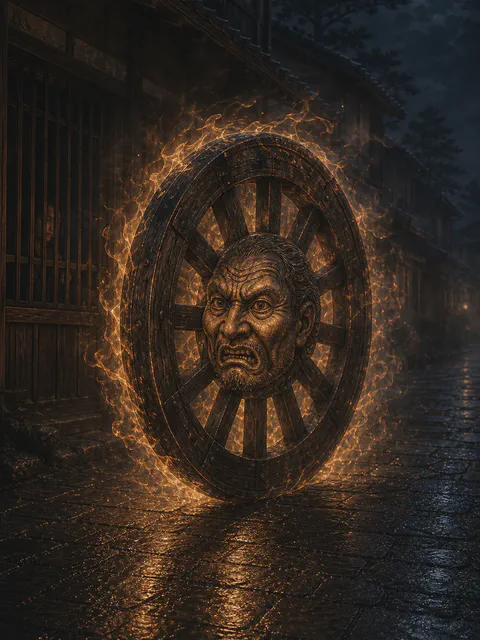
Wanyūdō
輪入道(わにゅうどう)
In Toriyama Sekien's 1779 picture book, a single ox-cart wheel rolls through the night by itself — and anyone who sees it is said to lose their soul.
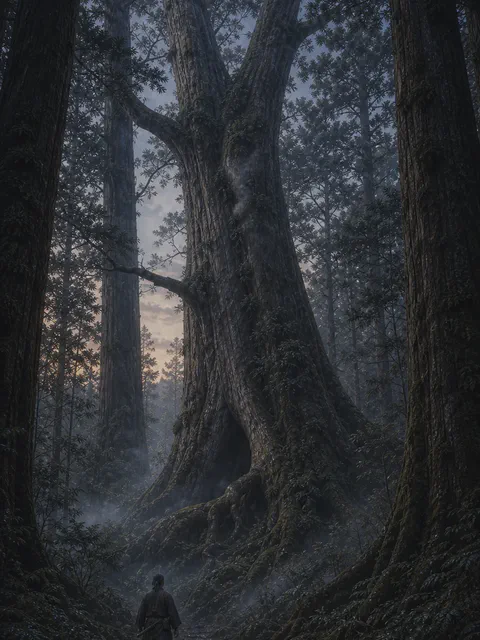
Kodama
木霊(こだま)
Kodama can mean both a presence within an old tree and the echo that returns from a mountain — but Japanese tradition gives it no single fixed body.
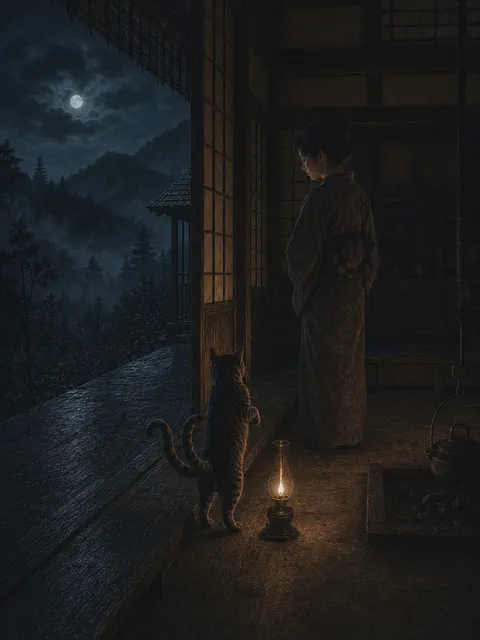
Nekomata
猫又(ねこまた)
A 1931 Kagawa record describes an aging cat whose tail divides in two and that rises to dance on its hind legs.
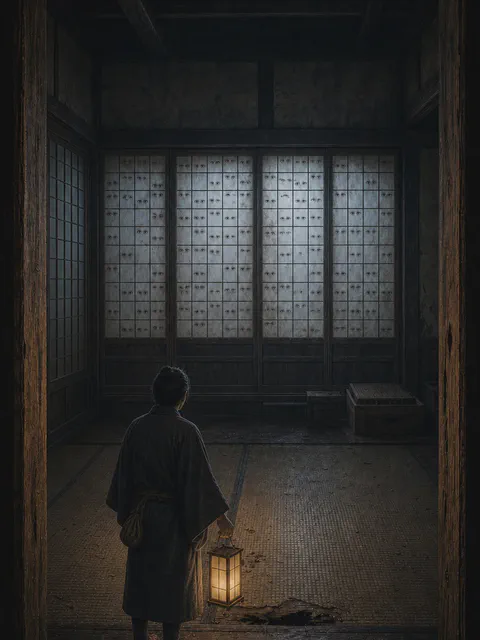
Mokumokuren
目目連(もくもくれん)
Rows of human eyes appear across old shoji in Toriyama Sekien's 1781 picture-book image.
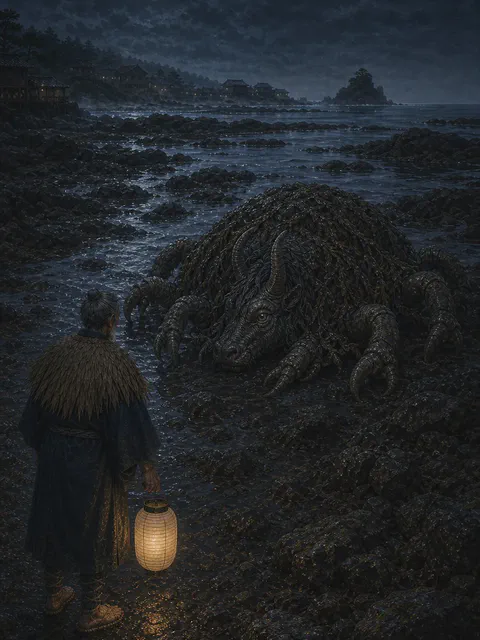
Ushi-oni
牛鬼(うしおに)
Toriyama Sekien's 1776 print shows a bull-like head on a squat clawed body at the water's edge — and tells us nothing else about it.
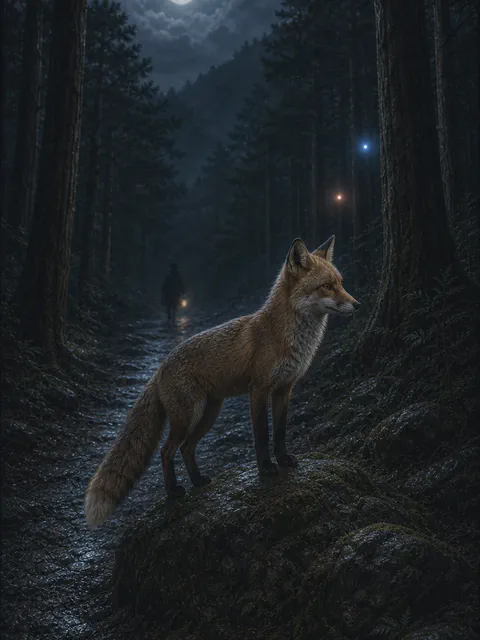
Kitsune
狐(きつね)
A 1930 account from Toyooka describes blurred blue or red foxfire moving restlessly from beyond the mountain to somewhere close by.
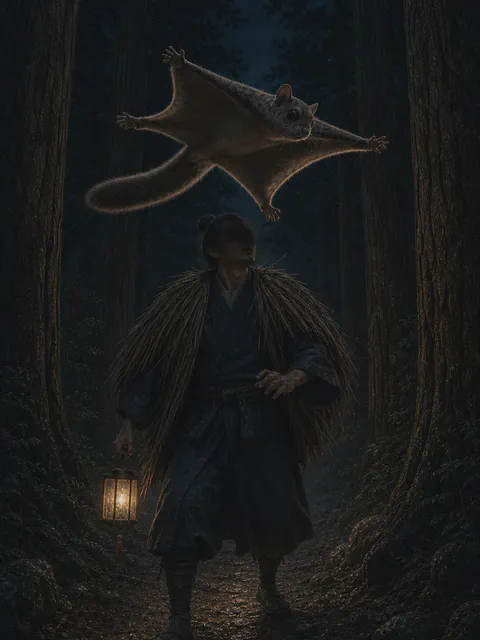
Nobusuma
野衾(のぶすま)
A 1938 Tokyo record describes something like a flying squirrel that drifts down onto a traveler and covers the eyes and mouth — and stops there.
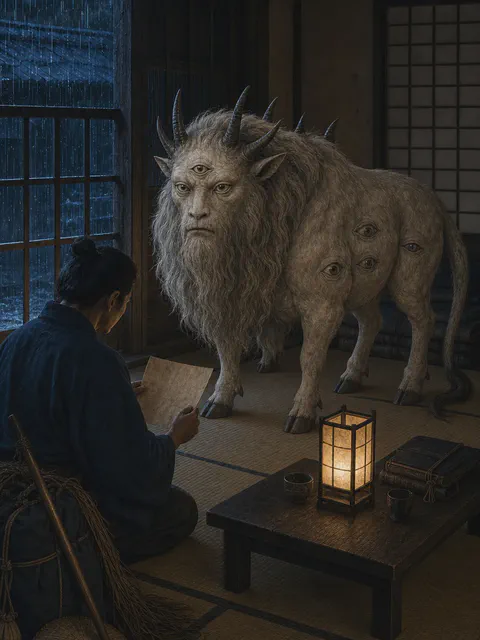
Hakutaku
白澤(はくたく)
A beast from Chinese legend that named every harmful thing in the world for the Yellow Emperor, and whose image — nine eyes, six horns, a human face — was carried by Edo travelers and set beside pillows during the cholera epidemic of 1858.
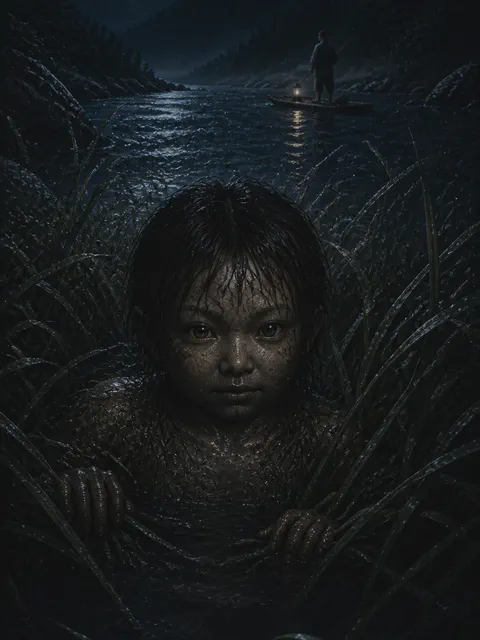
Kawa-akago
川赤子(かわあかご)
Toriyama Sekien drew an infant-shaped creature rising from the water plants of a mountain river in 1779, watching a man on a raft — and admitted in the caption that he was guessing about what it was.
Suiko
水虎(すいこ)
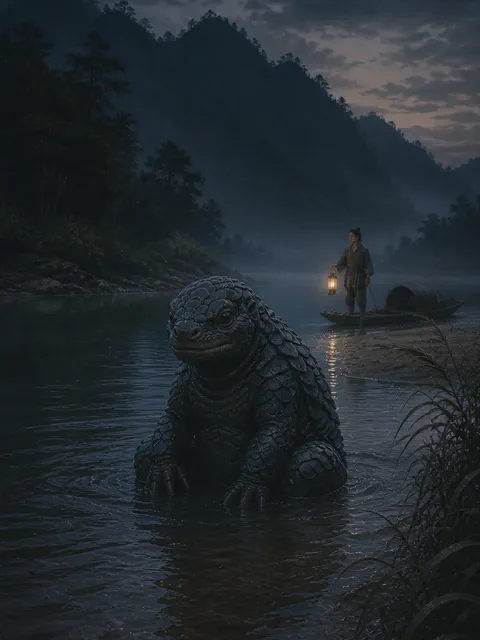
A Chinese pharmacological encyclopedia describes a river creature the size of a small child, armoured in scales that arrows cannot pierce, which keeps its body underwater and lets only its two tiger-pawed knees break the surface.
Shin
蜃(しん)
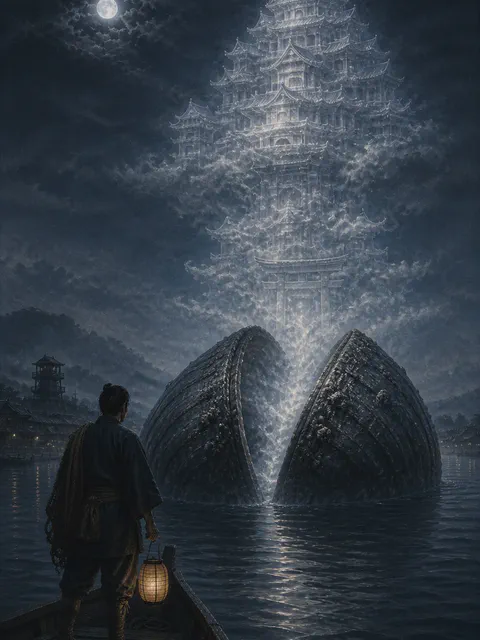
Old records describe a creature at the coast whose breath rises over the water and takes the shape of towers. The sources never agreed on what it was — and the Japanese word for a mirage is still its name.
Yamabiko
山彦(やまびこ)
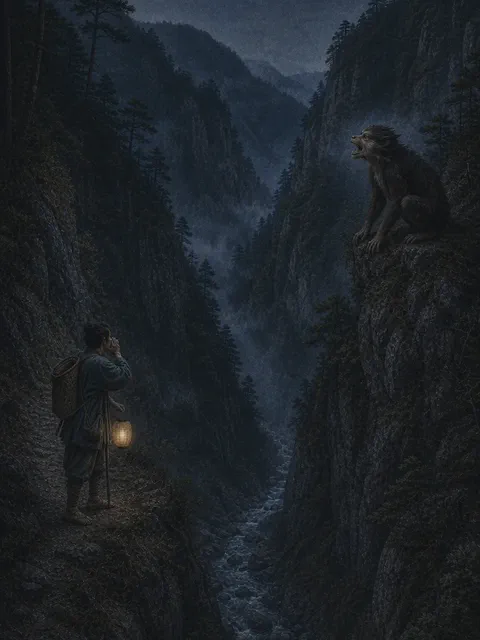
The echo in a Japanese valley was heard as an answer before anyone drew the thing answering — and when painters finally gave it a body, they produced a small animal that is neither quite a dog nor quite a monkey.
Satori
覚(さとり)
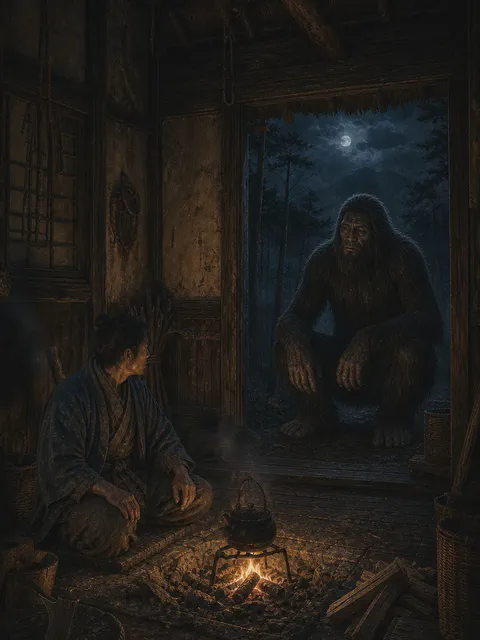
Sekien's 1779 entry describes a black, long-haired creature of the deep mountains that understands speech, reads what you are thinking, and leaves the moment you decide to kill it — and a later tale defeats it with something nobody thought at all.
Akaname
垢嘗(あかなめ)
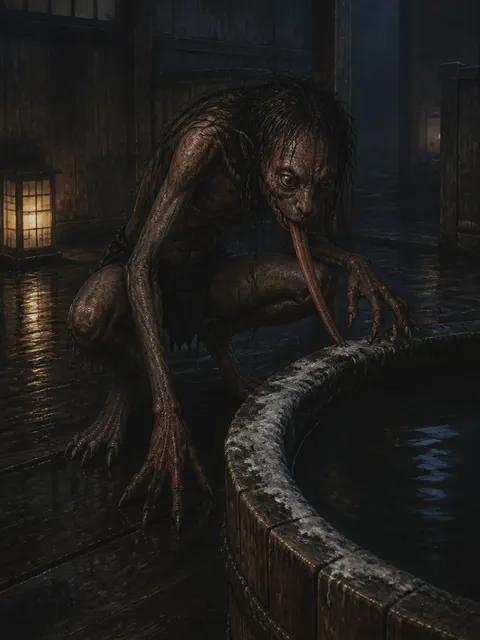
Sekien drew a crouching figure with a long tongue in a bathhouse in 1776 and called it the grime-licker. He wrote nothing else about it — and everything you have been told about dirty bathrooms was added afterwards.
Hone-onna
骨女(ほねおんな)
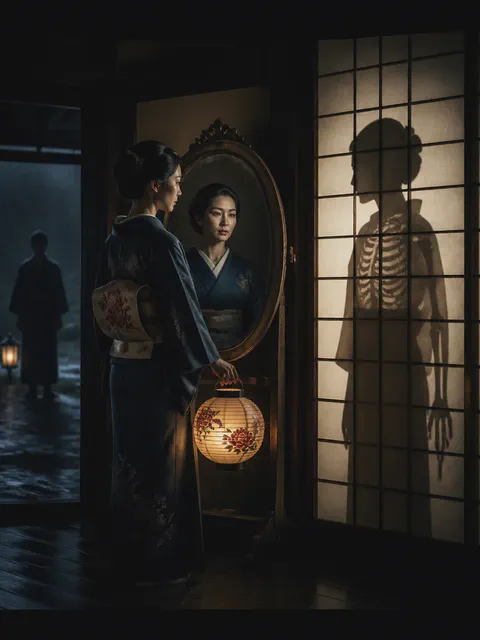
Sekien drew Hone-onna in 1779 as an old skeleton carrying a peony lantern, and his caption names the 1666 tale behind it: a widower's night visitor whom only an outsider saw for what she was.
Tenome
手の目(てのめ)
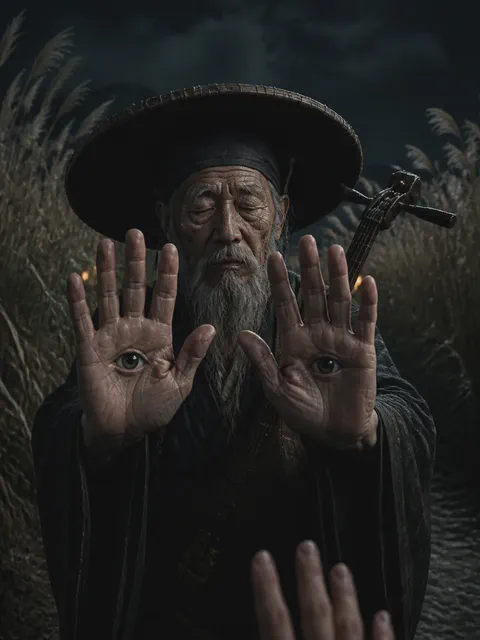
Sekien's 1776 plate shows an elderly blind figure with a biwa on his back, holding out two palms, each with an open eye. He gave it a name and nothing more; the story of a murdered man hunting his killer came later.
Tenjō-sagari
天井下り(てんじょうさがり)
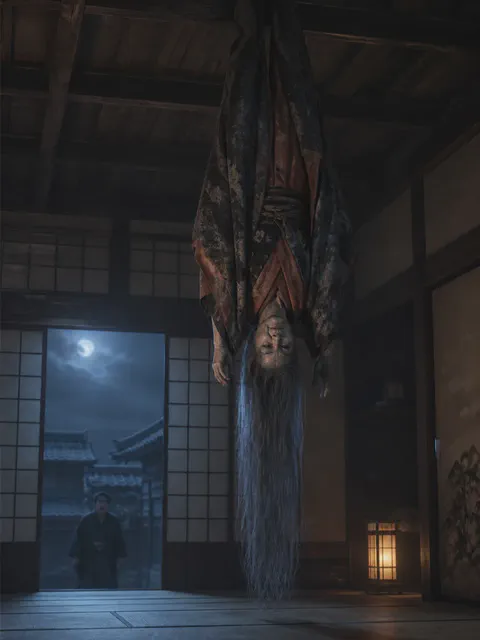
In 1779 Sekien drew an old woman hanging upside down from the ceiling, and wrote a caption that is mostly a joke — about a demon who once escaped through a roof, and a phrase for knocking someone flat.
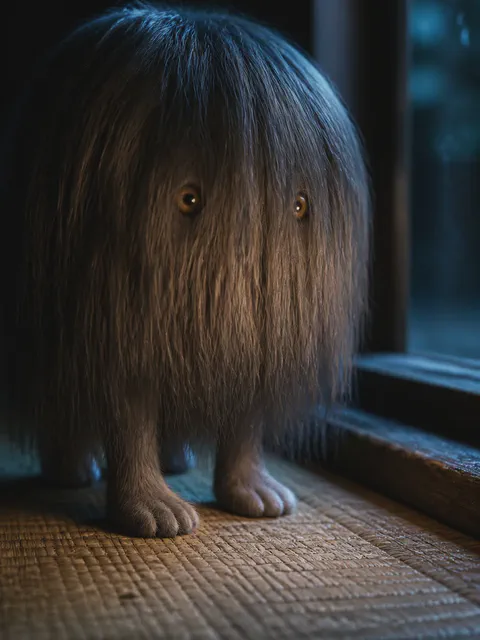
Keukegen
毛羽毛現(けうけげん)
Sekien drew Keukegen in 1781 as a small creature covered in long hair, and spent his caption on its name — which, written another way, means rarely there and rarely seen. The damp houses and disease came later.
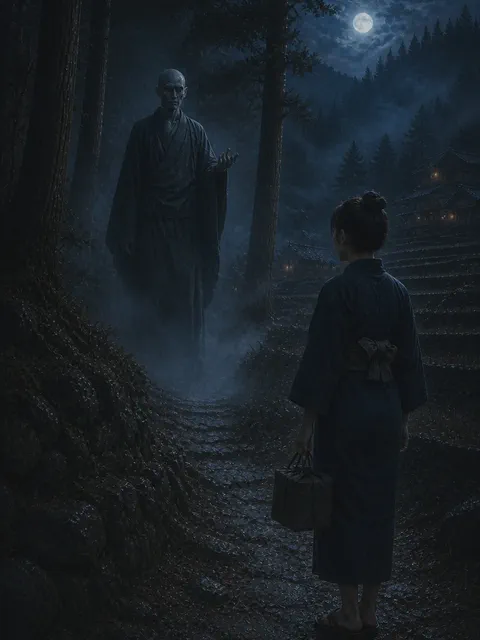
Ao-bōzu
青坊主(あおぼうず)
In a 1984 record from Miai in Kagawa, a girl carrying lunch to her family's mountain field met Ao-bōzu, the blue monk. He asked her one question. She said no, and he was gone.
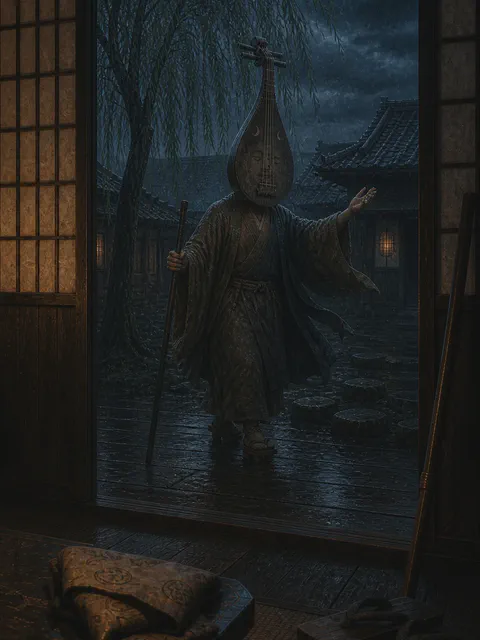
Biwa-bokuboku
琵琶牧々(びわぼくぼく)
In 1784 Sekien drew a blind biwa priest with a biwa for a head, feeling his way under a willow. His caption names two legendary court lutes, Genjō and Bokuba, and builds the creature's name out of one of them.
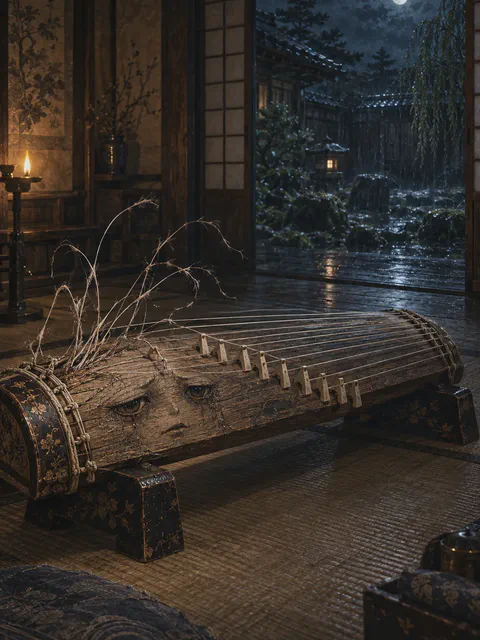
Koto-furunushi
琴古主(ことふるぬし)
Sekien's 1784 Koto-furunushi is an old koto with a face and strings like wild hair. His caption says why it appeared: after Yatsuhashi changed the music, the old Tsukushi koto survived only as a name, and it came to make its grudge known.
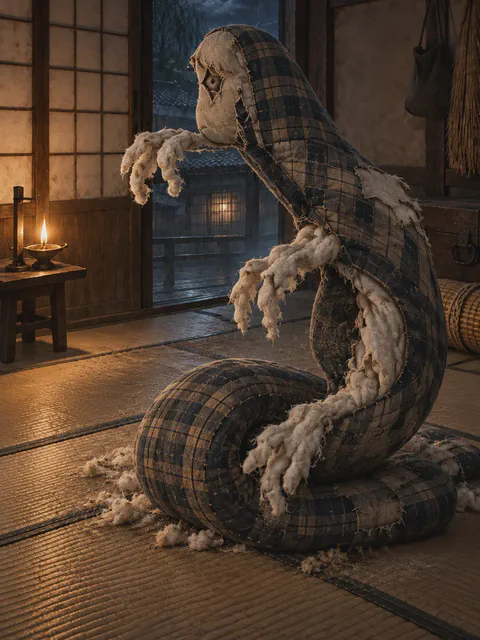
Boroboroton
暮露暮露団(ぼろぼろとん)
Sekien's 1784 Boroboroton is a worn, patched futon standing upright with cotton spilling out like hands. His caption gets there through wandering Zen mendicants, an old poetry contest, and one word that means both.
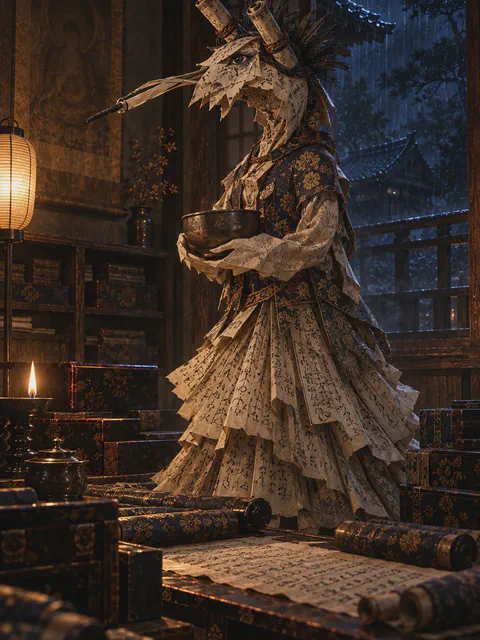
Kyōrinrin
経凛々(きょうりんりん)
Sekien's 1784 Kyōrinrin is a figure built from sutra scrolls and folded scripture. His caption wonders whether these are the scriptures thrown away by the monk Shubin, whose curse on Kūkai turned back on himself.
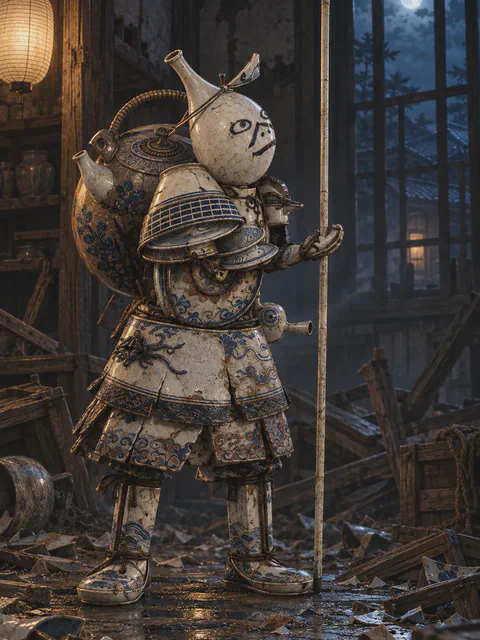
Seto-taishō
瀬戸大将(せとたいしょう)
Sekien's 1784 Seto-taishō is a warrior assembled from sake flasks, plates, bowls, a teapot, and a kettle, carrying a spear tipped with a vase. Its caption is a chain of puns on Cao Cao, Guan Yu, and the names of Japanese pottery.
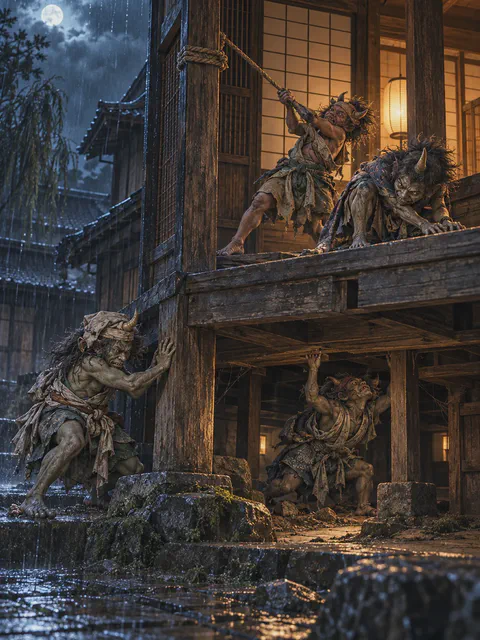
Yanari
鳴屋(やなり)
Sekien's 1776 plate shows a crew of small oni at the posts and under the veranda of a wooden house, pushing at the timbers. He named them for the sound a house makes at night and wrote nothing else.
Otoroshi
おとろし
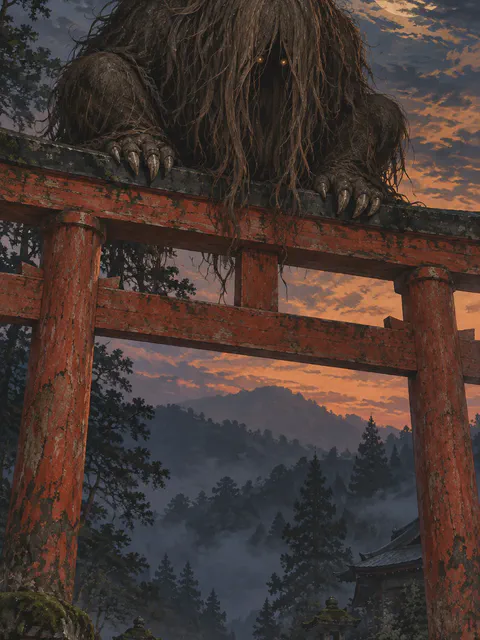
Otoroshi appears in a 1737 scroll and in Sekien's 1776 book as a hunched, hairy creature — on top of a torii in Sekien's version. Neither says what it does. The story about it dropping on the impious was read out of the picture later.
Shōkera
しょうけら
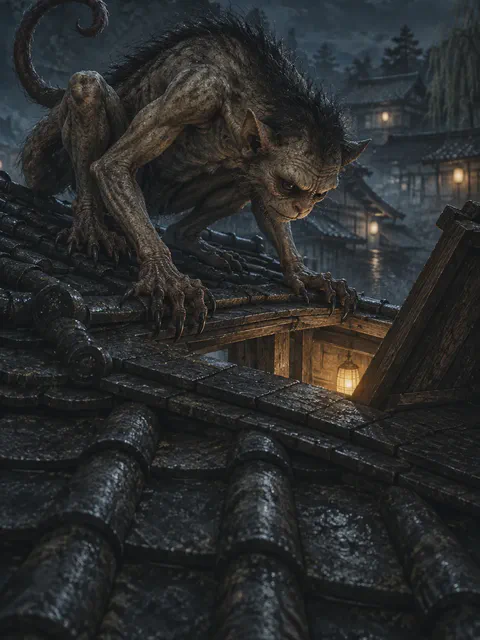
Sekien drew Shōkera in 1776 as a clawed, long-limbed figure clinging to a roof and peering in through the skylight. The plate gives a name and nothing else: no purpose, no victim, no reason it is looking.