
Shapeshifters: Foxes, Cats, Otters and Tanuki
Animals that take human form, and humans that are something else
The commonest trick in Japanese folklore is a change of shape: an animal that becomes a person, or a person who turns out to be something else. These are the changers, and the moment in each story when the disguise fails.
11 yokai
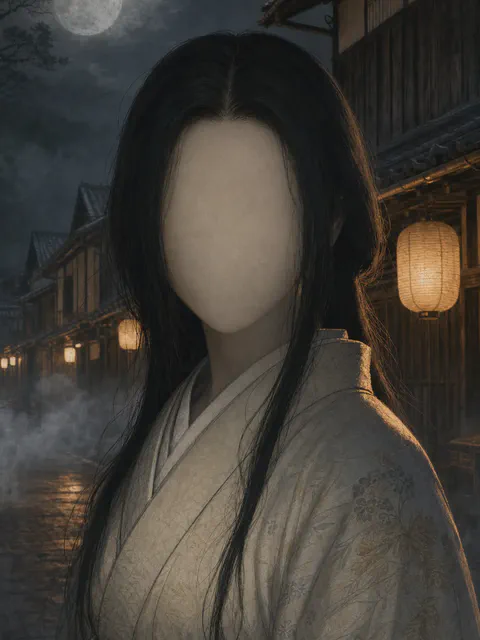
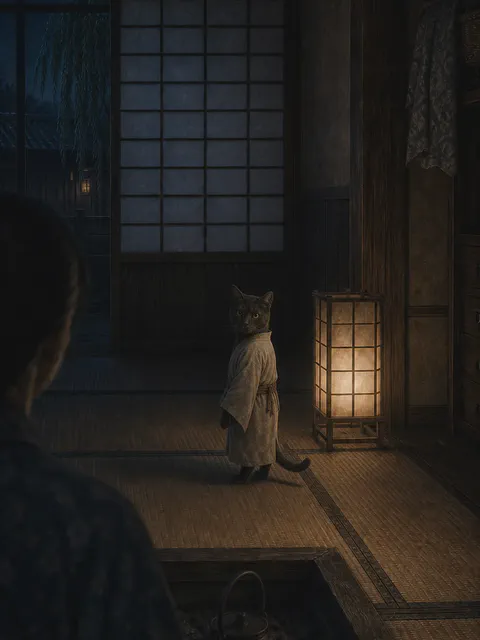
Bakeneko
化け猫(ばけねこ)
Stories of old cats that speak, perform, dress like people or take human form—and the separate cat yokai they keep getting confused with.
Jorōgumo
絡新婦(じょろうぐも)
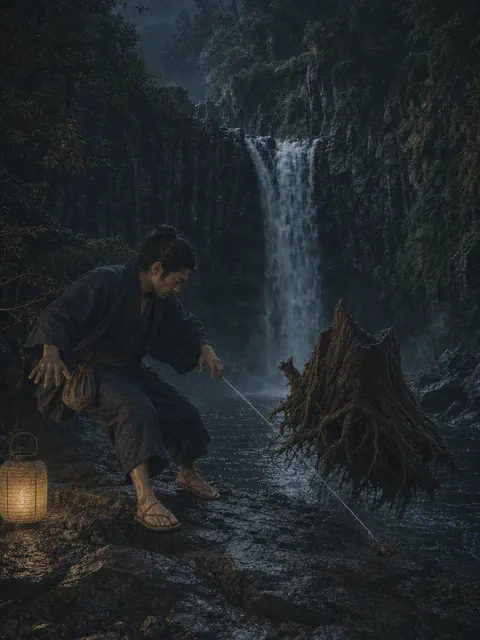
At a waterfall in Shizuoka, a spider winds one fine thread around a man's foot—and reveals enough strength to tear a mulberry stump from the earth.
Nekomata
猫又(ねこまた)
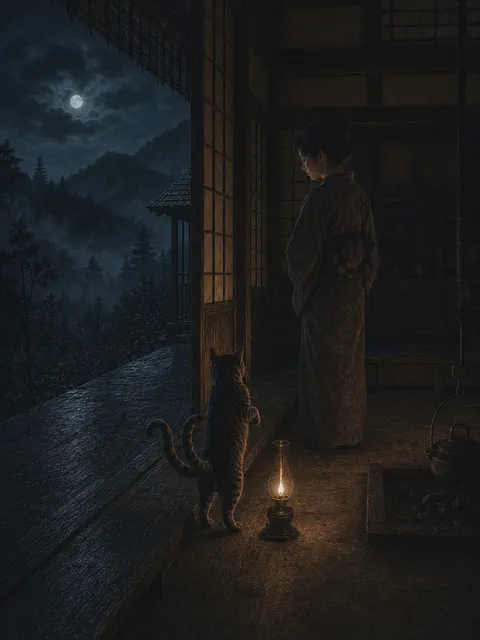
A 1931 Kagawa record describes an aging cat whose tail divides in two and that rises to dance on its hind legs.

Kitsune
狐(きつね)
A 1930 account from Toyooka describes blurred blue or red foxfire moving restlessly from beyond the mountain to somewhere close by.
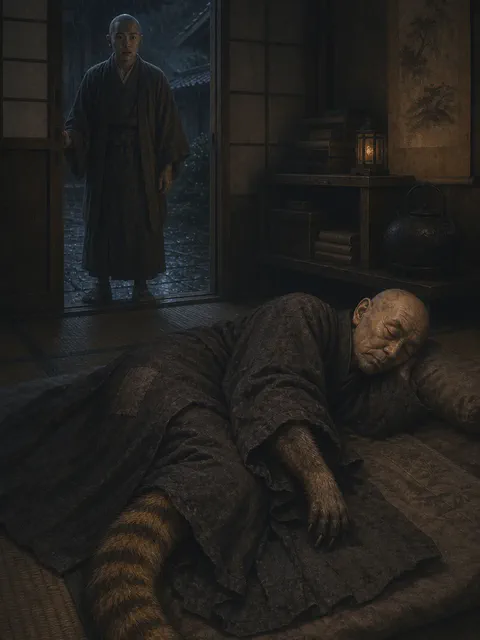
Bake-danuki
化け狸(ばけだぬき)
Morinji tradition tells of the monk Shukaku, an inexhaustible iron kettle, and the mujina or tanuki form revealed while he slept.
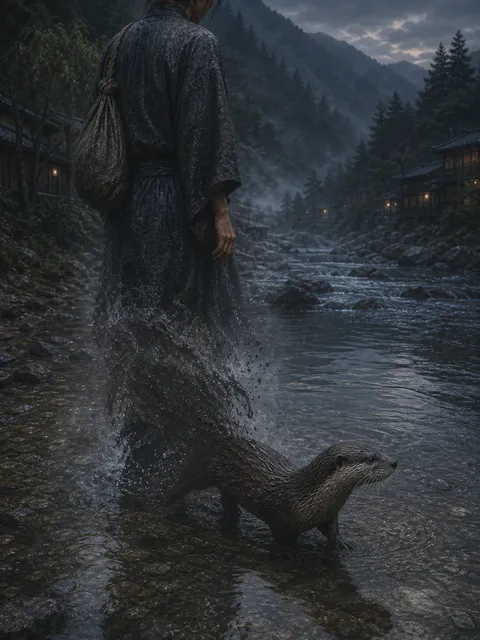
Kawauso
川獺(かわうそ)
In Gunma in 1956 the kawauso was a figure on a riverside road at dusk who glances back and beckons — not a traveler, but an otter in human form.
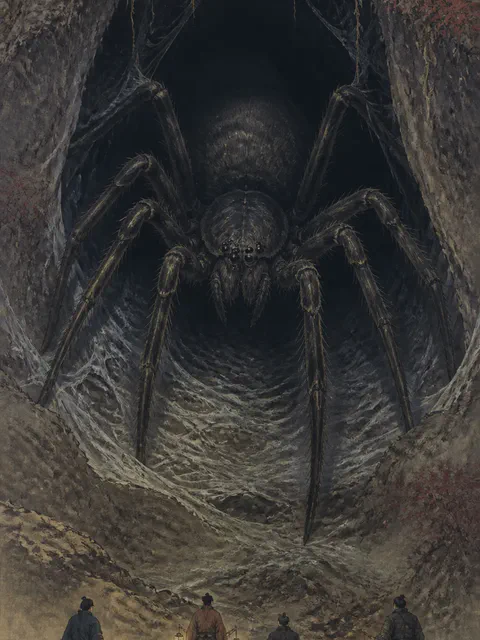
Tsuchigumo
土蜘蛛(つちぐも)
A monk appears at a sick warlord's bedside and throws spider silk at him. That is the tale. But the same word, centuries earlier, was what the court called people it wanted to treat as outsiders.
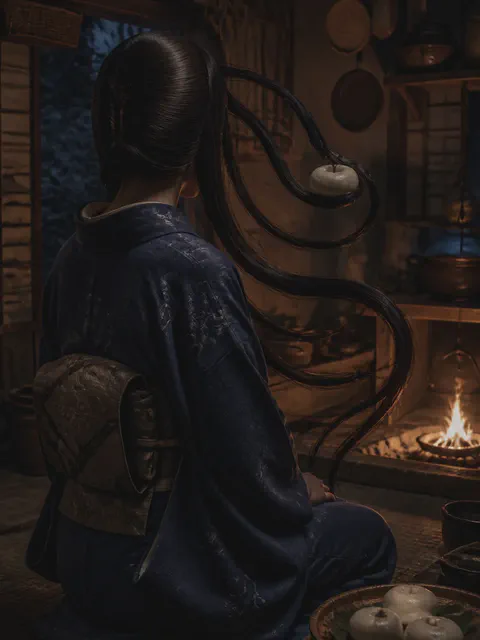
Futakuchi-onna
二口女(ふたくちおんな)
The 1841 Ehon Hyaku Monogatari made Futakuchi-onna a stepmother punished with a mouth at the back of her head. Folktales of the wife who eats nothing, recorded in the twentieth century, give the same hidden mouth to brides who turn out to be snakes, spiders, and oni.
Hone-onna
骨女(ほねおんな)
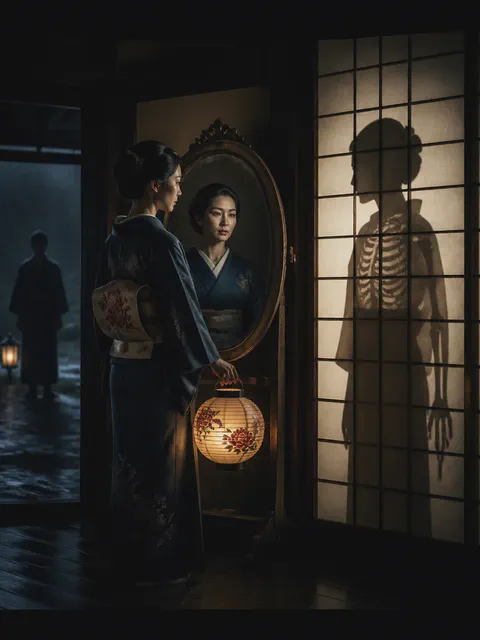
Sekien drew Hone-onna in 1779 as an old skeleton carrying a peony lantern, and his caption names the 1666 tale behind it: a widower's night visitor whom only an outsider saw for what she was.
Tamamo-no-Mae
玉藻前(たまものまえ)
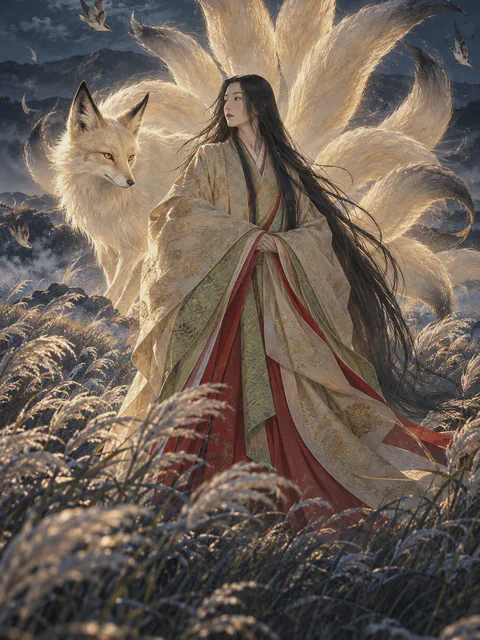
In the fifteenth-century tale, Tamamo-no-Mae is the most learned woman at the court of Retired Emperor Toba. He falls ill, divination names her as the cause, and she flees to Nasu as a fox. The killing stone came later.