Umi-bōzu
海坊主(うみぼうず)
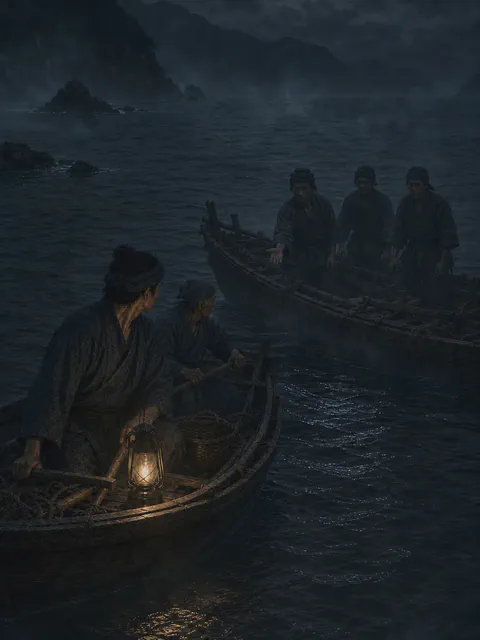
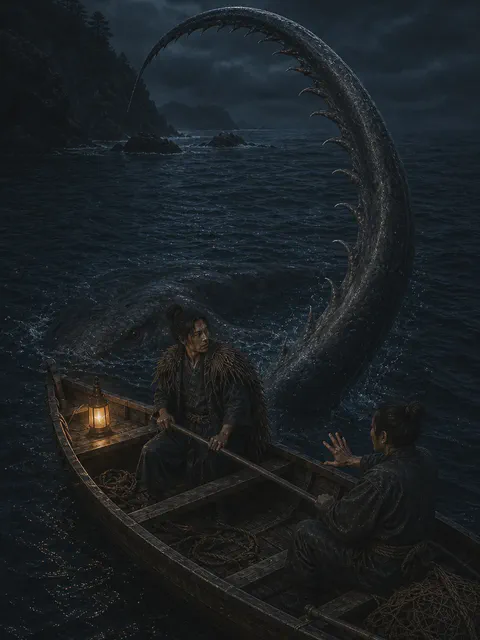
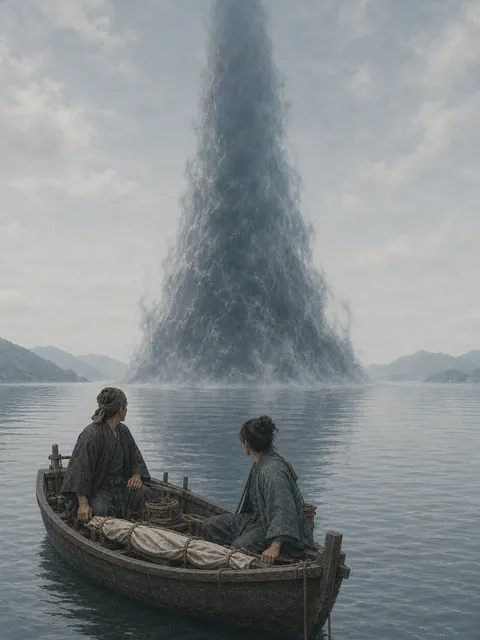
One account describes a vast Buddha-like shape crossing ahead of a boat on a clear, windless day, then slowly thinning until it vanished.
Yokai of the sea, the shore and the ship
The sea gave Japan more yokai than any other place, and most of them are about not coming back. Here are the creatures of the open water, the rocky shore and the fishing boat: the ones that pass by, the ones that ask for something, and the ones that take.
11 yokai
海坊主(うみぼうず)
One account describes a vast Buddha-like shape crossing ahead of a boat on a clear, windless day, then slowly thinning until it vanished.
船幽霊(ふなゆうれい)
A ruined boat draws alongside at night and its crew asks for a scoop. Give them an ordinary one, and they may use it to fill your boat with seawater.
牛鬼(うしおに)
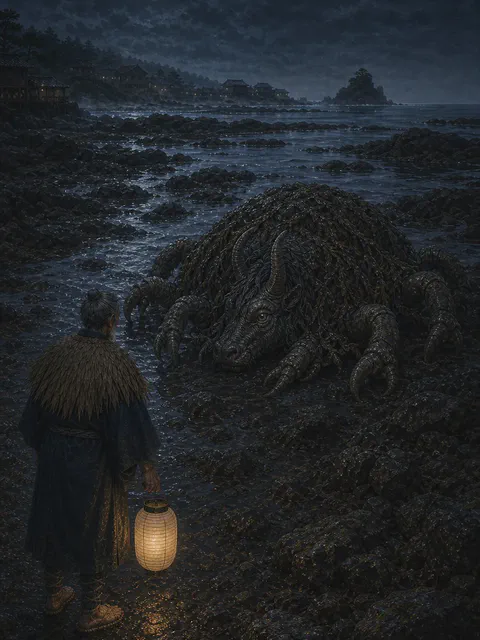
Toriyama Sekien's 1776 print shows a bull-like head on a squat clawed body at the water's edge — and tells us nothing else about it.
濡女(ぬれおんな)
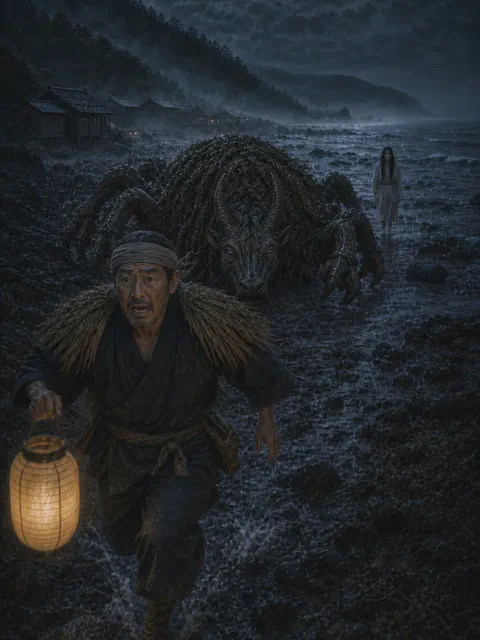
In Iwami in 1933, a fisherman walking home at night was handed an infant by a wet-haired woman — and when he threw the bundle down and ran, something else came out of the dark after him.
磯女(いそおんな)
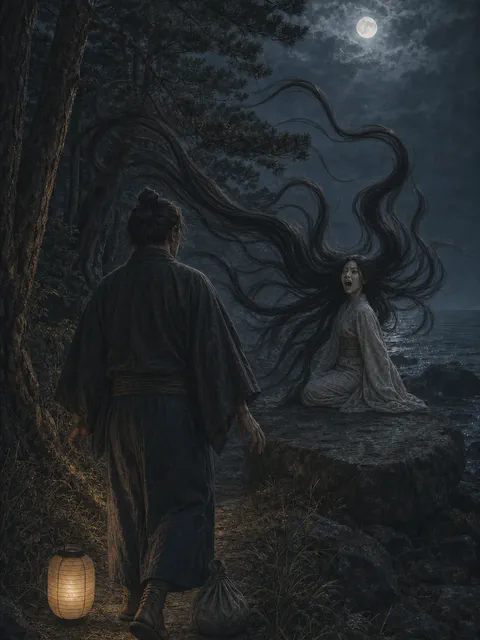
A 1929 record from Mizuho in Nagasaki describes a wrestler who tried to speak to a black-haired woman sitting on a shore stone at night — and other accounts from the same coastline describe something else entirely under the same name.
磯撫で(いそなで)
In the 1841 Ehon Hyaku Monogatari a shark-like creature of the western sea attacks with its tail — and in Kumano in 1960 the name was still the thing people said when someone died at the shore.
鮫人(さめびと)
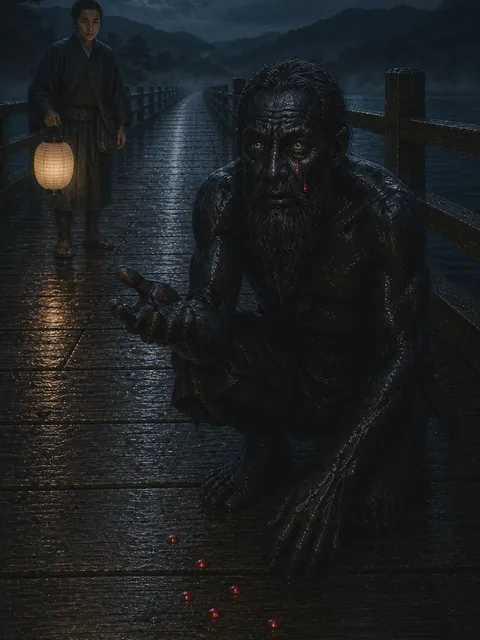
In a story Lafcadio Hearn published in English in 1900, a man on the Long Bridge of Seta shelters a creature banished from the Dragon Palace — and is repaid in tears that harden into jewels, which only come when the grief behind them is real.
人魚(にんぎょ)
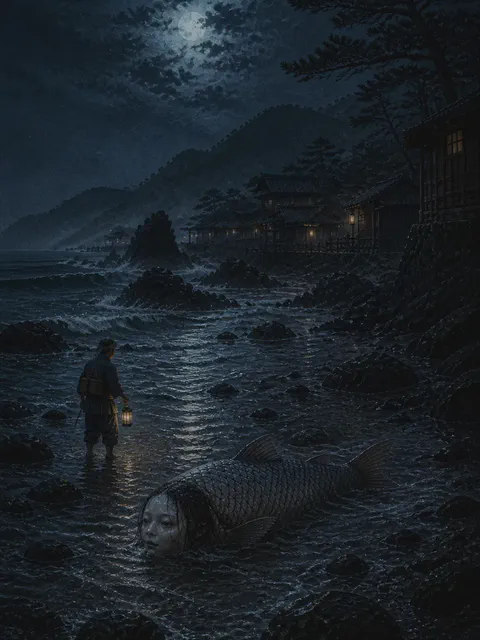
The Japanese ningyo of the old illustrated encyclopedias is not a mermaid — it is a fish body carrying a human face, with no arms and nothing to seduce anyone with. The famous story attached to it is not about romance either.
蜃(しん)
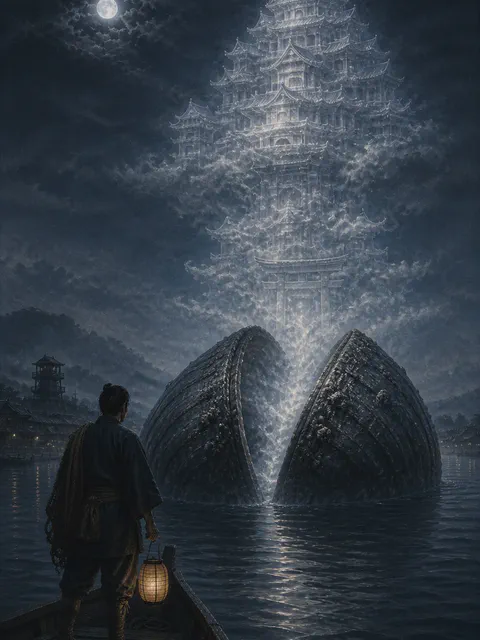
Old records describe a creature at the coast whose breath rises over the water and takes the shape of towers. The sources never agreed on what it was — and the Japanese word for a mirage is still its name.
アマビエ
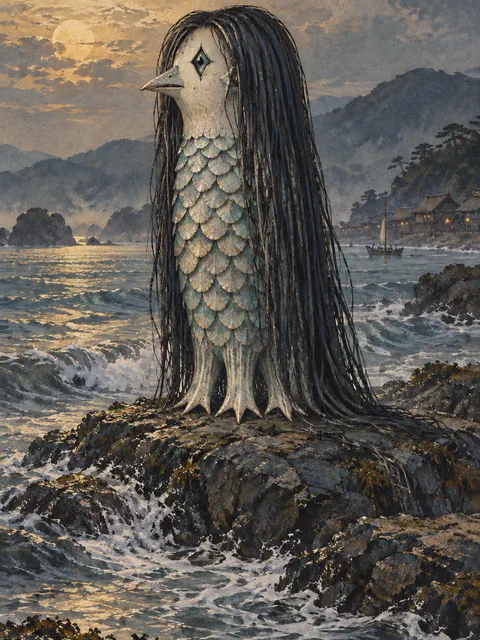
A printed sheet dated 1846 tells of a creature with long hair and a beak that rose from the sea off Higo, foretold six years of good harvests and an epidemic, and asked people to copy its picture and show it around.
滑瓢(ぬらりひょん)
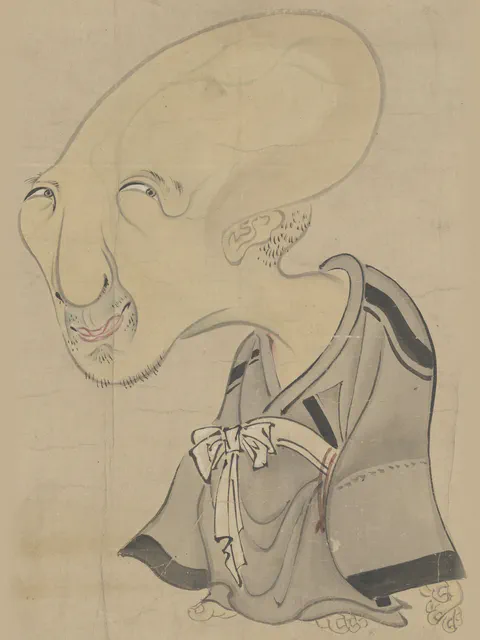
A long-headed old man stepping from a palanquin in the Edo scrolls and Sekien's 1776 print, a floating ball off Okayama, and the supreme-commander title added in the twentieth century.