
Yokai of the Night Road
Things met on the road after dark
The oldest yokai stories are about walking home alone. These are the things met on the road at night — the ones that block it, the ones that follow, the ones that stand in it and ask you a question.
31 yokai
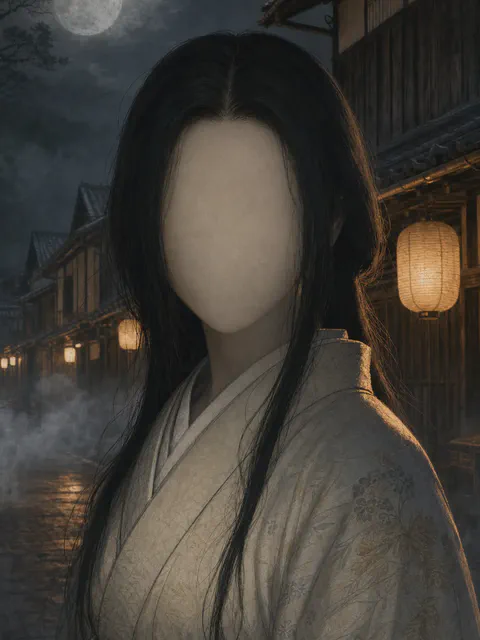
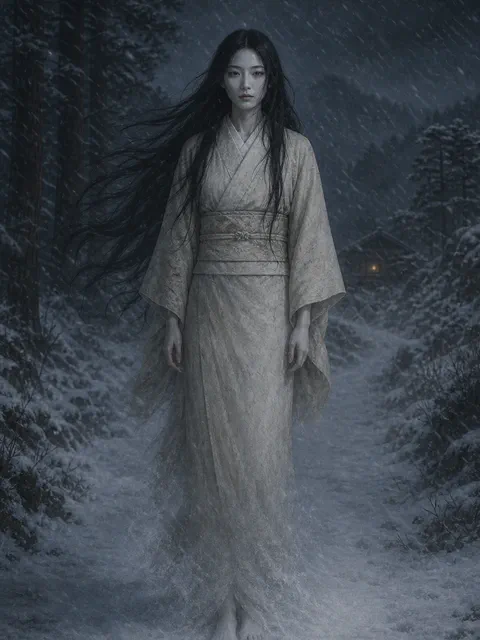
Yuki-onna
雪女(ゆきおんな)
A pale woman seen on winter roads, sometimes deadly, sometimes harmless, and never described the same way everywhere.
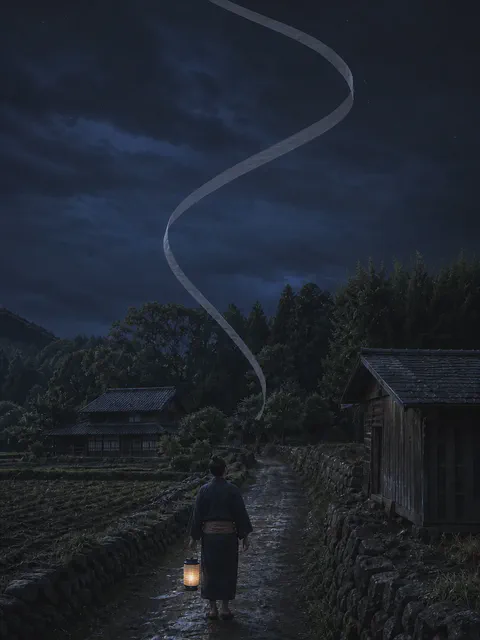
Ittan-momen
一反木綿(いったんもめん)
A white bolt of cloth that flutters across a rural night road, dazzles a traveler and attacks.
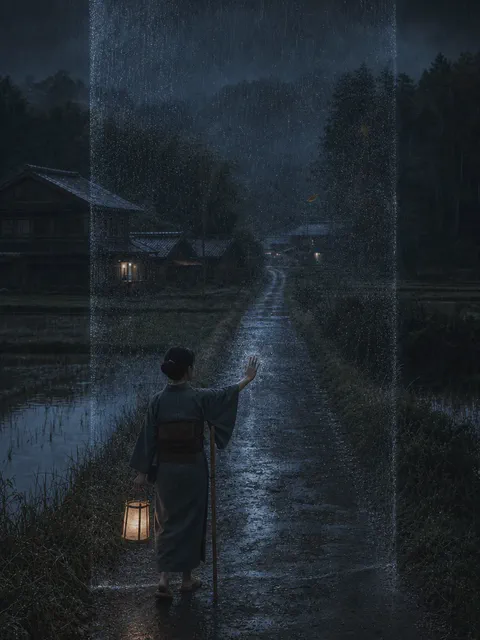
Nurikabe
塗り壁(ぬりかべ)
A night-road obstruction that stops travelers like a wall, though the early record does not describe a visible body.
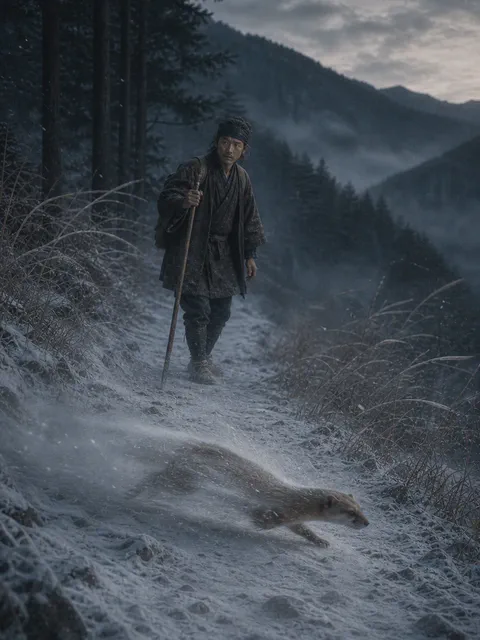
Kamaitachi
鎌鼬(かまいたち)
In Nagano in 1955 the kamaitachi was a weasel so fast that no one had ever seen it — known only by the clean cut it leaves on a stumbling traveler's shin.
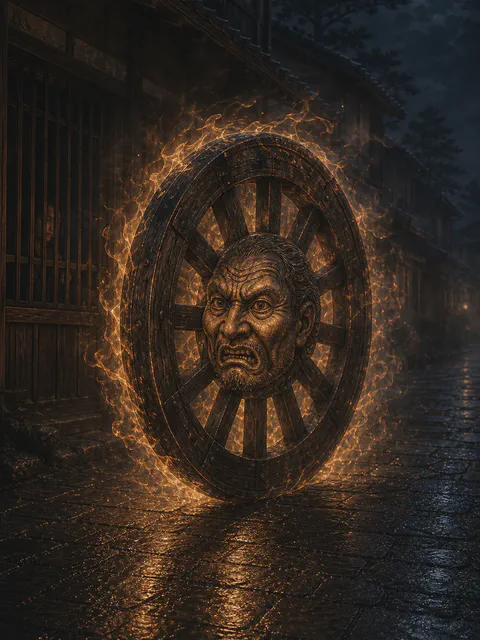
Wanyūdō
輪入道(わにゅうどう)
In Toriyama Sekien's 1779 picture book, a single ox-cart wheel rolls through the night by itself — and anyone who sees it is said to lose their soul.
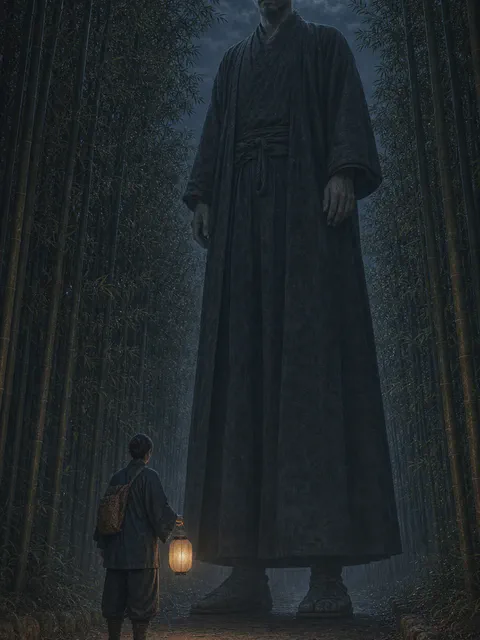
Mikoshi-nyūdō
見越入道(みこしにゅうどう)
A 1938 Nagasaki record warns of bamboo rustling over a night road and a looming figure that must be recognized aloud.
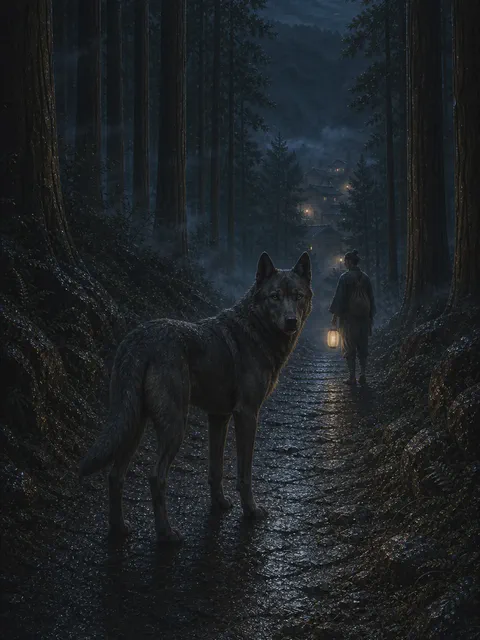
Okuri-inu
送り犬(おくりいぬ)
A 1936 Gifu account describes a mountain dog that follows a traveler all the way to his door — and leaves only after salt and a word of thanks.
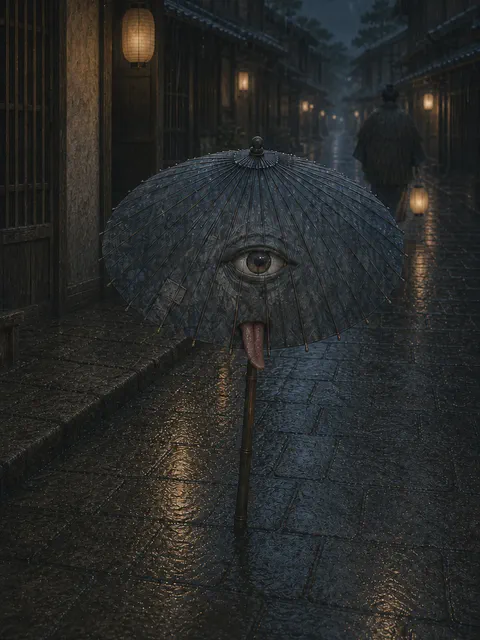
Karakasa-kozō
唐傘小僧(からかさこぞう)
An 1857 Osaka print shows a kabuki actor playing a one-legged umbrella monster — the clearest history of a yokai known through pictures rather than encounters.
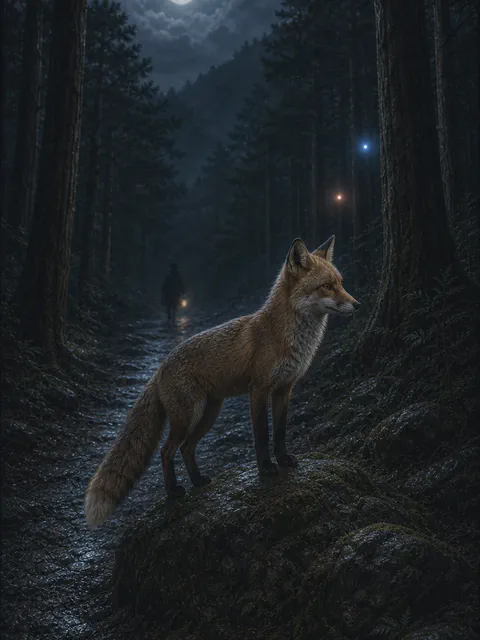
Kitsune
狐(きつね)
A 1930 account from Toyooka describes blurred blue or red foxfire moving restlessly from beyond the mountain to somewhere close by.
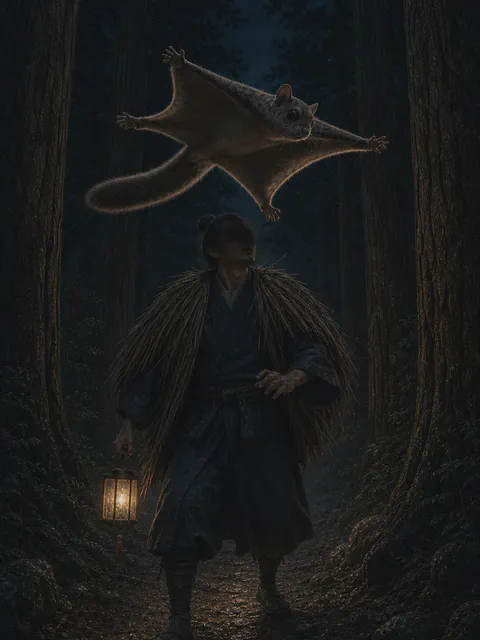
Nobusuma
野衾(のぶすま)
A 1938 Tokyo record describes something like a flying squirrel that drifts down onto a traveler and covers the eyes and mouth — and stops there.
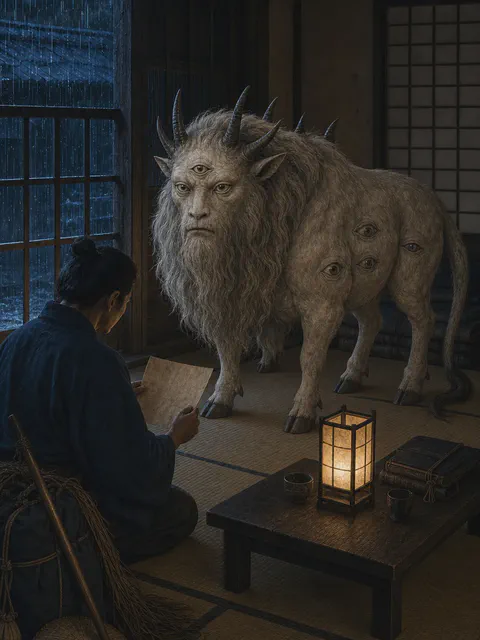
Hakutaku
白澤(はくたく)
A beast from Chinese legend that named every harmful thing in the world for the Yellow Emperor, and whose image — nine eyes, six horns, a human face — was carried by Edo travelers and set beside pillows during the cholera epidemic of 1858.
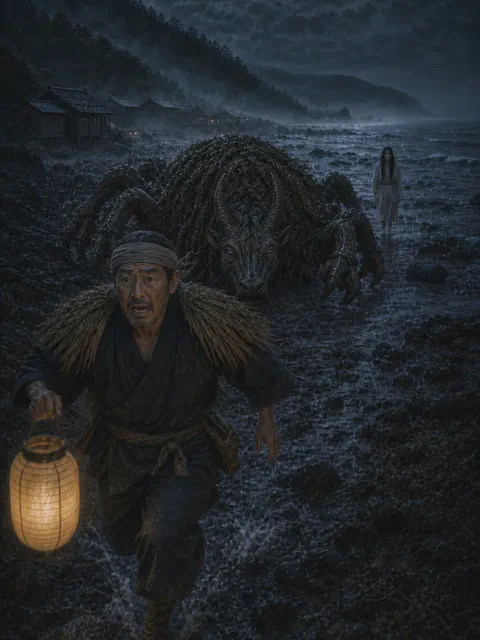
Nure-onna
濡女(ぬれおんな)
In Iwami in 1933, a fisherman walking home at night was handed an infant by a wet-haired woman — and when he threw the bundle down and ran, something else came out of the dark after him.
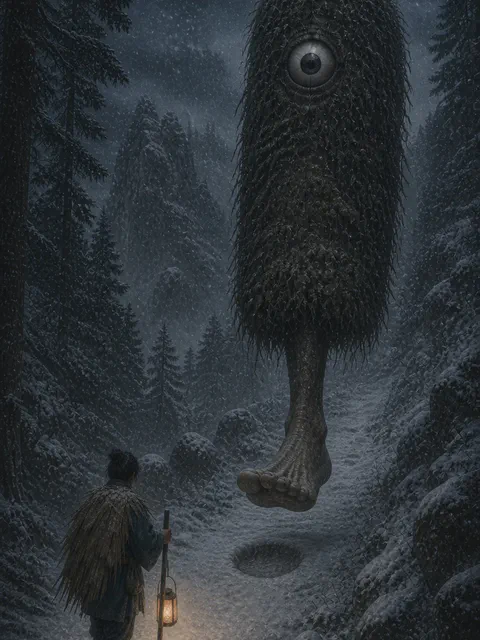
Ippon-datara
一本だたら(いっぽんだたら)
In the Kii mountains a one-legged thing leaves enormous single tracks in the snow — and Yanagita Kunio, reporting them, declined to conclude a one-legged creature from footprints alone.
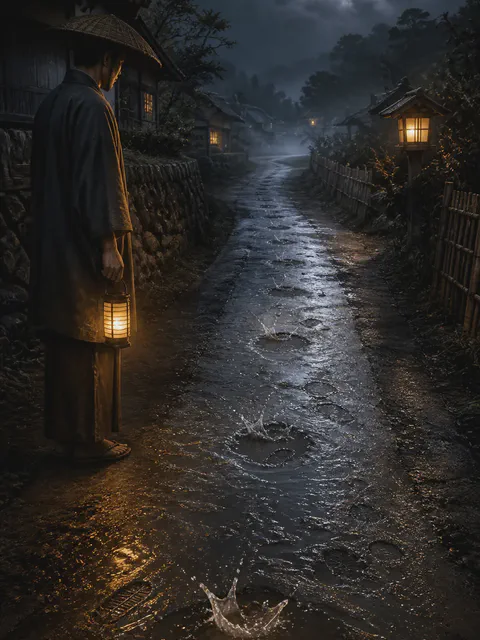
Betobeto-san
べとべとさん(べとべとさん)
On a night road in Uda you hear a bita-bita footfall coming along behind you. There is nobody there. Step aside, say the words, and it stops — which is the entire record.
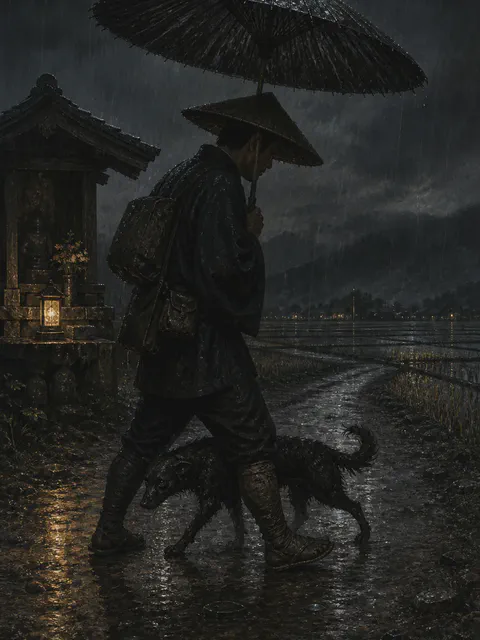
Sunekosuri
脛擦り(すねこすり)
A naturalist writing a national dictionary of yokai in 1935 gave the Sunekosuri of Oda district about one line: dog shaped, on rainy nights, brushing between a traveller's legs as it passes. Everything else you have read about it came later.
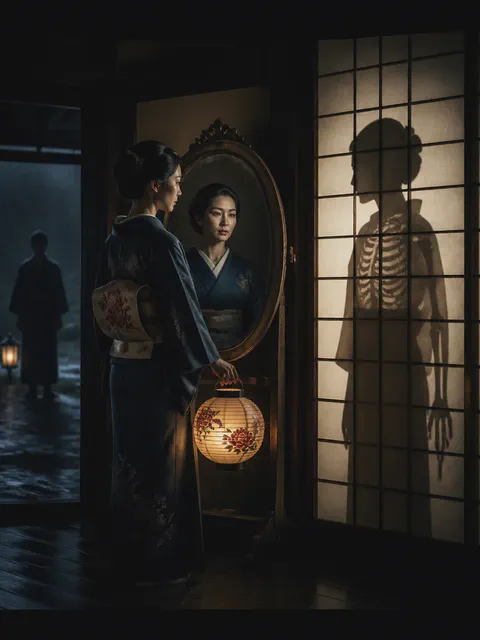
Hone-onna
骨女(ほねおんな)
Sekien drew Hone-onna in 1779 as an old skeleton carrying a peony lantern, and his caption names the 1666 tale behind it: a widower's night visitor whom only an outsider saw for what she was.
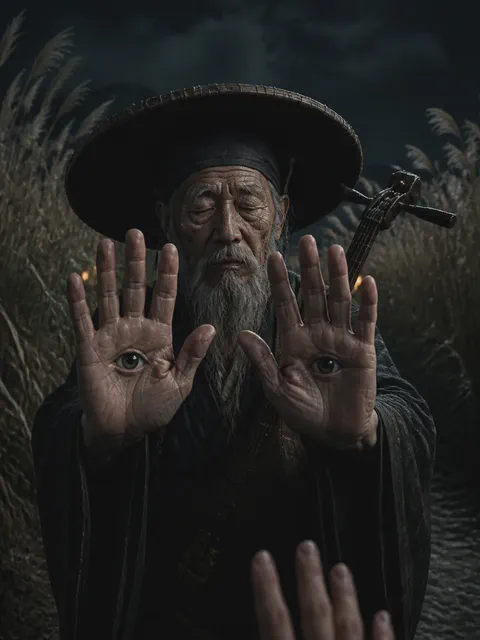
Tenome
手の目(てのめ)
Sekien's 1776 plate shows an elderly blind figure with a biwa on his back, holding out two palms, each with an open eye. He gave it a name and nothing more; the story of a murdered man hunting his killer came later.
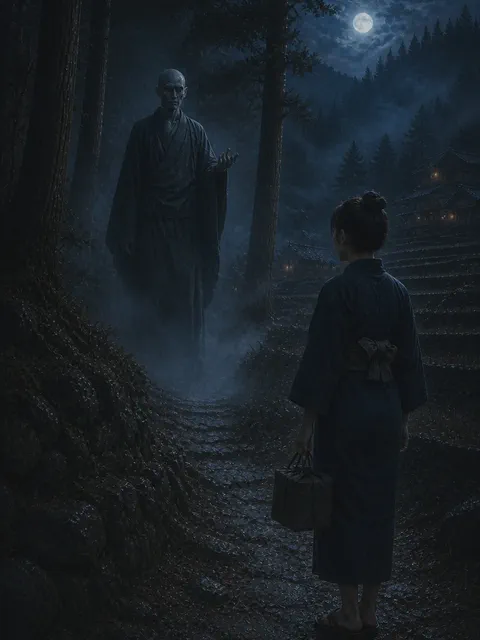
Ao-bōzu
青坊主(あおぼうず)
In a 1984 record from Miai in Kagawa, a girl carrying lunch to her family's mountain field met Ao-bōzu, the blue monk. He asked her one question. She said no, and he was gone.
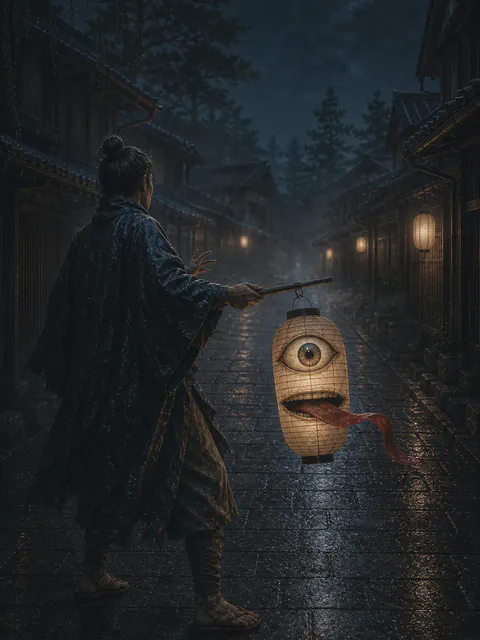
Chōchin-obake
提灯お化け(ちょうちんおばけ)
One of forty-eight monsters on Yoshimori's print Shinban Bakemono-zukushi is a paper lantern with an eye, a mouth, and something coming out of the mouth. That picture is the record — there is no story attached to it.
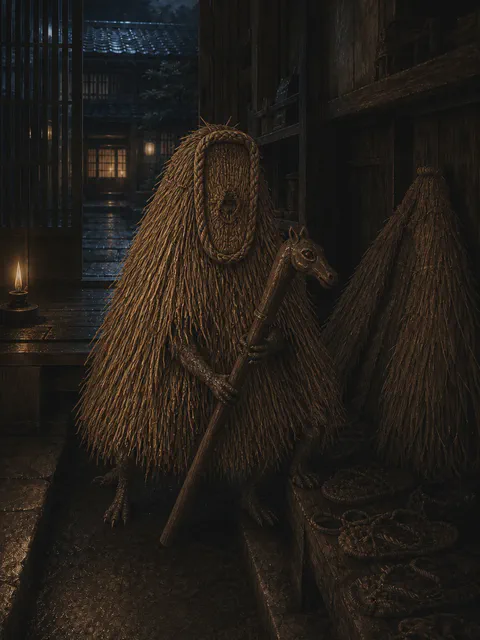
Bakezōri
化け草履(ばけぞうり)
A yokai scroll in the Nichibun collection shows a sandal monster covered in yellow straw, with a straw sandal for a face, riding a horse-head staff. It is stranger than the one-eyed singing sandal of modern books, and it comes with no story.
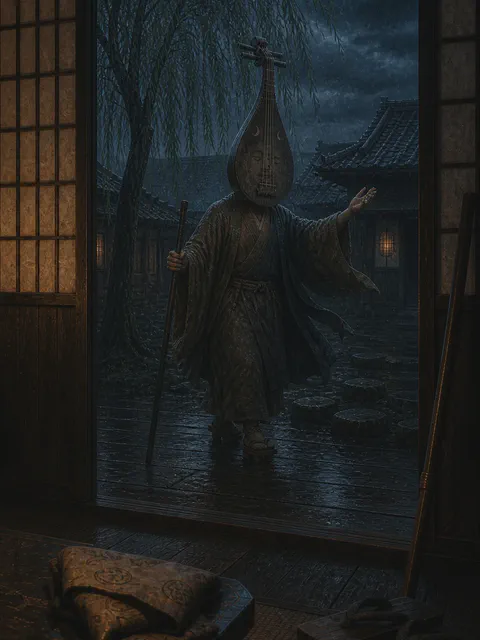
Biwa-bokuboku
琵琶牧々(びわぼくぼく)
In 1784 Sekien drew a blind biwa priest with a biwa for a head, feeling his way under a willow. His caption names two legendary court lutes, Genjō and Bokuba, and builds the creature's name out of one of them.
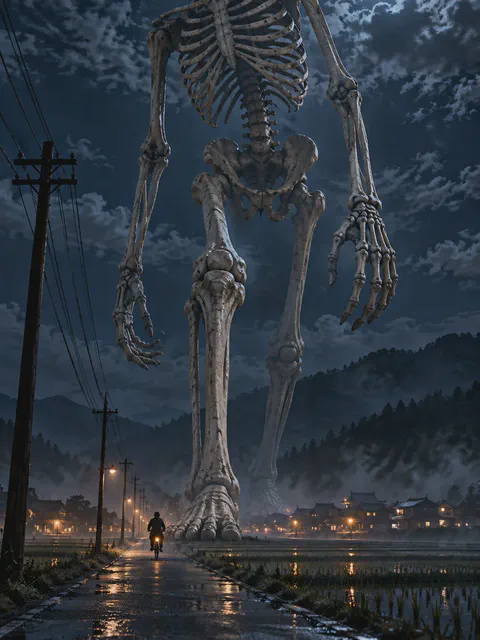
Gashadokuro
がしゃどくろ
Gashadokuro, the giant skeleton, looks ancient. It was created by the writer Saitō Morihiro in 1966, taken into Mizuki Shigeru's yokai collection in 1968, and later matched to a Kuniyoshi print from the 1840s that never used the name.
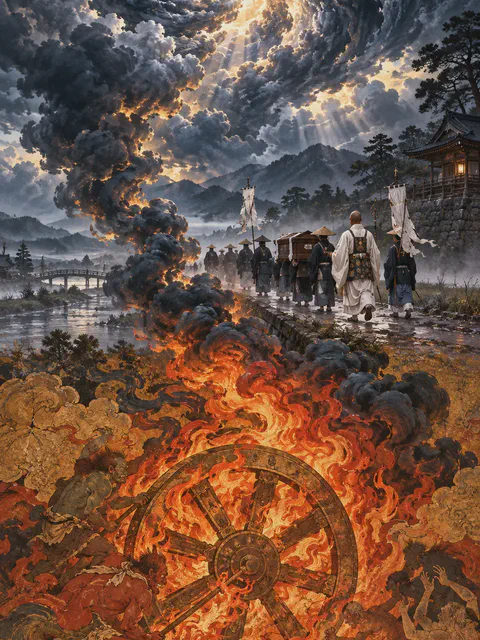
Kasha
火車(かしゃ)
Kasha began as the Buddhist fire cart that came for sinners at the hour of death. By the late sixteenth century it was a thing in the thunderstorm that stole the dead from funerals, and only from about the late seventeenth century was it said to be a cat.
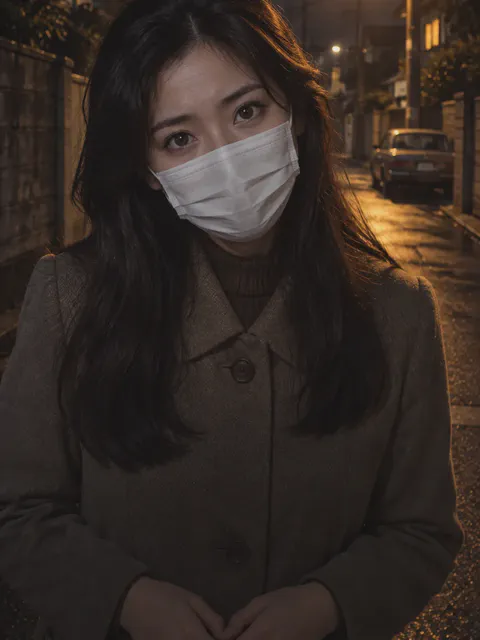
Kuchisake-onna
口裂け女(くちさけおんな)
Kuchisake-onna is not an old yokai. She is a rumour that swept through Japanese schoolchildren in 1978–79: a masked woman asking 'Am I pretty?' Almost every other detail changed from school to school.
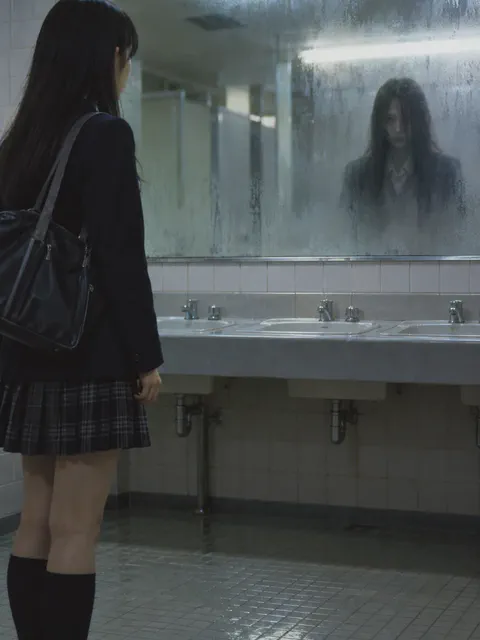
Teke Teke
テケテケ
Teke Teke is a modern school ghost story, best known as the upper half of a woman who drags herself along on her elbows. Its origin cannot be traced, and one recorded version from a Kobe high school puts it in a mirror instead.
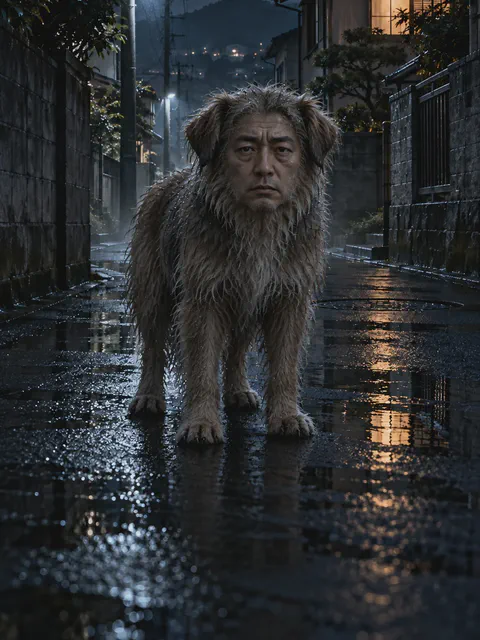
Jinmenken
人面犬(じんめんけん)
Jinmenken, the dog with a human face, swept through Japanese children's rumour around 1989–90. A first-grader in Yamagata had his own version: the dog had left Tokyo because people would not stop talking about it.
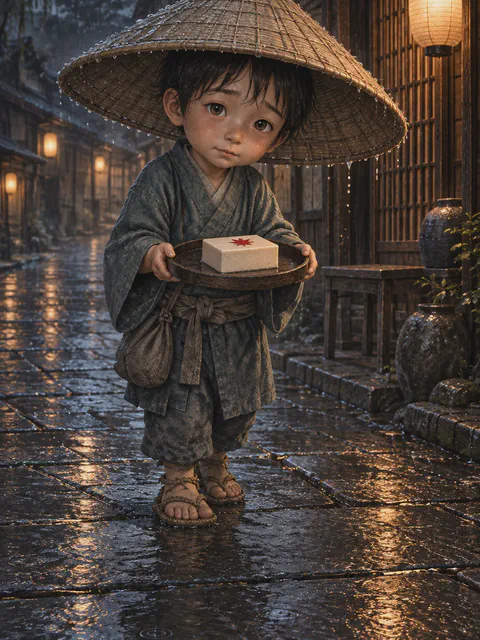
Tofu-kozō
豆腐小僧(とうふこぞう)
Tofu-kozō, a big-headed child under a large hat carrying a tray of tofu, appears in Edo comic picture books from 1779. He follows people and does no harm, and in one story he drops his tofu running away from a human.
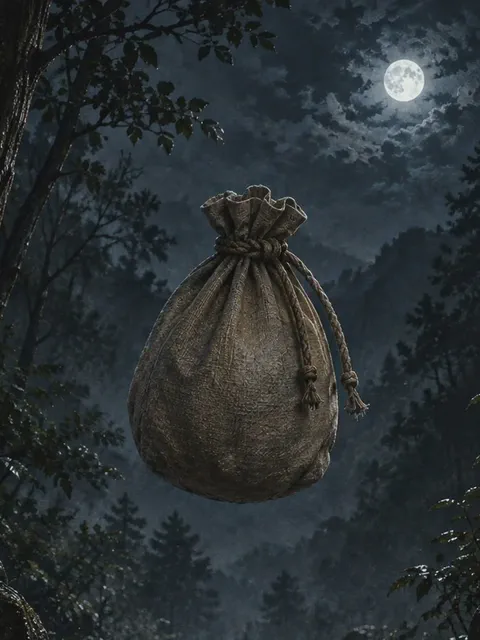
Chabukuro
茶袋(ちゃぶくろ)
A tea-steeping bag that hangs in the air on eerie stretches of road in the Hata district of Kōchi, recorded in 1938, with illness blamed on anyone it strikes; related bags hang from trees in Kagawa and float on rivers in Wakayama.
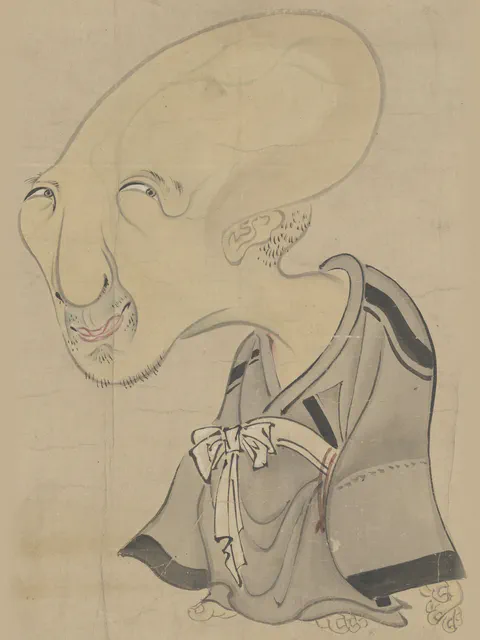
Nurarihyon
滑瓢(ぬらりひょん)
A long-headed old man stepping from a palanquin in the Edo scrolls and Sekien's 1776 print, a floating ball off Okayama, and the supreme-commander title added in the twentieth century.
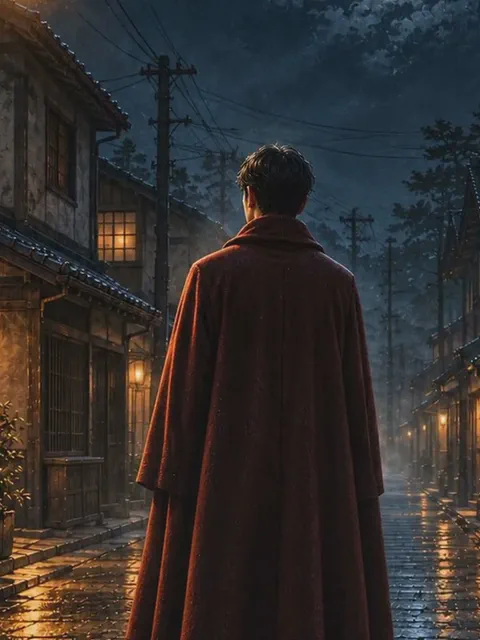
Aka Manto
赤マント(あかマント)
The red-cloaked man of a Tokyo rumour in February 1939, denied on the radio by the police and spread by schoolchildren across the capital, and the school-toilet Aka Manto of the 1980s who asks whether you want the red cloak or the blue.