Tengu
天狗(てんぐ)
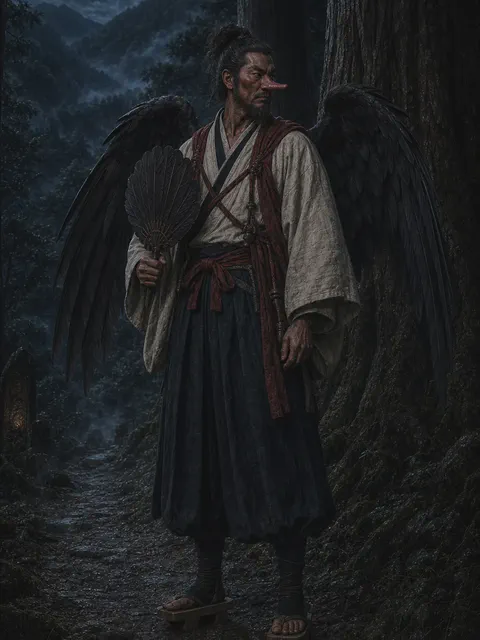
A mountain being associated with flight, impossible voices, disappearances, and more than one familiar face.
Yokai of the deep mountains and the woods
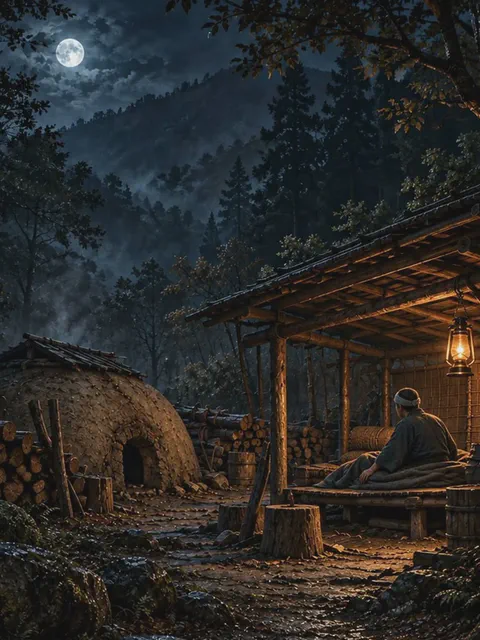
The mountains are where Japanese villages stopped and something else began. These are the beings met on the high paths and in the deep woods — the ones that call, the ones that follow, and the ones that are simply there when you look up.
30 yokai
天狗(てんぐ)
A mountain being associated with flight, impossible voices, disappearances, and more than one familiar face.
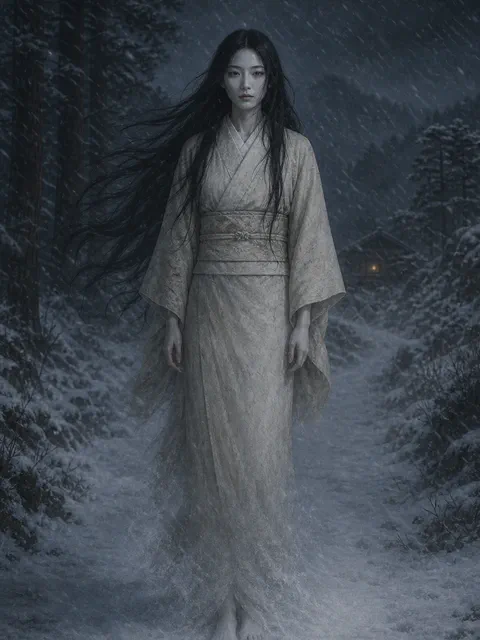
雪女(ゆきおんな)
A pale woman seen on winter roads, sometimes deadly, sometimes harmless, and never described the same way everywhere.
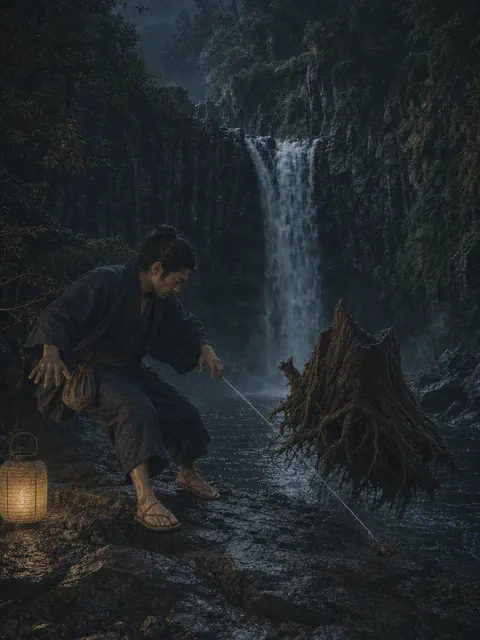
絡新婦(じょろうぐも)
At a waterfall in Shizuoka, a spider winds one fine thread around a man's foot—and reveals enough strength to tear a mulberry stump from the earth.
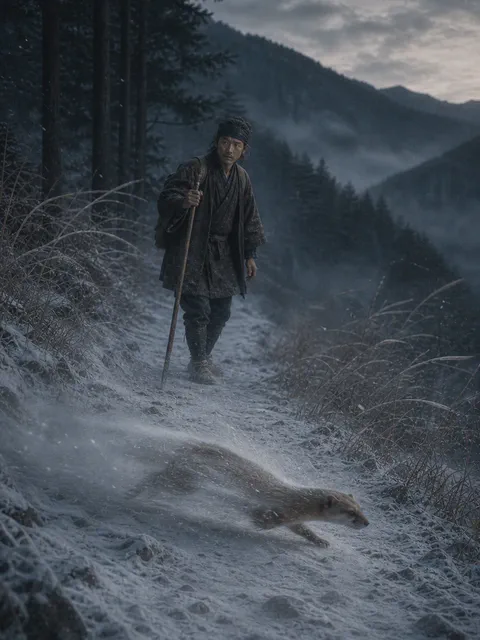
鎌鼬(かまいたち)
In Nagano in 1955 the kamaitachi was a weasel so fast that no one had ever seen it — known only by the clean cut it leaves on a stumbling traveler's shin.
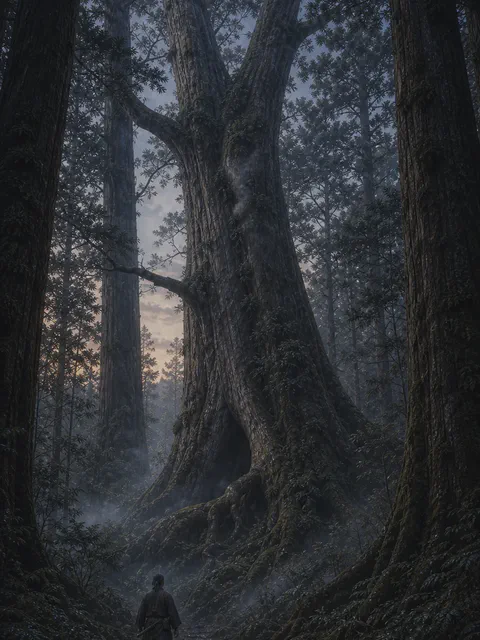
木霊(こだま)
Kodama can mean both a presence within an old tree and the echo that returns from a mountain — but Japanese tradition gives it no single fixed body.
猫又(ねこまた)
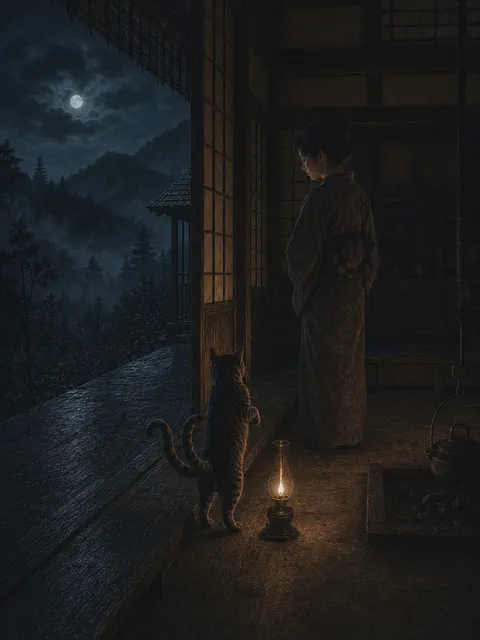
A 1931 Kagawa record describes an aging cat whose tail divides in two and that rises to dance on its hind legs.
見越入道(みこしにゅうどう)
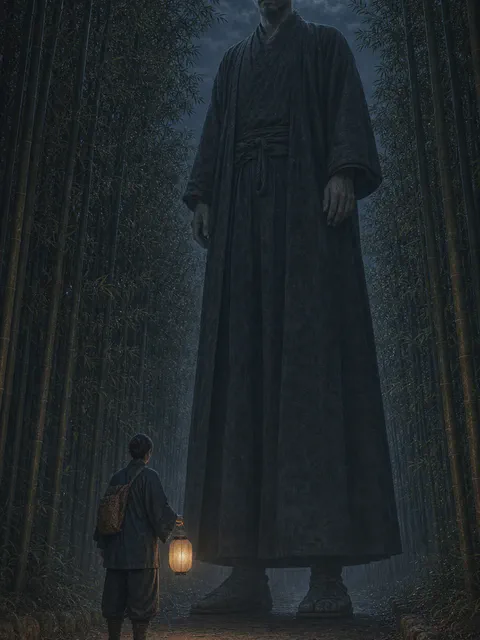
A 1938 Nagasaki record warns of bamboo rustling over a night road and a looming figure that must be recognized aloud.
小豆洗い(あずきあらい)
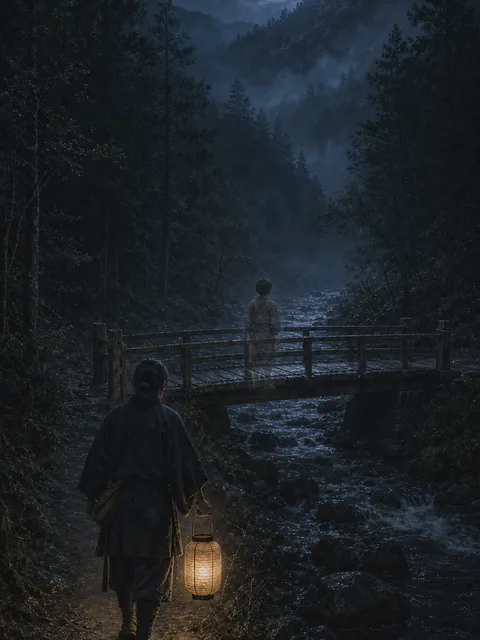
A bean-washing sound repeats beside a dark stream, but the person making it cannot be found.
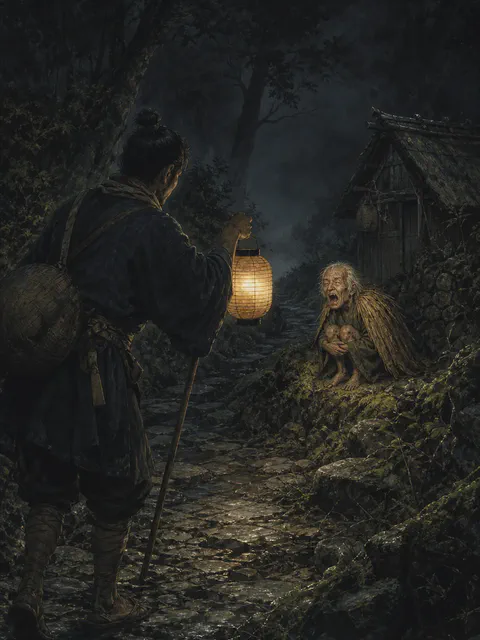
山姥(やまうば)
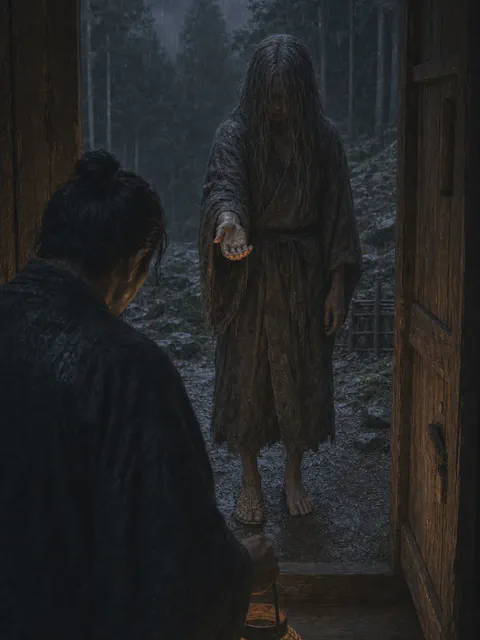
A man carries a woven object home from the hills, and that night a woman's voice demands the return of her ashinaka.
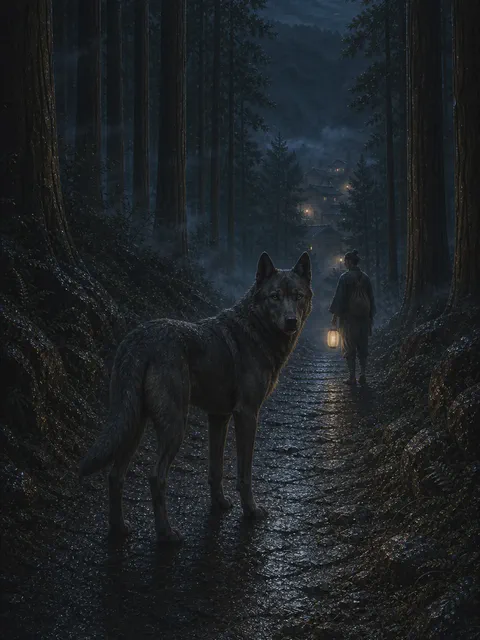
送り犬(おくりいぬ)
A 1936 Gifu account describes a mountain dog that follows a traveler all the way to his door — and leaves only after salt and a word of thanks.
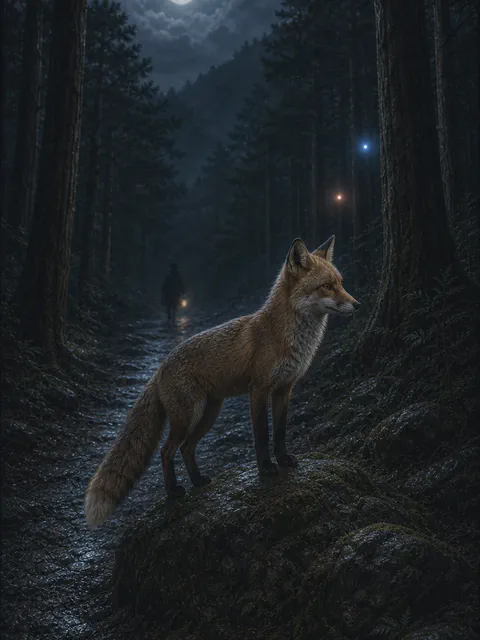
狐(きつね)
A 1930 account from Toyooka describes blurred blue or red foxfire moving restlessly from beyond the mountain to somewhere close by.
犬神(いぬがみ)
A possessing spirit of western Japan with no agreed-upon body — and a label that excluded entire households from marriage and community life.
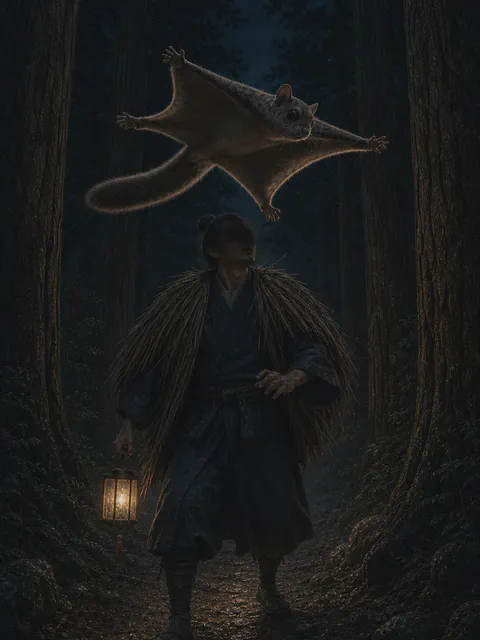
野衾(のぶすま)
A 1938 Tokyo record describes something like a flying squirrel that drifts down onto a traveler and covers the eyes and mouth — and stops there.
雷獣(らいじゅう)
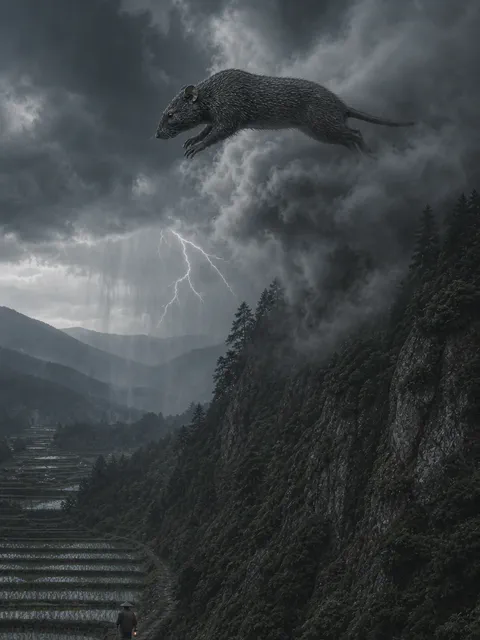
An Edo-period account from Shimotsuke describes a mouse-like animal that waited in a mountain hole each summer until its own thundercloud came to collect it.
狒々(ひひ)
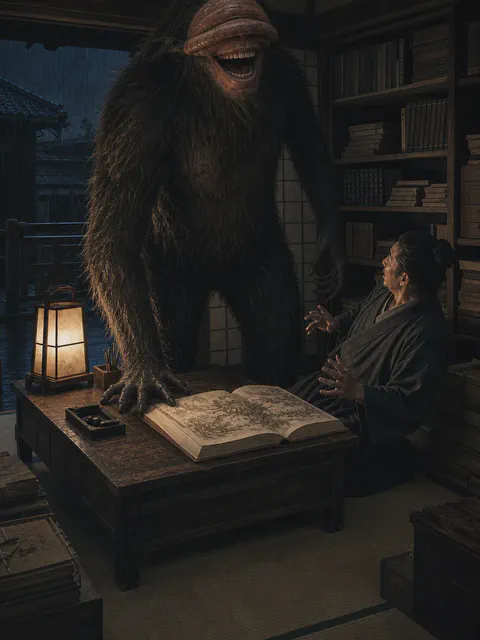
A 1712 Japanese encyclopedia compiled older Chinese descriptions of a black-haired, long-lipped creature that laughs when it sees a person — and whose upper lip then rolls up over its own eyes.
山彦(やまびこ)
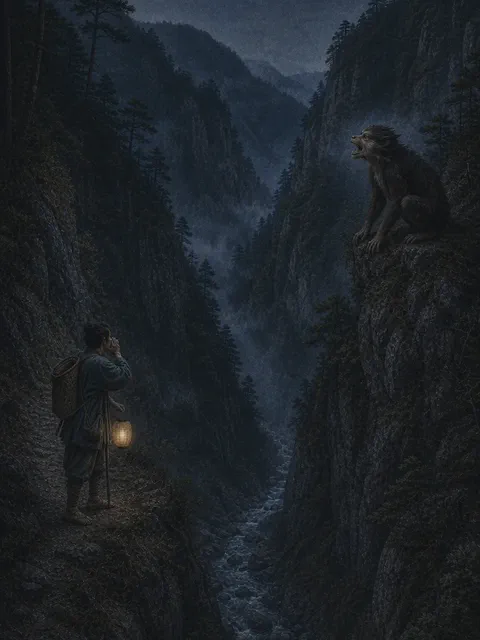
The echo in a Japanese valley was heard as an answer before anyone drew the thing answering — and when painters finally gave it a body, they produced a small animal that is neither quite a dog nor quite a monkey.
覚(さとり)
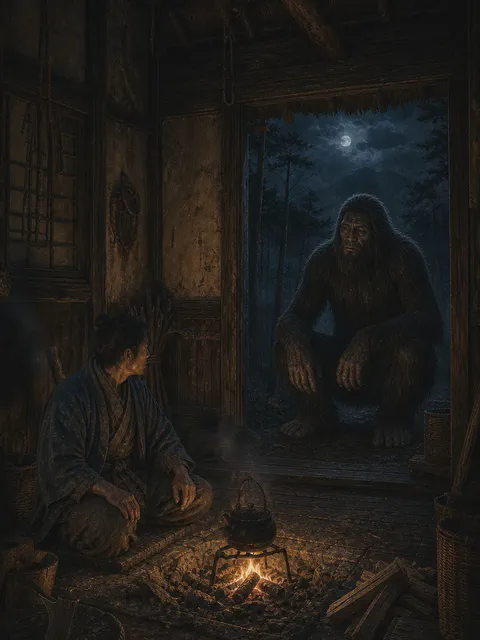
Sekien's 1779 entry describes a black, long-haired creature of the deep mountains that understands speech, reads what you are thinking, and leaves the moment you decide to kill it — and a later tale defeats it with something nobody thought at all.
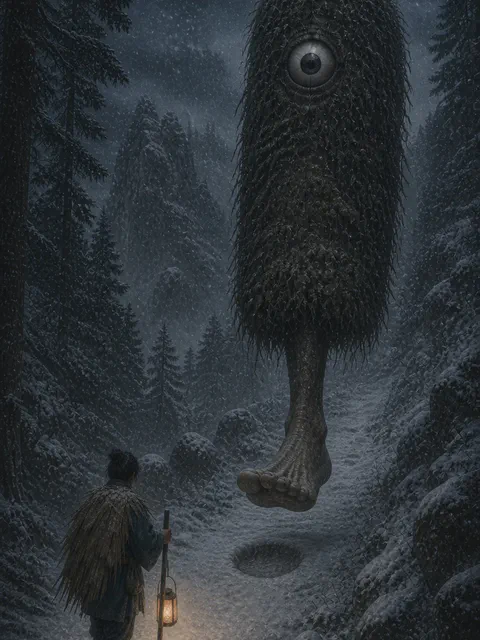
一本だたら(いっぽんだたら)
In the Kii mountains a one-legged thing leaves enormous single tracks in the snow — and Yanagita Kunio, reporting them, declined to conclude a one-legged creature from footprints alone.
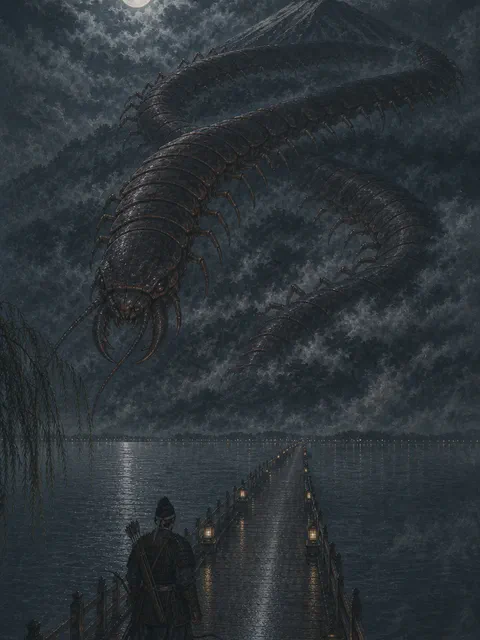
大百足(おおむかで)
A warrior who walked over a serpent lying across the Long Bridge of Seta was asked by the dragon clan for help — because a centipede large enough to wrap a mountain was killing them, and they could not stop it themselves.
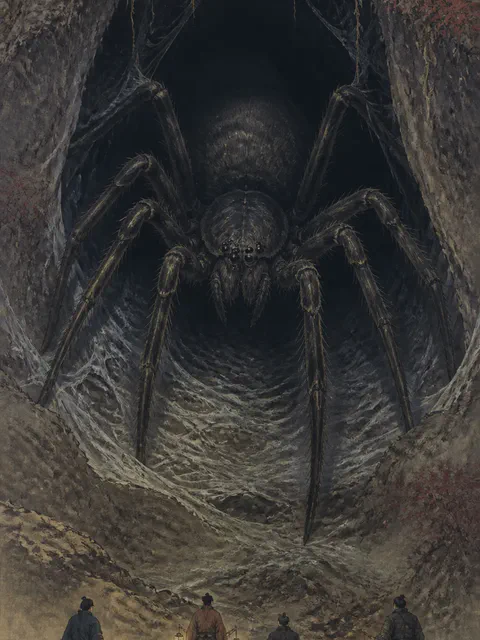
土蜘蛛(つちぐも)
A monk appears at a sick warlord's bedside and throws spider silk at him. That is the tale. But the same word, centuries earlier, was what the court called people it wanted to treat as outsiders.
児啼爺(こなきじじい)
A 1938 record from the Miyoshi mountains of Tokushima gives an old man's appearance and an infant's cry, in a single line. The famous part — that it grows unbearably heavy once you pick it up — is not in it.
青坊主(あおぼうず)
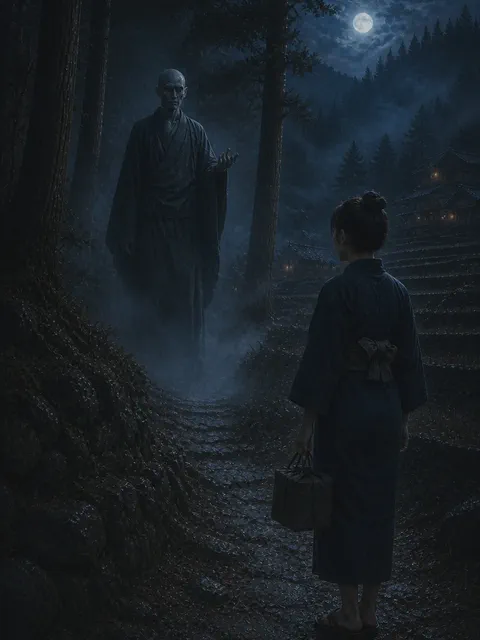
In a 1984 record from Miai in Kagawa, a girl carrying lunch to her family's mountain field met Ao-bōzu, the blue monk. He asked her one question. She said no, and he was gone.
酒呑童子(しゅてんどうじ)
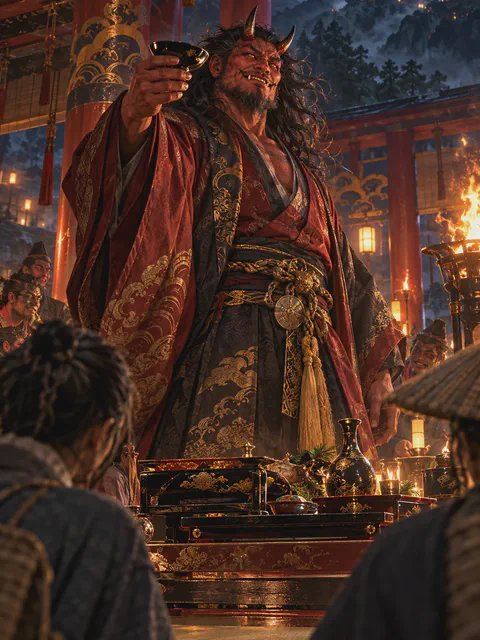
The tale of Shuten-dōji appeared in the fourteenth century: an oni lord on Mt. Ōe who carried off the daughters of the capital, and the warriors who got in disguised as monks and defeated him with sake.
大嶽丸(おおたけまる)
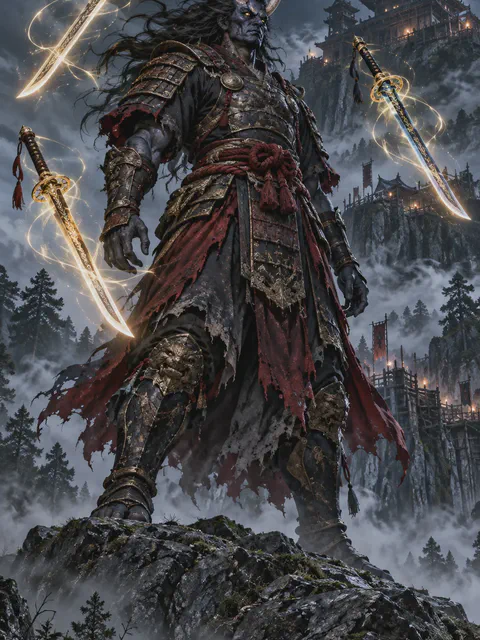
In the Muromachi tale Tamura no Sōshi, the demon god Ōtakemaru of Mt. Suzuka cannot be found or beaten by force. The hero Tamura-maru wins only because Suzuka Gozen deceives the demon and takes his swords.
鬼(おに)
The horned, red-skinned oni with a club is a late composite. The word first named an invisible spirit of the dead, then hell's wardens, mountain monsters, outsiders — and even the figure who once chased oni away.
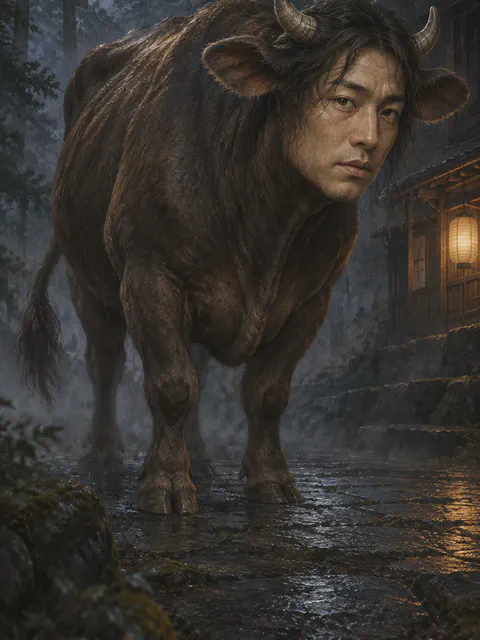
件(くだん)
An 1836 broadsheet from Tango described a kudan — a cow's body with a human face — and promised that any house that put up its picture would prosper. Other kudan of the same century foretold disaster instead.
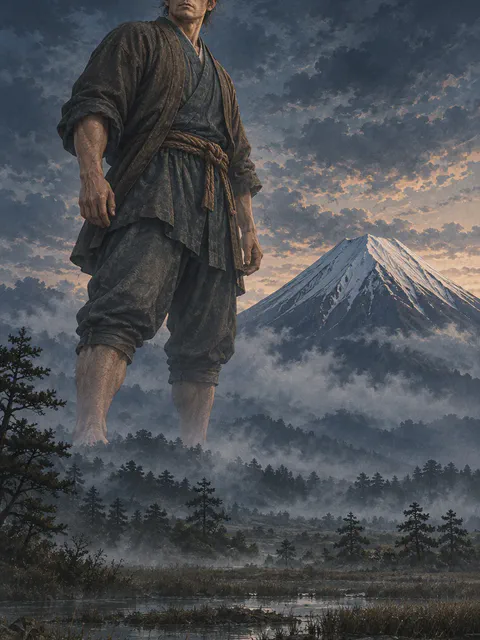
だいだらぼっち
In Sagamihara, a giant called Deirabotchi carried Mt. Fuji on his back, sat down to rest, and found the mountain had taken root. He stamped in frustration, and his footprint became a pond.
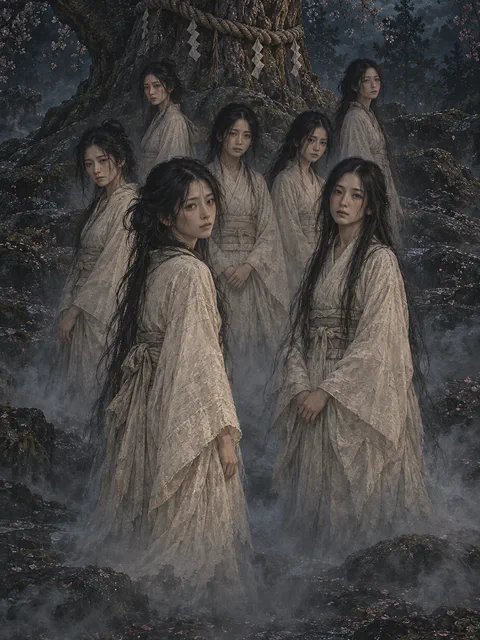
七人ミサキ(しちにんみさき)
In a tale told in Sukumo, Kōchi, seven women fleeing a political upheaval were caught at the border and put to death beneath an old cherry tree. Seven figures in white appeared there until the people began holding memorial rites.
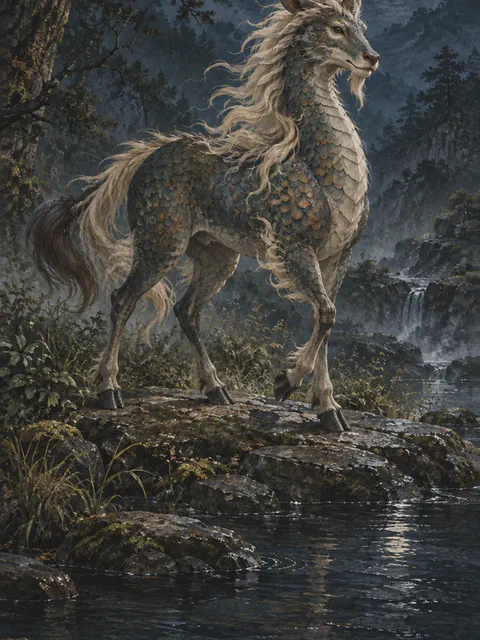
麒麟(きりん)
The kirin is an auspicious beast of Chinese origin, shown in Japanese art from the eighth century: deer-bodied, one-horned, and said to appear only when the world is well governed. It harms no living thing — not even the grass.
山童(やまわろ)
The hairy mountain child of Kyushu: a 1950 Ashikita record of one snapping twigs all night beside a charcoal burner, the rice balls and sake it works for, the paths where no kiln may stand, and the belief that it is the kappa gone up the mountain for the winter.