Isonade
磯撫で(いそなで)
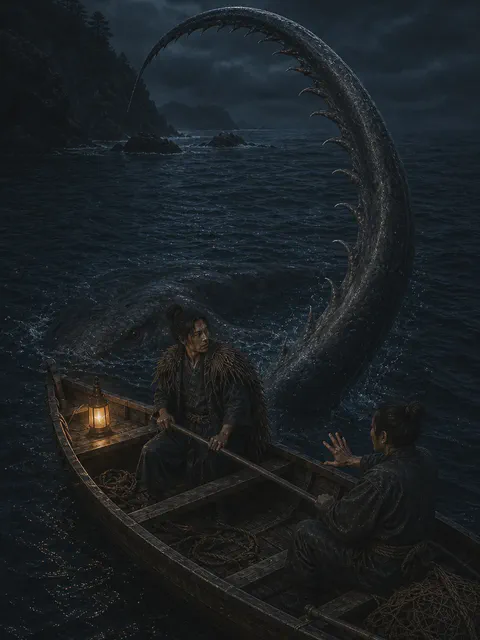
In the 1841 Ehon Hyaku Monogatari a shark-like creature of the western sea attacks with its tail — and in Kumano in 1960 the name was still the thing people said when someone died at the shore.
Rated 4 or 5 on our editorial danger scale
Every article carries an editorial danger rating from 1 to 5. These are the 4s and 5s: the yokai whose records include someone not coming home, and what, if anything, the records say to do about it.
18 yokai
磯撫で(いそなで)
In the 1841 Ehon Hyaku Monogatari a shark-like creature of the western sea attacks with its tail — and in Kumano in 1960 the name was still the thing people said when someone died at the shore.
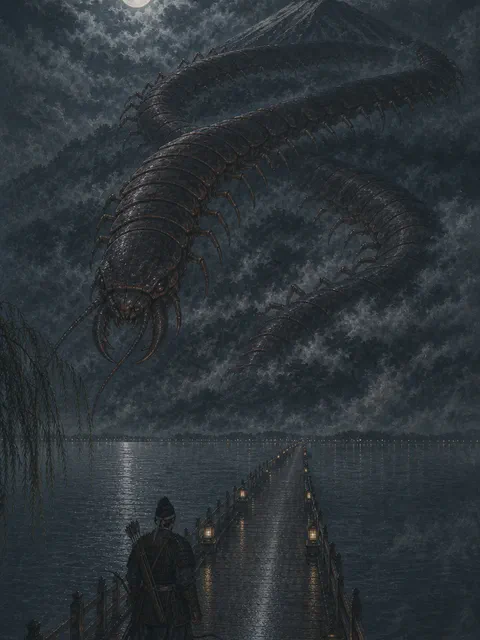
大百足(おおむかで)
A warrior who walked over a serpent lying across the Long Bridge of Seta was asked by the dragon clan for help — because a centipede large enough to wrap a mountain was killing them, and they could not stop it themselves.
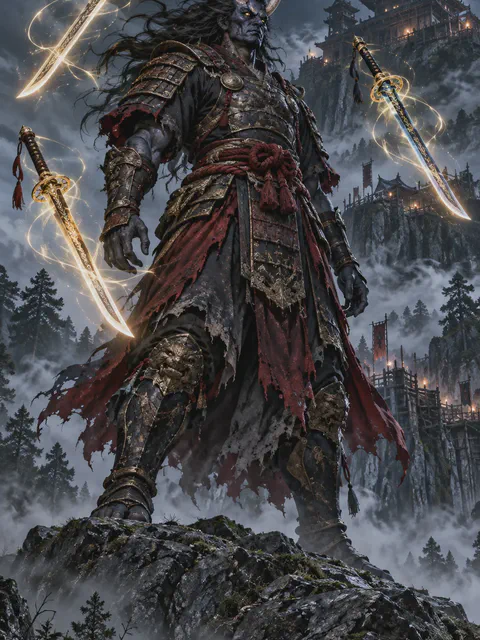
大嶽丸(おおたけまる)
In the Muromachi tale Tamura no Sōshi, the demon god Ōtakemaru of Mt. Suzuka cannot be found or beaten by force. The hero Tamura-maru wins only because Suzuka Gozen deceives the demon and takes his swords.
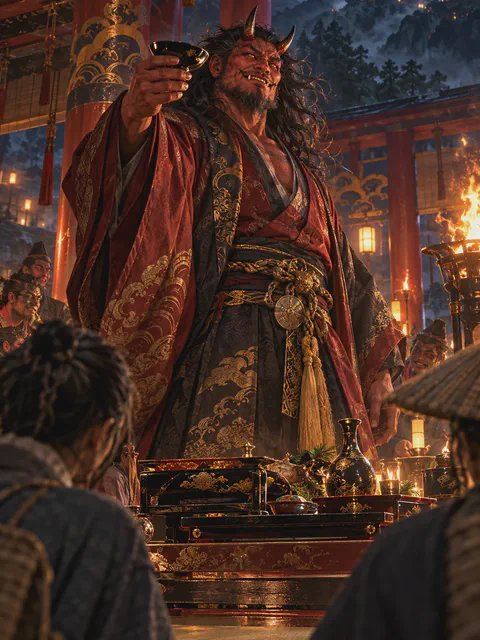
酒呑童子(しゅてんどうじ)
The tale of Shuten-dōji appeared in the fourteenth century: an oni lord on Mt. Ōe who carried off the daughters of the capital, and the warriors who got in disguised as monks and defeated him with sake.
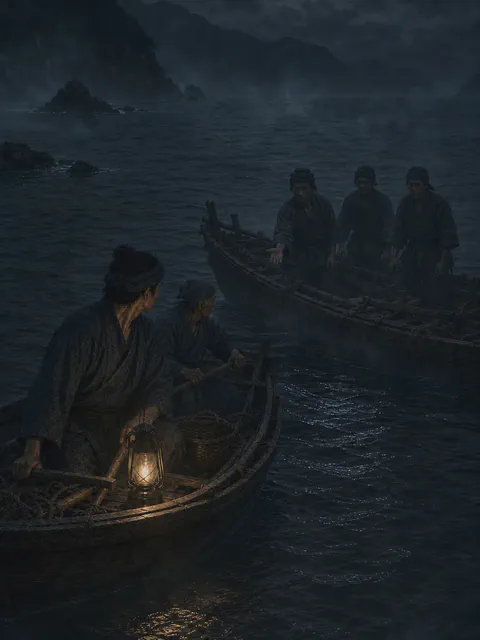
船幽霊(ふなゆうれい)
A ruined boat draws alongside at night and its crew asks for a scoop. Give them an ordinary one, and they may use it to fill your boat with seawater.
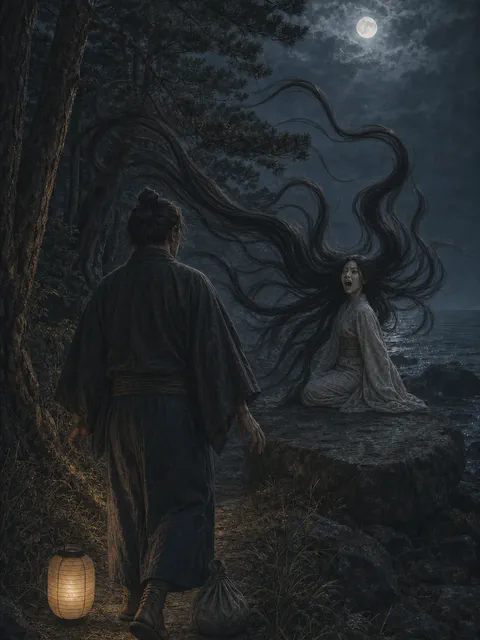
磯女(いそおんな)
A 1929 record from Mizuho in Nagasaki describes a wrestler who tried to speak to a black-haired woman sitting on a shore stone at night — and other accounts from the same coastline describe something else entirely under the same name.
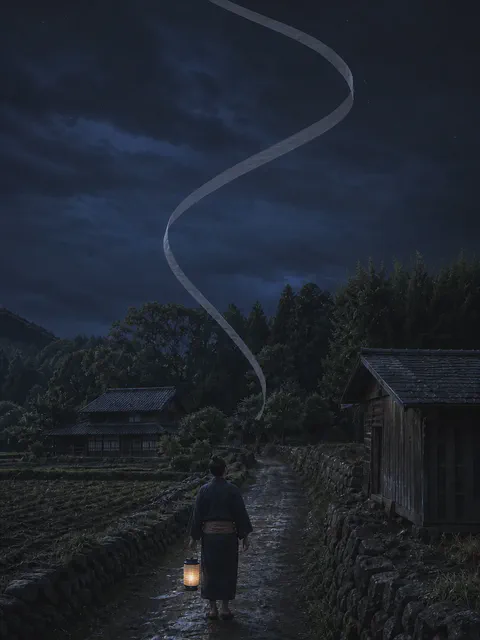
一反木綿(いったんもめん)
A white bolt of cloth that flutters across a rural night road, dazzles a traveler and attacks.
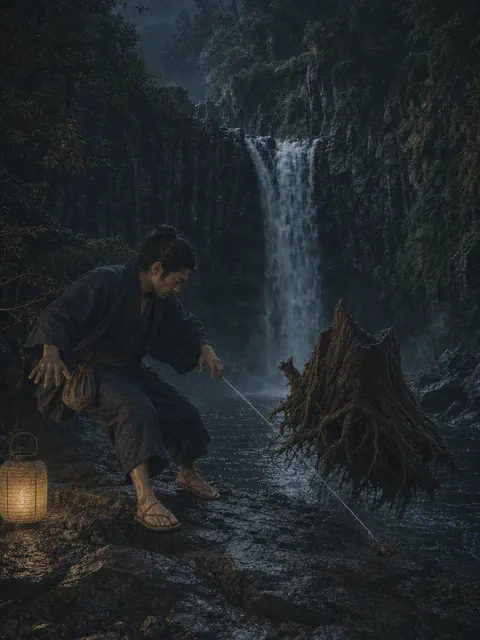
絡新婦(じょろうぐも)
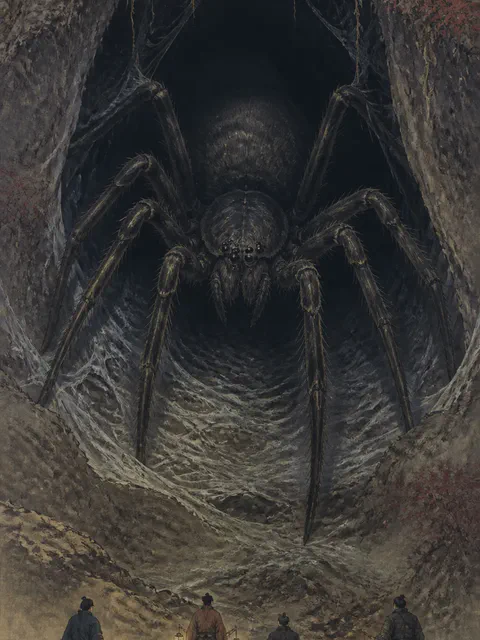
At a waterfall in Shizuoka, a spider winds one fine thread around a man's foot—and reveals enough strength to tear a mulberry stump from the earth.
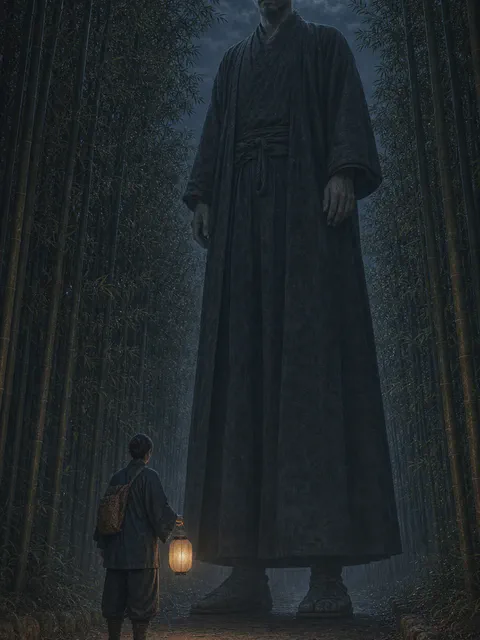
見越入道(みこしにゅうどう)
A 1938 Nagasaki record warns of bamboo rustling over a night road and a looming figure that must be recognized aloud.
鵺(ぬえ)
In The Tale of the Heike, a black cloud and a bird's cry sicken the emperor until an archer shoots the creature down — and the versions disagree on what fell.
濡女(ぬれおんな)
In Iwami in 1933, a fisherman walking home at night was handed an infant by a wet-haired woman — and when he threw the bundle down and ran, something else came out of the dark after him.
鬼(おに)
The horned, red-skinned oni with a club is a late composite. The word first named an invisible spirit of the dead, then hell's wardens, mountain monsters, outsiders — and even the figure who once chased oni away.
玉藻前(たまものまえ)
In the fifteenth-century tale, Tamamo-no-Mae is the most learned woman at the court of Retired Emperor Toba. He falls ill, divination names her as the cause, and she flees to Nasu as a fox. The killing stone came later.
天狗(てんぐ)
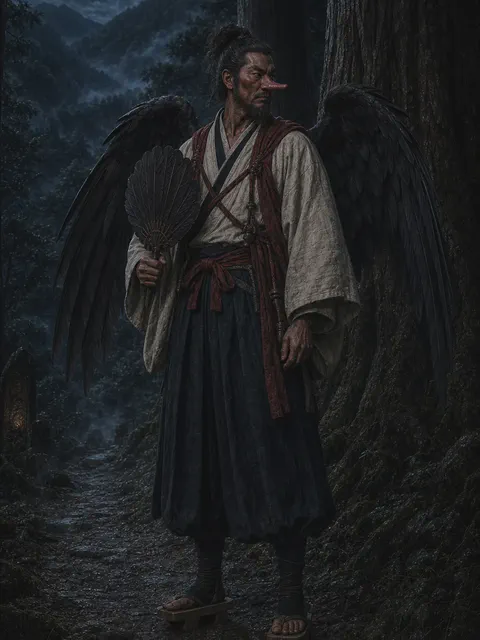
A mountain being associated with flight, impossible voices, disappearances, and more than one familiar face.
土蜘蛛(つちぐも)
A monk appears at a sick warlord's bedside and throws spider silk at him. That is the tale. But the same word, centuries earlier, was what the court called people it wanted to treat as outsiders.
海坊主(うみぼうず)
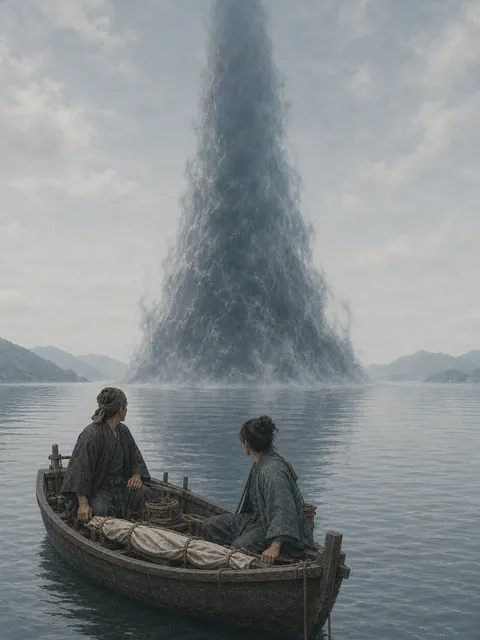
One account describes a vast Buddha-like shape crossing ahead of a boat on a clear, windless day, then slowly thinning until it vanished.
輪入道(わにゅうどう)
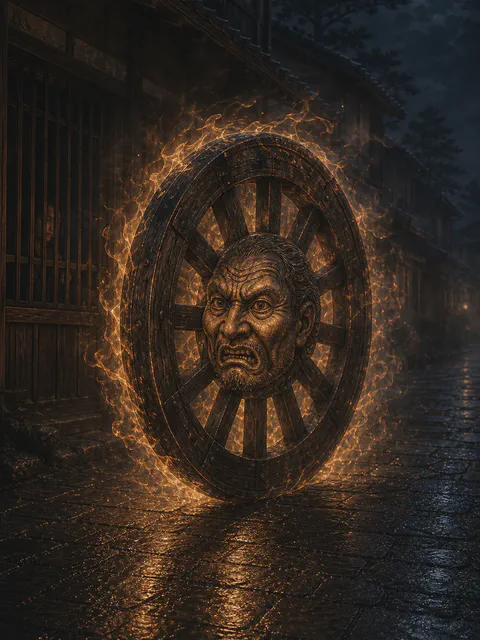
In Toriyama Sekien's 1779 picture book, a single ox-cart wheel rolls through the night by itself — and anyone who sees it is said to lose their soul.
雪女(ゆきおんな)
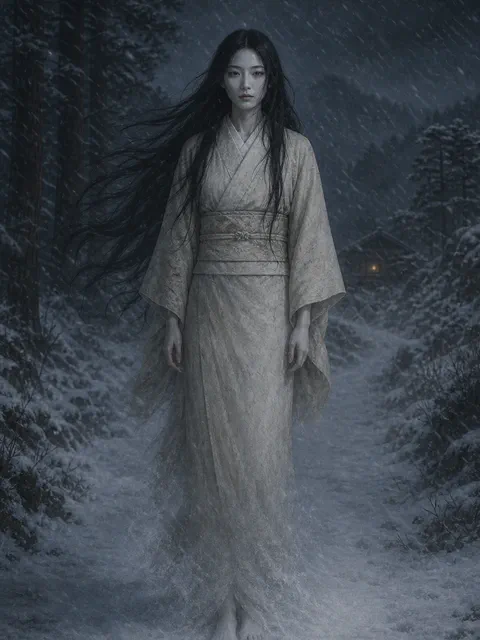
A pale woman seen on winter roads, sometimes deadly, sometimes harmless, and never described the same way everywhere.