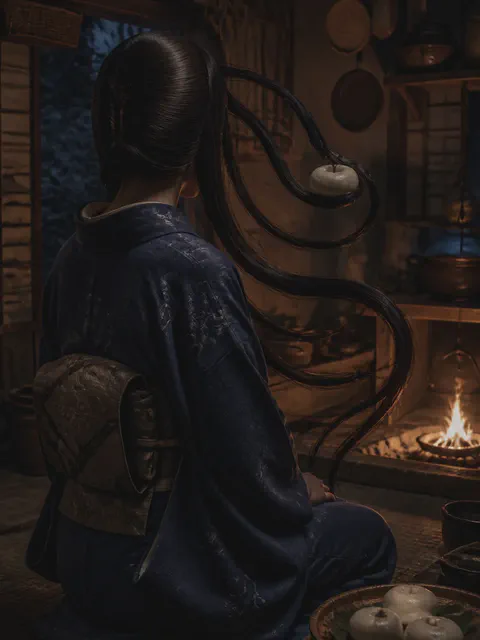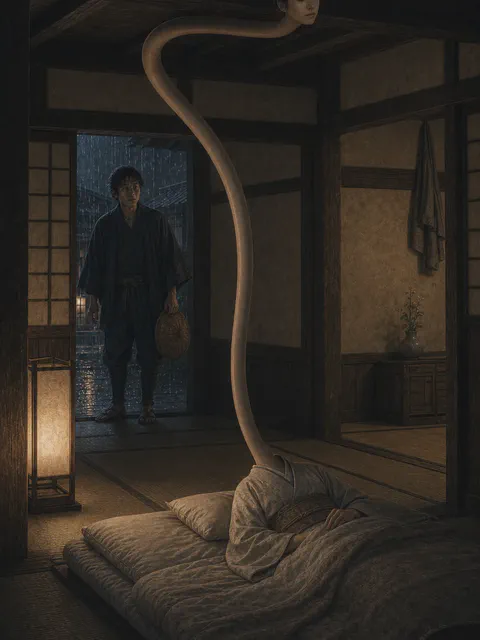
Rokurokubi
轆轤首(ろくろくび)
A seemingly human figure whose neck stretches at night—and one name that once covered more than one uncanny form.
Yokai of the home — the ceiling, the bath, the pillow and the door
Not every yokai lives out in the dark. Many of them live with you: in the rafters, under the floor, in the bath, at the pillow, in the doorway. Here are the beings of the Japanese house, from the one that brings prosperity to the ones that just make noise.
31 yokai
轆轤首(ろくろくび)
A seemingly human figure whose neck stretches at night—and one name that once covered more than one uncanny form.
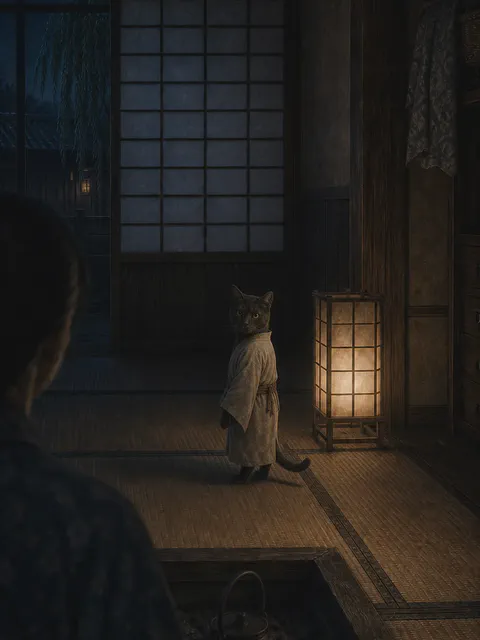
化け猫(ばけねこ)
Stories of old cats that speak, perform, dress like people or take human form—and the separate cat yokai they keep getting confused with.
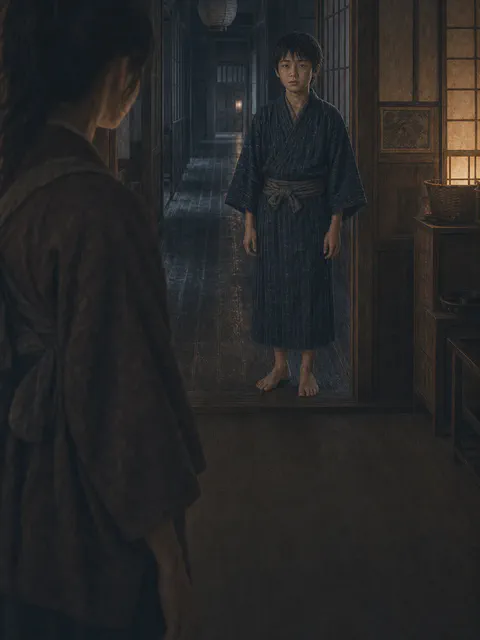
座敷童子(ざしきわらし)
In Tōno Monogatari, an unfamiliar child crosses the corridor of an old house — and the family that shelters the spirit is said to prosper.
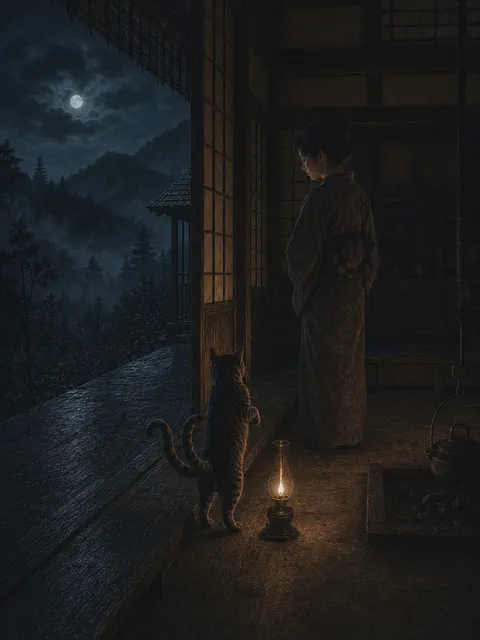
猫又(ねこまた)
A 1931 Kagawa record describes an aging cat whose tail divides in two and that rises to dance on its hind legs.
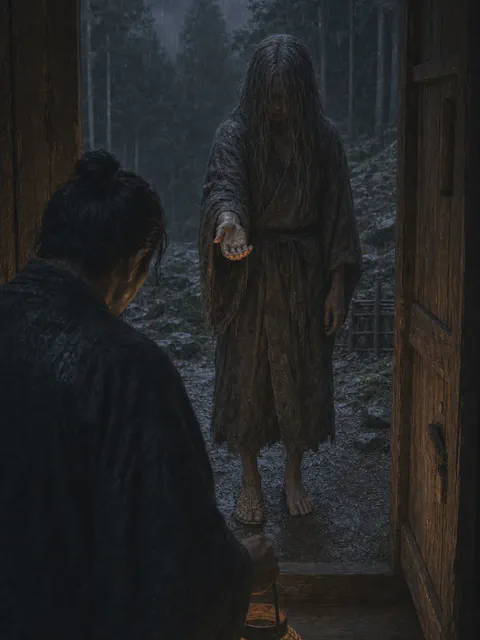
山姥(やまうば)
A man carries a woven object home from the hills, and that night a woman's voice demands the return of her ashinaka.
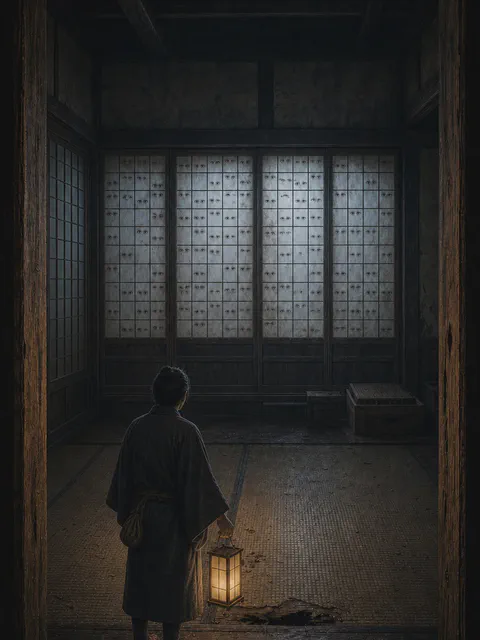
目目連(もくもくれん)
Rows of human eyes appear across old shoji in Toriyama Sekien's 1781 picture-book image.
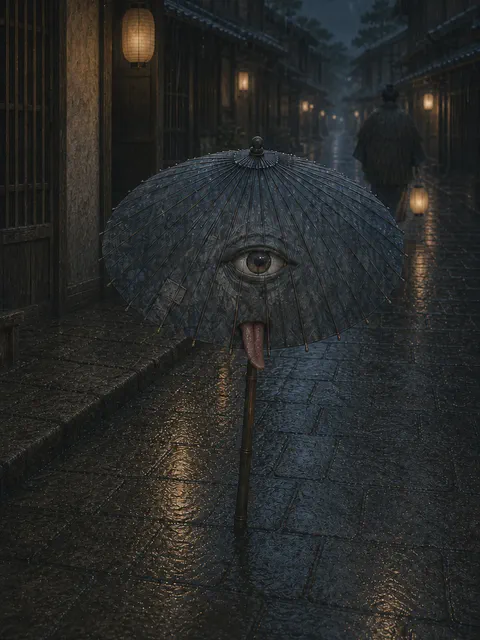
唐傘小僧(からかさこぞう)
An 1857 Osaka print shows a kabuki actor playing a one-legged umbrella monster — the clearest history of a yokai known through pictures rather than encounters.
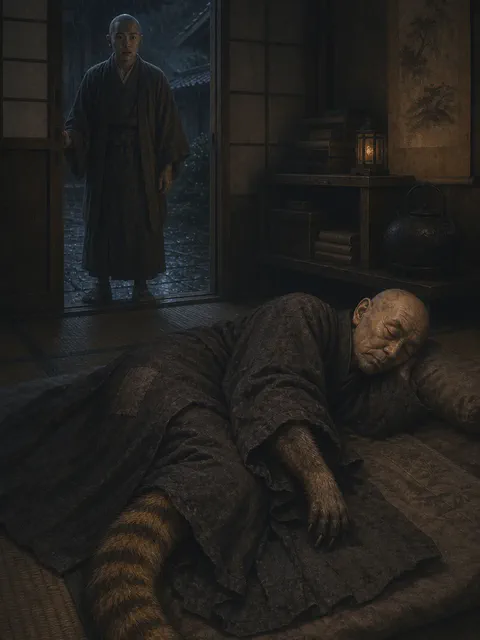
化け狸(ばけだぬき)
Morinji tradition tells of the monk Shukaku, an inexhaustible iron kettle, and the mujina or tanuki form revealed while he slept.
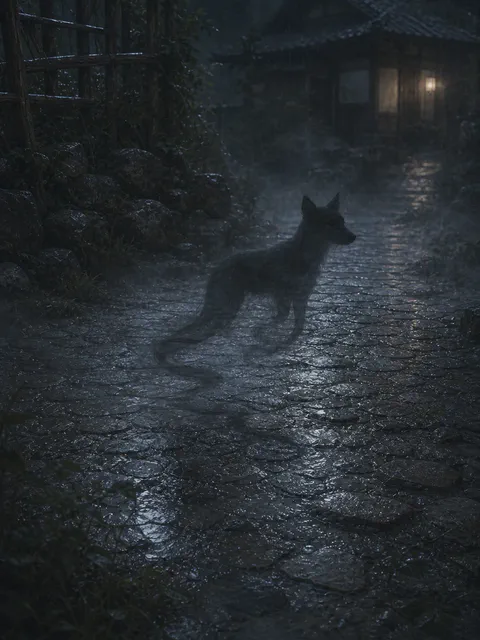
犬神(いぬがみ)
A possessing spirit of western Japan with no agreed-upon body — and a label that excluded entire households from marriage and community life.
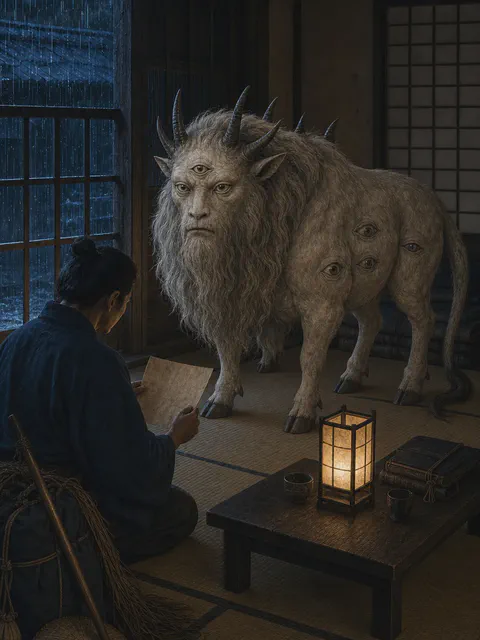
白澤(はくたく)
A beast from Chinese legend that named every harmful thing in the world for the Yellow Emperor, and whose image — nine eyes, six horns, a human face — was carried by Edo travelers and set beside pillows during the cholera epidemic of 1858.
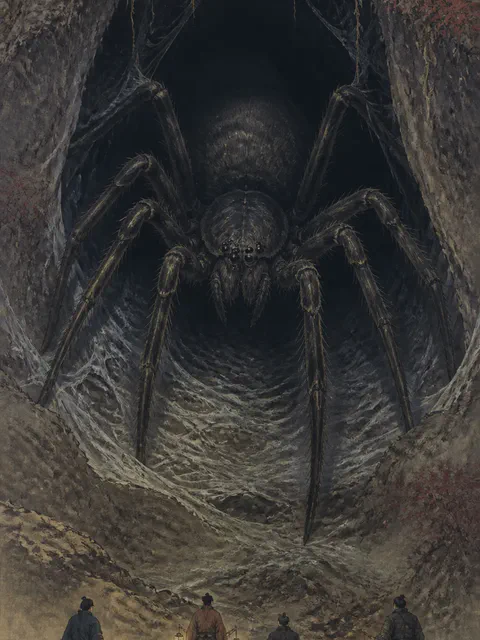
土蜘蛛(つちぐも)
A monk appears at a sick warlord's bedside and throws spider silk at him. That is the tale. But the same word, centuries earlier, was what the court called people it wanted to treat as outsiders.
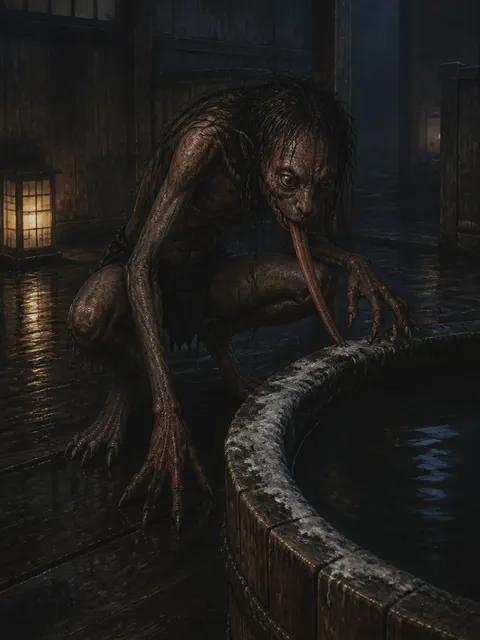
垢嘗(あかなめ)
Sekien drew a crouching figure with a long tongue in a bathhouse in 1776 and called it the grime-licker. He wrote nothing else about it — and everything you have been told about dirty bathrooms was added afterwards.
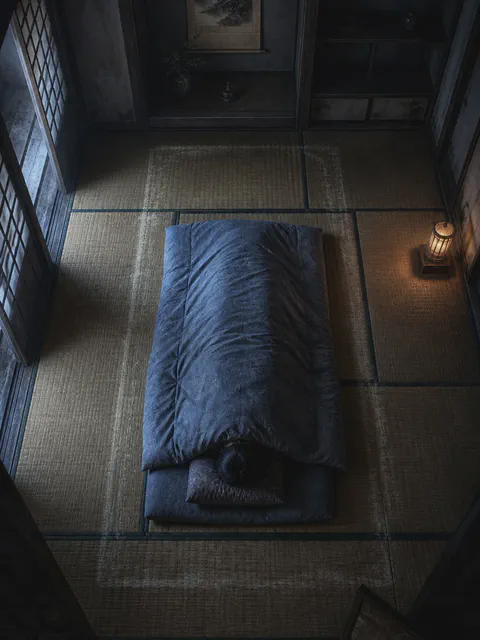
枕返し(まくらがえし)
From Niigata in 1935 to Ibaraki in 1998, people recorded going to sleep facing one way and waking facing the other. The culprit changes from house to house; the reversal never does.
二口女(ふたくちおんな)
The 1841 Ehon Hyaku Monogatari made Futakuchi-onna a stepmother punished with a mouth at the back of her head. Folktales of the wife who eats nothing, recorded in the twentieth century, give the same hidden mouth to brides who turn out to be snakes, spiders, and oni.
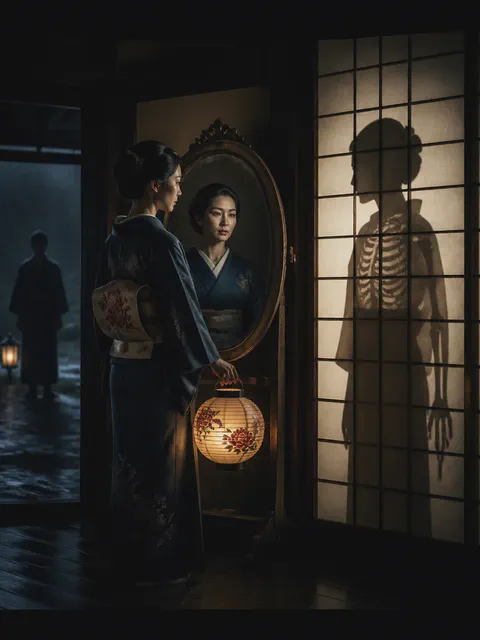
骨女(ほねおんな)
Sekien drew Hone-onna in 1779 as an old skeleton carrying a peony lantern, and his caption names the 1666 tale behind it: a widower's night visitor whom only an outsider saw for what she was.
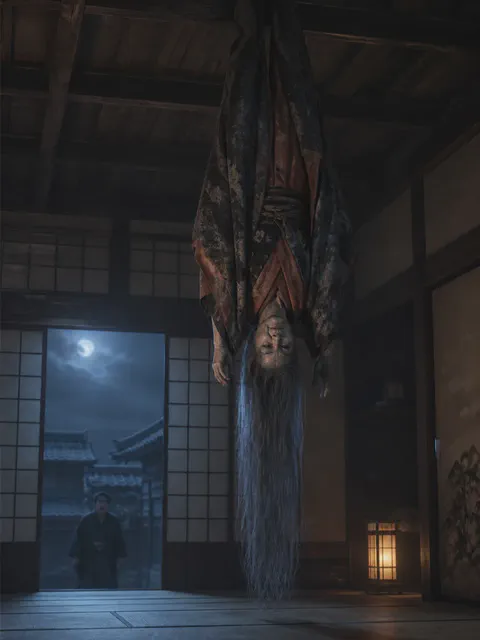
天井下り(てんじょうさがり)
In 1779 Sekien drew an old woman hanging upside down from the ceiling, and wrote a caption that is mostly a joke — about a demon who once escaped through a roof, and a phrase for knocking someone flat.
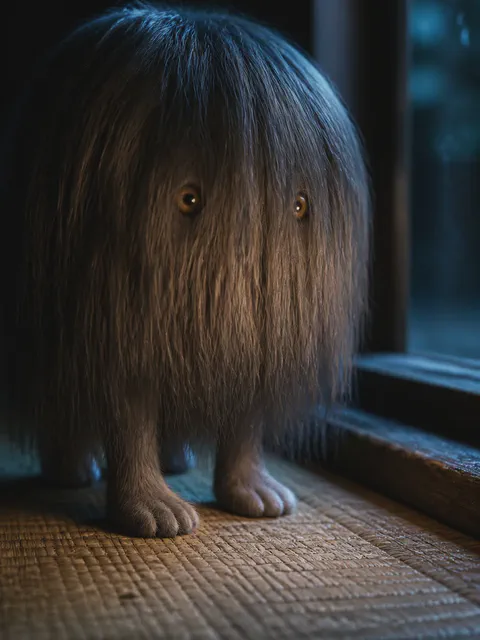
毛羽毛現(けうけげん)
Sekien drew Keukegen in 1781 as a small creature covered in long hair, and spent his caption on its name — which, written another way, means rarely there and rarely seen. The damp houses and disease came later.
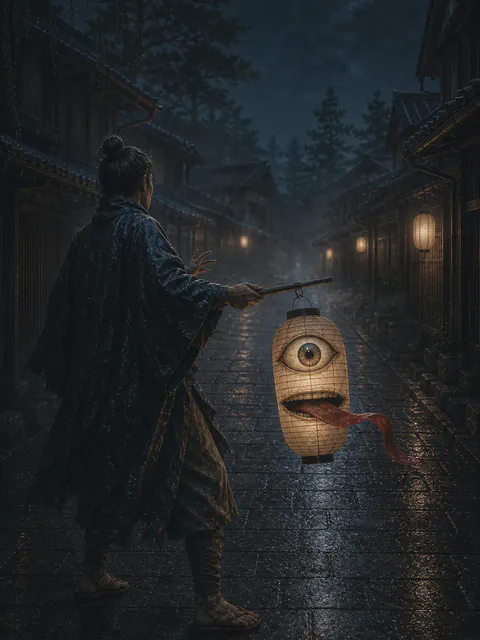
提灯お化け(ちょうちんおばけ)
One of forty-eight monsters on Yoshimori's print Shinban Bakemono-zukushi is a paper lantern with an eye, a mouth, and something coming out of the mouth. That picture is the record — there is no story attached to it.
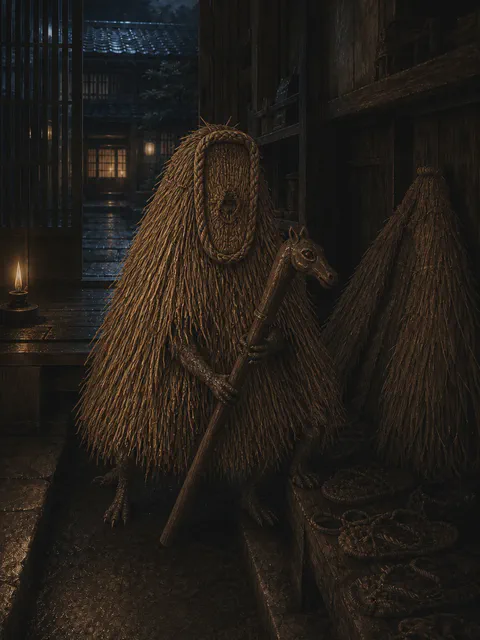
化け草履(ばけぞうり)
A yokai scroll in the Nichibun collection shows a sandal monster covered in yellow straw, with a straw sandal for a face, riding a horse-head staff. It is stranger than the one-eyed singing sandal of modern books, and it comes with no story.
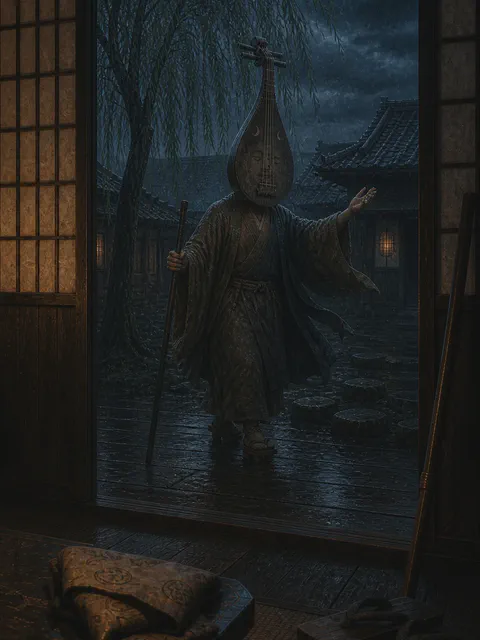
琵琶牧々(びわぼくぼく)
In 1784 Sekien drew a blind biwa priest with a biwa for a head, feeling his way under a willow. His caption names two legendary court lutes, Genjō and Bokuba, and builds the creature's name out of one of them.
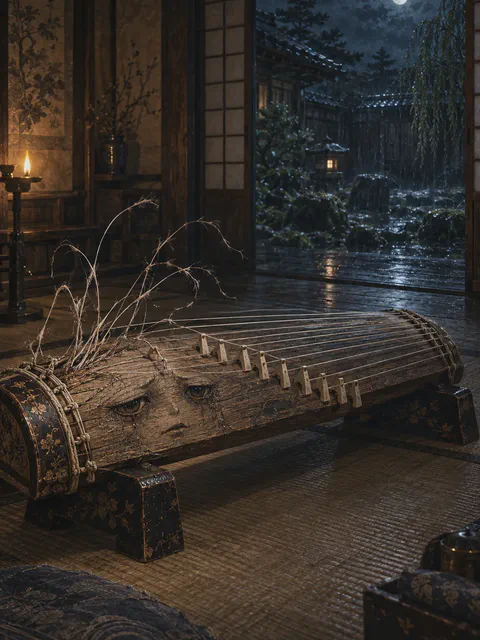
琴古主(ことふるぬし)
Sekien's 1784 Koto-furunushi is an old koto with a face and strings like wild hair. His caption says why it appeared: after Yatsuhashi changed the music, the old Tsukushi koto survived only as a name, and it came to make its grudge known.
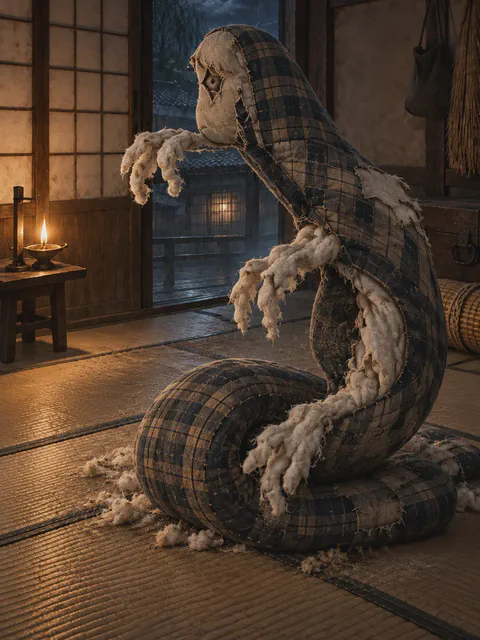
暮露暮露団(ぼろぼろとん)
Sekien's 1784 Boroboroton is a worn, patched futon standing upright with cotton spilling out like hands. His caption gets there through wandering Zen mendicants, an old poetry contest, and one word that means both.
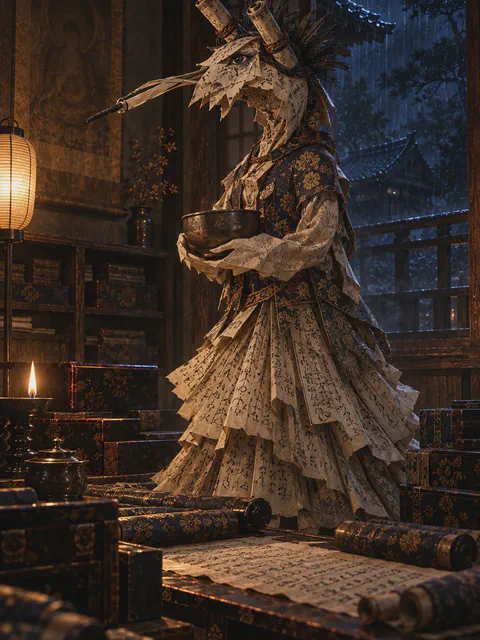
経凛々(きょうりんりん)
Sekien's 1784 Kyōrinrin is a figure built from sutra scrolls and folded scripture. His caption wonders whether these are the scriptures thrown away by the monk Shubin, whose curse on Kūkai turned back on himself.
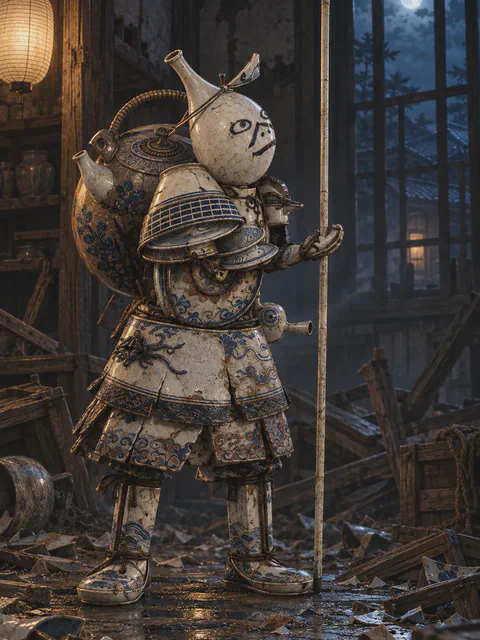
瀬戸大将(せとたいしょう)
Sekien's 1784 Seto-taishō is a warrior assembled from sake flasks, plates, bowls, a teapot, and a kettle, carrying a spear tipped with a vase. Its caption is a chain of puns on Cao Cao, Guan Yu, and the names of Japanese pottery.
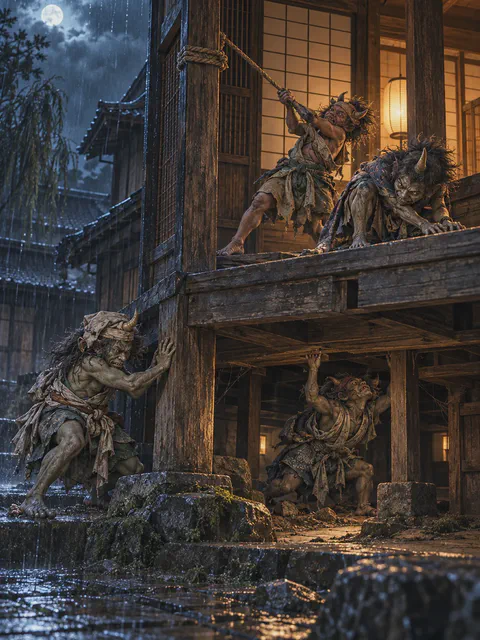
鳴屋(やなり)
Sekien's 1776 plate shows a crew of small oni at the posts and under the veranda of a wooden house, pushing at the timbers. He named them for the sound a house makes at night and wrote nothing else.
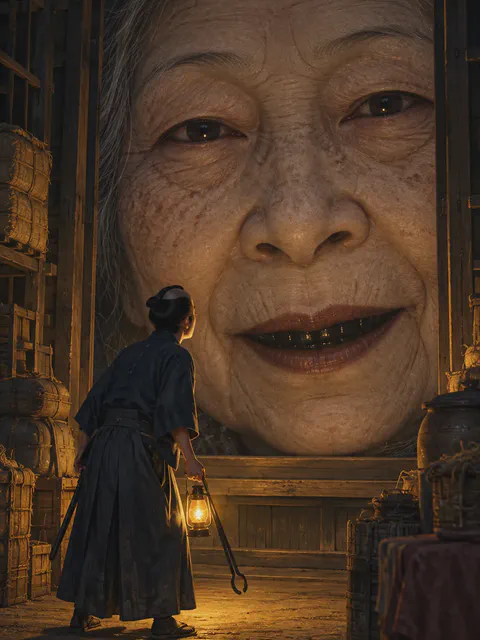
大首(おおくび)
In the Inō Mononoke-roku, set in Miyoshi in 1749, sixteen-year-old Heitarō faces a month of nightly visitations. One night an old woman's face, teeth blackened, fills his doorway. He takes the fire tongs to it.
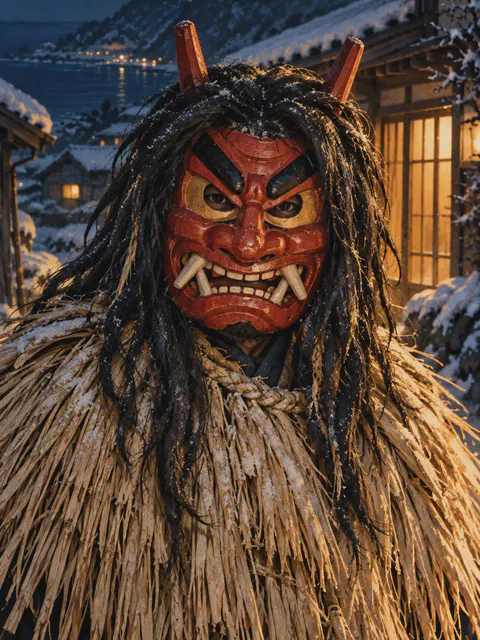
なまはげ
On New Year's Eve in Oga, Akita, young men in fierce masks and straw capes go from house to house as Namahage — visiting deities who rebuke idleness and bring blessings for the year. Each household receives them with food and sake.
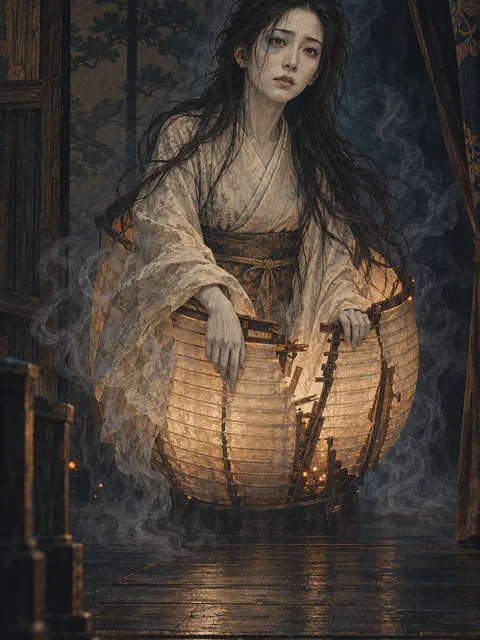
お岩(おいわ)
Oiwa is the wronged wife of Tsuruya Nanboku's 1825 kabuki play Tōkaidō Yotsuya Kaidan — poisoned under the name of medicine, betrayed, and returning to pursue her husband. On stage, she emerges from a burning lantern.
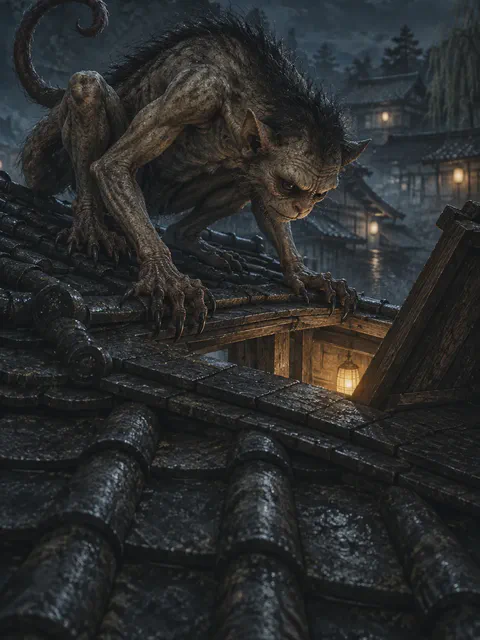
しょうけら
Sekien drew Shōkera in 1776 as a clawed, long-limbed figure clinging to a roof and peering in through the skylight. The plate gives a name and nothing else: no purpose, no victim, no reason it is looking.
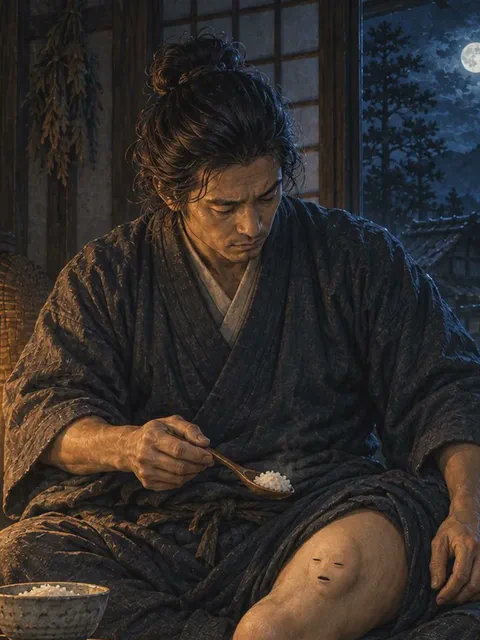
人面瘡(じんめんそう)
A face-shaped sore on a farmer's left thigh that eats rice and rice cakes, told at Ogura in Yamashiro in a collection of 1666 and before that in Tang China, and cured by the one medicine it refuses.
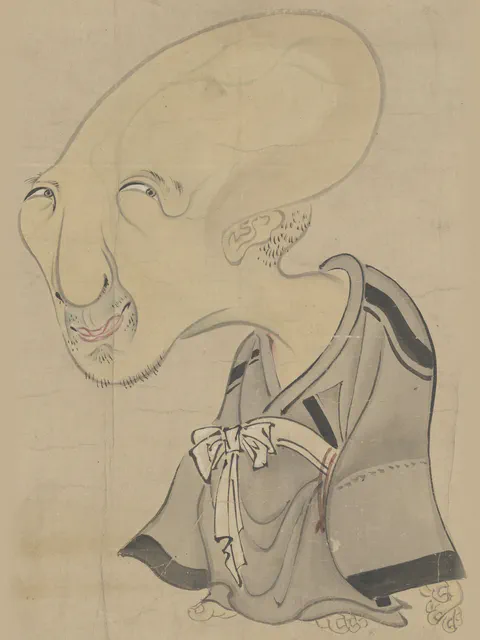
滑瓢(ぬらりひょん)
A long-headed old man stepping from a palanquin in the Edo scrolls and Sekien's 1776 print, a floating ball off Okayama, and the supreme-commander title added in the twentieth century.