Kuchisake-onna
口裂け女(くちさけおんな)
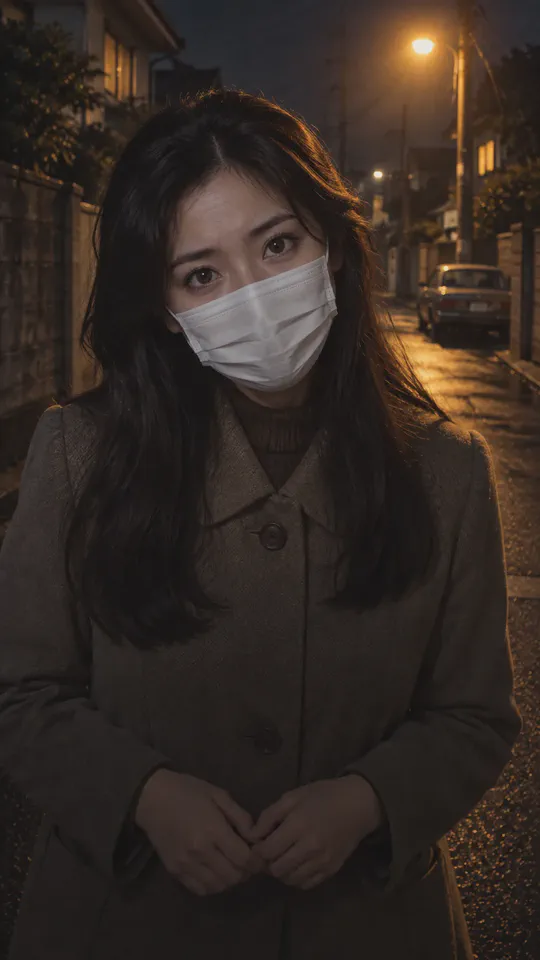
Kuchisake-onna is not an old yokai. She is a rumour that swept through Japanese schoolchildren in 1978–79: a masked woman asking 'Am I pretty?' Almost every other detail changed from school to school.

百鬼夜行
Discover the spirits, monsters, and strange encounters of Japanese folklore.
Explore Yokai口裂け女(くちさけおんな)
Kuchisake-onna is not an old yokai. She is a rumour that swept through Japanese schoolchildren in 1978–79: a masked woman asking 'Am I pretty?' Almost every other detail changed from school to school.
鬼(おに)
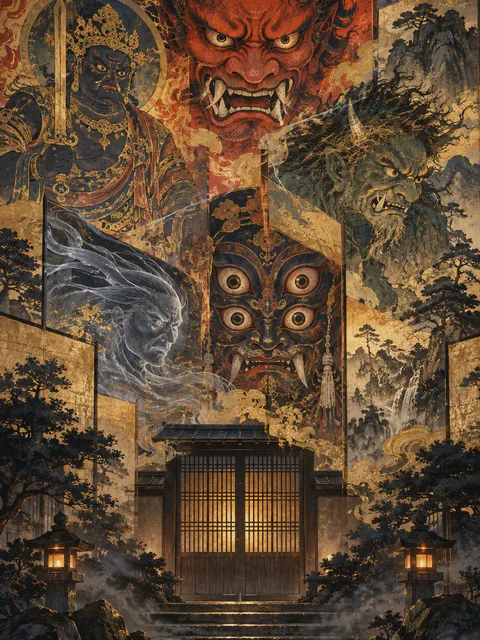
The horned, red-skinned oni with a club is a late composite. The word first named an invisible spirit of the dead, then hell's wardens, mountain monsters, outsiders — and even the figure who once chased oni away.
火車(かしゃ)
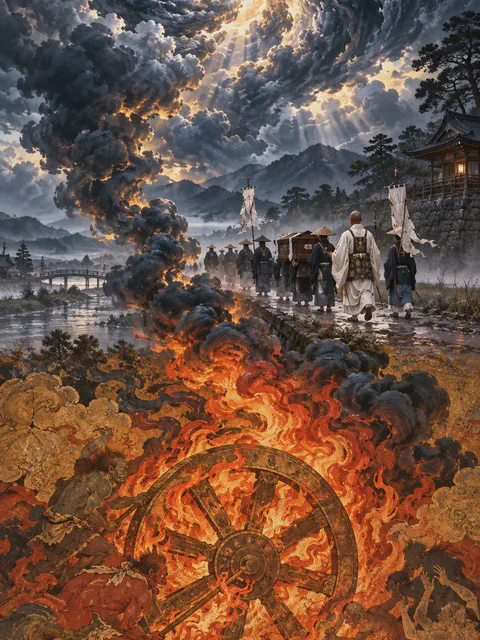
Kasha began as the Buddhist fire cart that came for sinners at the hour of death. By the late sixteenth century it was a thing in the thunderstorm that stole the dead from funerals, and only from about the late seventeenth century was it said to be a cat.
おとろし
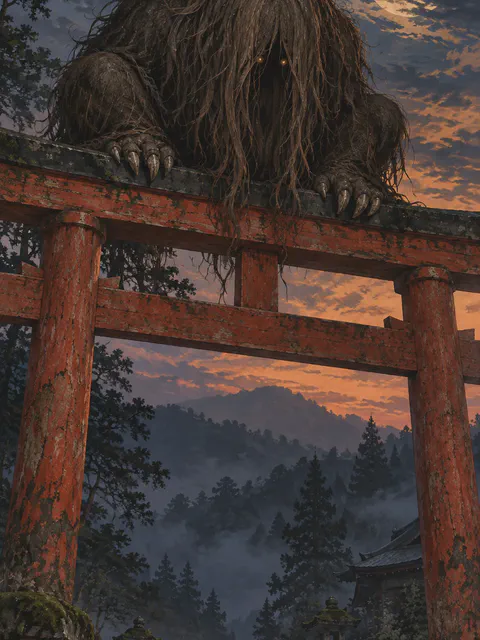
Otoroshi appears in a 1737 scroll and in Sekien's 1776 book as a hunched, hairy creature — on top of a torii in Sekien's version. Neither says what it does. The story about it dropping on the impious was read out of the picture later.
大首(おおくび)
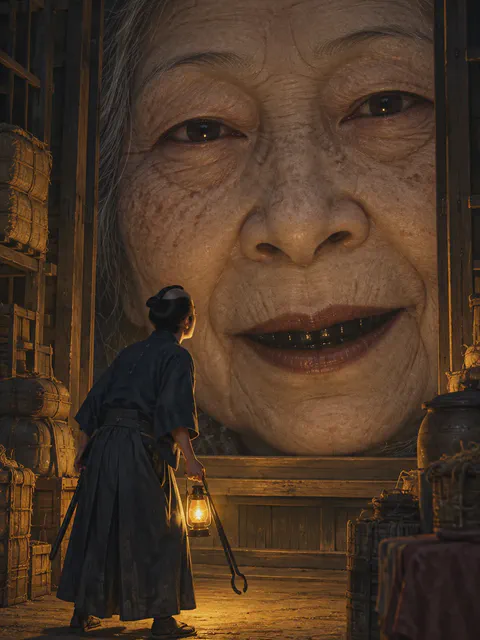
In the Inō Mononoke-roku, set in Miyoshi in 1749, sixteen-year-old Heitarō faces a month of nightly visitations. One night an old woman's face, teeth blackened, fills his doorway. He takes the fire tongs to it.
がしゃどくろ
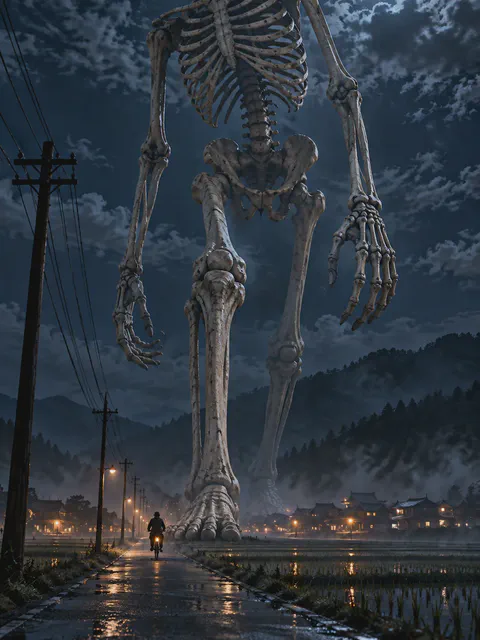
Gashadokuro, the giant skeleton, looks ancient. It was created by the writer Saitō Morihiro in 1966, taken into Mizuki Shigeru's yokai collection in 1968, and later matched to a Kuniyoshi print from the 1840s that never used the name.
Kuchisake-onna is not an old yokai. She is a rumour that swept through Japanese schoolchildren in 1978–79: a masked woman asking 'Am I pretty?' Almost every other detail changed from school to school.
Read the articleYokai Night Parade pairs 30-second folklore shorts with referenced articles. We separate documented tradition from later popular imagery, cite our sources, and label every illustration as a reconstruction — never as a historical image.